Va. committee reports HB 1013 after debate over terrapin protection, bycatch devices
February 04, 2026 | 2026 Legislature VA, Virginia
This article was created by AI summarizing key points discussed. AI makes mistakes, so for full details and context, please refer to the video of the full meeting. Please report any errors so we can fix them. Report an error »
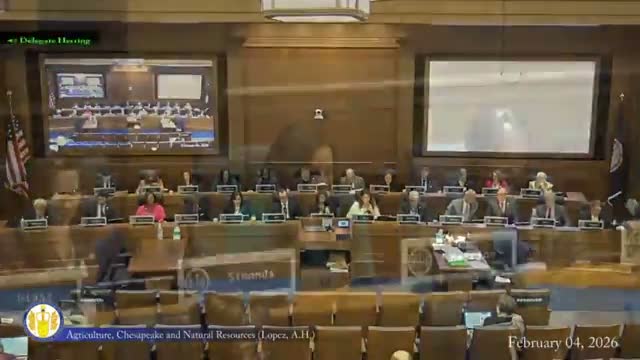
House Bill 1013, amended on the floor of the Natural Resources-related docket, was reported by the committee on a 14–8 vote after extended debate and public testimony.
Delegate Tran, the patron of the line amendments, said the changes were intended to narrow the bill’s scope and avoid presupposing regulatory outcomes. "We have included the Crab Management Advisory Committee," Tran said, and the amendments focus the requirement on "recreational crab pots" while directing VMRC, VIMS and CMAQ to determine whether additional strategies are needed and to report any recommendations to the General Assembly.
The bill would direct the Virginia Marine Resources Commission (VMRC), in collaboration with the Virginia Institute of Marine Science (VIMS), to develop Diamondback Terrapin Protection Areas within Chesapeake Bay waters and require bycatch-reduction devices in crab pots placed within those protection areas. Violations would be classified as a Class 3 misdemeanor under the bill as amended.
Pete Nixon, who identified himself as a longtime participant in crab-management advisory work, urged the committee to limit gear requirements to recreational pots, saying commercial gear ‘‘doesn’t seem to be the problem’’ and that most documented terrapin mortality in past studies was linked to unattended recreational pots. "These turtles . . . live underwater without breathing for 12 hours," Nixon said, responding to testimony the committee had received that suggested shorter survivorship estimates.
Chris Moore, executive director of the Chesapeake Bay Foundation, told the committee that one substantive change in the amendments is the explicit inclusion of VIMS in the discussions. "We've not had VIMS in the room for these discussions over the last couple years, and that ensures, I think, we have the three main groups there," Moore said, adding that including VMRC, VIMS and the Crab Management Advisory Committee should help develop scientifically informed, location-specific protections.
Members expressed divided views. Delegate Blockson said he had reservations about mandating gear changes because any device requirement could be difficult to limit geographically and might be perceived as a statewide mandate. Delegate Kent asked whether the added CMAQ language merely restates existing practice; members also raised potential fiscal impacts if VIMS participation created additional work requiring appropriation review.
After consideration of the amendments and public testimony, the committee voted 14 to 8 to report HB 1013 with amendments. The committee record shows the matter will proceed with the reported changes for further consideration by the General Assembly.
Delegate Tran, the patron of the line amendments, said the changes were intended to narrow the bill’s scope and avoid presupposing regulatory outcomes. "We have included the Crab Management Advisory Committee," Tran said, and the amendments focus the requirement on "recreational crab pots" while directing VMRC, VIMS and CMAQ to determine whether additional strategies are needed and to report any recommendations to the General Assembly.
The bill would direct the Virginia Marine Resources Commission (VMRC), in collaboration with the Virginia Institute of Marine Science (VIMS), to develop Diamondback Terrapin Protection Areas within Chesapeake Bay waters and require bycatch-reduction devices in crab pots placed within those protection areas. Violations would be classified as a Class 3 misdemeanor under the bill as amended.
Pete Nixon, who identified himself as a longtime participant in crab-management advisory work, urged the committee to limit gear requirements to recreational pots, saying commercial gear ‘‘doesn’t seem to be the problem’’ and that most documented terrapin mortality in past studies was linked to unattended recreational pots. "These turtles . . . live underwater without breathing for 12 hours," Nixon said, responding to testimony the committee had received that suggested shorter survivorship estimates.
Chris Moore, executive director of the Chesapeake Bay Foundation, told the committee that one substantive change in the amendments is the explicit inclusion of VIMS in the discussions. "We've not had VIMS in the room for these discussions over the last couple years, and that ensures, I think, we have the three main groups there," Moore said, adding that including VMRC, VIMS and the Crab Management Advisory Committee should help develop scientifically informed, location-specific protections.
Members expressed divided views. Delegate Blockson said he had reservations about mandating gear changes because any device requirement could be difficult to limit geographically and might be perceived as a statewide mandate. Delegate Kent asked whether the added CMAQ language merely restates existing practice; members also raised potential fiscal impacts if VIMS participation created additional work requiring appropriation review.
After consideration of the amendments and public testimony, the committee voted 14 to 8 to report HB 1013 with amendments. The committee record shows the matter will proceed with the reported changes for further consideration by the General Assembly.
View the Full Meeting & All Its Details
This article offers just a summary. Unlock complete video, transcripts, and insights as a Founder Member.
✓
Watch full, unedited meeting videos
✓
Search every word spoken in unlimited transcripts
✓
AI summaries & real-time alerts (all government levels)
✓
Permanent access to expanding government content
30-day money-back guarantee
