Residents Urge East Grand Rapids to Bar Local Immigration Enforcement, Question Surveillance and Brownfield Funding
February 02, 2026 | East Grand Rapids, Kent County, Michigan
This article was created by AI summarizing key points discussed. AI makes mistakes, so for full details and context, please refer to the video of the full meeting. Please report any errors so we can fix them. Report an error »
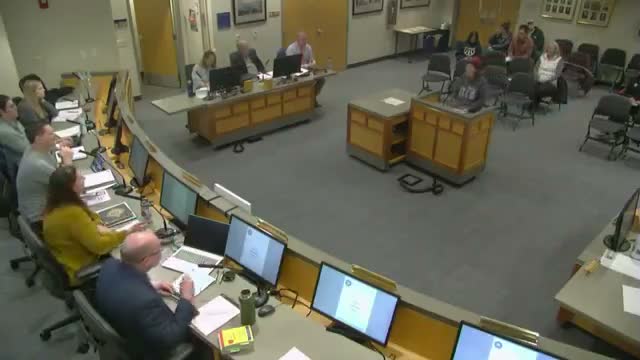
Several East Grand Rapids residents used the public-comment period to press the City Commission for clearer written protections against local cooperation with federal immigration enforcement and to raise concerns about surveillance cameras and public funding for a private development.
Multiple residents requested formal policies restricting local law-enforcement cooperation with Immigration and Customs Enforcement. Kristen Harnsell said the city should adopt a "policy that prevents local law enforcement from participating with... ICE," and urged prohibiting officers from asking about immigration status because "when immigrants are afraid of law enforcement they are less likely to report crimes." Lauren Pesina urged urgency, saying she did not want the Commission to "wait until something bad happens" and described conditions she observed at a regional detention center.
Nancy Patterson asked the city to explain whether the cameras referenced in a police report (described by participants as "Flock" cameras) are used in the city and to state whether their footage could be used by federal agencies. In response, a city public-safety director said, "We do not have any flat cameras owned or operated in the city," and noted nearby cameras on Burton and Bratton are in Grand Rapids.
Several commenters also urged caution about using public brownfield redevelopment funds for the Gaslight Investors project. Tina Marua and Mark Armstead said brownfield dollars should be reserved for cleanup and substantial public benefit, not to subsidize a private development unless the city secures demonstrable affordable-housing benefits.
No formal policy or funding decision was made during the meeting; the resolution and funding conversations were scheduled for later consideration and staff review.
Multiple residents requested formal policies restricting local law-enforcement cooperation with Immigration and Customs Enforcement. Kristen Harnsell said the city should adopt a "policy that prevents local law enforcement from participating with... ICE," and urged prohibiting officers from asking about immigration status because "when immigrants are afraid of law enforcement they are less likely to report crimes." Lauren Pesina urged urgency, saying she did not want the Commission to "wait until something bad happens" and described conditions she observed at a regional detention center.
Nancy Patterson asked the city to explain whether the cameras referenced in a police report (described by participants as "Flock" cameras) are used in the city and to state whether their footage could be used by federal agencies. In response, a city public-safety director said, "We do not have any flat cameras owned or operated in the city," and noted nearby cameras on Burton and Bratton are in Grand Rapids.
Several commenters also urged caution about using public brownfield redevelopment funds for the Gaslight Investors project. Tina Marua and Mark Armstead said brownfield dollars should be reserved for cleanup and substantial public benefit, not to subsidize a private development unless the city secures demonstrable affordable-housing benefits.
No formal policy or funding decision was made during the meeting; the resolution and funding conversations were scheduled for later consideration and staff review.
View the Full Meeting & All Its Details
This article offers just a summary. Unlock complete video, transcripts, and insights as a Founder Member.
✓
Watch full, unedited meeting videos
✓
Search every word spoken in unlimited transcripts
✓
AI summaries & real-time alerts (all government levels)
✓
Permanent access to expanding government content
30-day money-back guarantee
