Public Safety Director: East Grand Rapids Sees Drop in Property Crime, Faces Rising Video Redaction Workload
February 02, 2026 | East Grand Rapids, Kent County, Michigan
This article was created by AI summarizing key points discussed. AI makes mistakes, so for full details and context, please refer to the video of the full meeting. Please report any errors so we can fix them. Report an error »
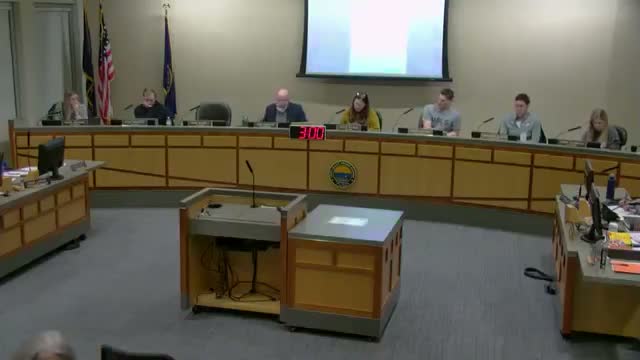
The Public Safety Department presented its 2025 annual report to the Commission, highlighting crime statistics, training, staffing and operational challenges.
Key points from the presentation included:
- The department reported it has "collected and destroyed nearly 11,000 pounds of expired and unused medications since 2017," citing the prescription drug take-back program as a success.
- The department responded to "over 4,400 calls for service" and conducted nearly 1,000 traffic stops during the past year.
- Part 1 property crimes were reported as down 32% from the prior year, a reduction department leaders attributed to a mix of direct patrols, community engagement and crime analysis.
- The department reported increases in video and audio public-record requests; staff said redacting body-worn-camera footage is labor-intensive and requires dedicated time.
- The department is pursuing an independent assessment with the Center for Safety Assessment and Inclusion to identify strengths and areas for improvement; the assessment will focus on pillars including traffic stops, training, policies and community engagement.
During questions, commissioners asked how the department would respond if ICE appeared at a local high school and about local authority. The Public Safety Director replied, "We do not have the authority or ability to enforce immigration status," adding that deputization would require a 287(g) agreement. Commissioners also sought clarity about what residents see at certain intersections; a staff member explained the devices as traffic-signal motion detectors that adjust signal timing, and separate sensors that report pavement temperature for winter operations.
Commissioners asked about the high rate of warnings versus written traffic citations; the department said only roughly 10% of traffic stops result in a written citation and that many stops are warnings or enforcement targeted by direct patrols. The department acknowledged staffing challenges but said recent hires and ongoing training are improving capacity and that achieving full staffing will be an ongoing process.
Key points from the presentation included:
- The department reported it has "collected and destroyed nearly 11,000 pounds of expired and unused medications since 2017," citing the prescription drug take-back program as a success.
- The department responded to "over 4,400 calls for service" and conducted nearly 1,000 traffic stops during the past year.
- Part 1 property crimes were reported as down 32% from the prior year, a reduction department leaders attributed to a mix of direct patrols, community engagement and crime analysis.
- The department reported increases in video and audio public-record requests; staff said redacting body-worn-camera footage is labor-intensive and requires dedicated time.
- The department is pursuing an independent assessment with the Center for Safety Assessment and Inclusion to identify strengths and areas for improvement; the assessment will focus on pillars including traffic stops, training, policies and community engagement.
During questions, commissioners asked how the department would respond if ICE appeared at a local high school and about local authority. The Public Safety Director replied, "We do not have the authority or ability to enforce immigration status," adding that deputization would require a 287(g) agreement. Commissioners also sought clarity about what residents see at certain intersections; a staff member explained the devices as traffic-signal motion detectors that adjust signal timing, and separate sensors that report pavement temperature for winter operations.
Commissioners asked about the high rate of warnings versus written traffic citations; the department said only roughly 10% of traffic stops result in a written citation and that many stops are warnings or enforcement targeted by direct patrols. The department acknowledged staffing challenges but said recent hires and ongoing training are improving capacity and that achieving full staffing will be an ongoing process.
View the Full Meeting & All Its Details
This article offers just a summary. Unlock complete video, transcripts, and insights as a Founder Member.
✓
Watch full, unedited meeting videos
✓
Search every word spoken in unlimited transcripts
✓
AI summaries & real-time alerts (all government levels)
✓
Permanent access to expanding government content
30-day money-back guarantee
