Bonner County workshop proposes GSA lodging baseline, agrees to carve‑outs for emergencies and ADA needs
February 03, 2026 | Bonner County, Idaho
This article was created by AI summarizing key points discussed. AI makes mistakes, so for full details and context, please refer to the video of the full meeting. Please report any errors so we can fix them. Report an error »
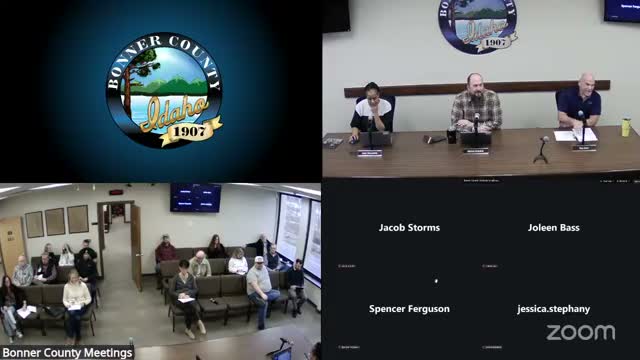
Bonner County auditors and commissioners spent a Feb. 2 workshop reviewing a revised Travel and Reimbursement Policy (1006) that would tighten pre‑travel authorization and set GSA lodging rates as the baseline for hotel reimbursements while allowing defined exceptions.
The auditor, who led the presentation, said the revised draft is a second pass after feedback from departments and recommended that “travel authorization is approved and submitted to auditing prior to the travel occurring,” so reimbursements can be tied back to pre‑approved trips. The auditor also proposed distinguishing local travel from out‑of‑county overnight travel and providing an appendix with an annual airfare benchmark for planning.
Why it matters: the policy governs how county employees, elected officials and certain contractors are reimbursed and how county insurance and protections apply for vehicle use, overnight stays and meal allowances. Changes could affect budgeting, the county’s exposure to liability, and day‑to‑day travel practices for public‑safety and field staff.
Key provisions and debates
GSA lodging as the baseline. Staff recommended using federal GSA lodging rates as the county reimbursement cap for overnight lodging; exceptions would be allowed if the board grants authorization. Commissioners asked for clearer language and an exception process when conferences or local hotel supply force higher rates.
Emergent and operational exceptions. Justice Services and sheriff’s office staff described routine, operational last‑minute trips — for example, traveling across state lines to pick up juveniles or warrants — that do not permit the usual lead time for pre‑authorization. Devin of Justice Services said staff “sometimes only know the day before we go down” and urged an emergent‑travel carve‑out. Staff agreed to add language permitting documented emergent travel for law‑enforcement and related functions, provided department sign‑off and post‑trip documentation are submitted to auditing.
ADA and privacy protections. Commissioners flagged privacy and ADA concerns for employees who require accommodations. An HR representative said medical documentation should be handled through HR so an employee’s specific medical information is not placed in a public voucher; staff recommended wording that recognizes ADA compliance and permits behind‑the‑scenes HR/medical verification for increased allowable expenses.
Mode of travel and reimbursement cap. The board debated whether reimbursement should cover the “most cost‑effective mode” or merely reimburse up to the cost of the least expensive commercially available fare. Sheriff Wheeler noted cases — such as a Sun Valley trip — where driving and staying en route may be more practical than flying. Staff proposed language that limits reimbursement to the lowest available commercial fare or equivalent benchmark while allowing documented exceptions.
Personal vehicles, rentals and insurance. Commissioners questioned draft language that appeared to limit personal‑vehicle reimbursement to 50% of the standard rate when a county vehicle is available; many said that clause conflicted with later sections and with the county’s insurance practice. Staff agreed to remove inconsistent language and recommended clarifying that personal auto insurance is primary and county coverage is secondary when an employee uses a private vehicle for county business. The group discussed alternatives — a motor pool, leasing, or a county rental relationship (enterprise) — to give employees county‑insured vehicles for long trips.
Airfare, per diem and receipts. Auditing proposed an FY26 planning benchmark — a median round‑trip airfare of about $450 from Spokane to Boise plus mileage (about $1.14 to Spokane), parking (~$10/day) and ground transport ($10–$20) — to help employees decide whether to drive or fly. Commissioners rejected a blanket requirement that all airfare be refundable and asked staff to remove “refundable rate” language. The per‑diem/receipt debate remained unsettled: commissioners asked whether meal per‑diems should be paid without receipts or whether the county should require receipts for some reimbursements; staff said legal input is needed.
Next steps and staff directions
Staff said they will: revise lodging language to incorporate narrowly defined exceptions to the GSA cap; add a clear local‑vs‑overnight distinction; include an emergent‑travel exception for law‑enforcement and justice‑services needs with documentation requirements; remove inconsistent mileage language; and propose an appendix with airfare planning figures. The auditor indicated the revised draft will return to the board for further review; the workshop concluded near noon.
The draft generated extended discussion on insurance, workers’ compensation and vehicle‑use rules; commissioners asked staff to coordinate edits with HR and the county insurance/risk manager and to seek legal input on federal compliance questions (mileage, per‑diem rules, and federal limits). No final vote or formal motion was taken at the workshop.
The auditor, who led the presentation, said the revised draft is a second pass after feedback from departments and recommended that “travel authorization is approved and submitted to auditing prior to the travel occurring,” so reimbursements can be tied back to pre‑approved trips. The auditor also proposed distinguishing local travel from out‑of‑county overnight travel and providing an appendix with an annual airfare benchmark for planning.
Why it matters: the policy governs how county employees, elected officials and certain contractors are reimbursed and how county insurance and protections apply for vehicle use, overnight stays and meal allowances. Changes could affect budgeting, the county’s exposure to liability, and day‑to‑day travel practices for public‑safety and field staff.
Key provisions and debates
GSA lodging as the baseline. Staff recommended using federal GSA lodging rates as the county reimbursement cap for overnight lodging; exceptions would be allowed if the board grants authorization. Commissioners asked for clearer language and an exception process when conferences or local hotel supply force higher rates.
Emergent and operational exceptions. Justice Services and sheriff’s office staff described routine, operational last‑minute trips — for example, traveling across state lines to pick up juveniles or warrants — that do not permit the usual lead time for pre‑authorization. Devin of Justice Services said staff “sometimes only know the day before we go down” and urged an emergent‑travel carve‑out. Staff agreed to add language permitting documented emergent travel for law‑enforcement and related functions, provided department sign‑off and post‑trip documentation are submitted to auditing.
ADA and privacy protections. Commissioners flagged privacy and ADA concerns for employees who require accommodations. An HR representative said medical documentation should be handled through HR so an employee’s specific medical information is not placed in a public voucher; staff recommended wording that recognizes ADA compliance and permits behind‑the‑scenes HR/medical verification for increased allowable expenses.
Mode of travel and reimbursement cap. The board debated whether reimbursement should cover the “most cost‑effective mode” or merely reimburse up to the cost of the least expensive commercially available fare. Sheriff Wheeler noted cases — such as a Sun Valley trip — where driving and staying en route may be more practical than flying. Staff proposed language that limits reimbursement to the lowest available commercial fare or equivalent benchmark while allowing documented exceptions.
Personal vehicles, rentals and insurance. Commissioners questioned draft language that appeared to limit personal‑vehicle reimbursement to 50% of the standard rate when a county vehicle is available; many said that clause conflicted with later sections and with the county’s insurance practice. Staff agreed to remove inconsistent language and recommended clarifying that personal auto insurance is primary and county coverage is secondary when an employee uses a private vehicle for county business. The group discussed alternatives — a motor pool, leasing, or a county rental relationship (enterprise) — to give employees county‑insured vehicles for long trips.
Airfare, per diem and receipts. Auditing proposed an FY26 planning benchmark — a median round‑trip airfare of about $450 from Spokane to Boise plus mileage (about $1.14 to Spokane), parking (~$10/day) and ground transport ($10–$20) — to help employees decide whether to drive or fly. Commissioners rejected a blanket requirement that all airfare be refundable and asked staff to remove “refundable rate” language. The per‑diem/receipt debate remained unsettled: commissioners asked whether meal per‑diems should be paid without receipts or whether the county should require receipts for some reimbursements; staff said legal input is needed.
Next steps and staff directions
Staff said they will: revise lodging language to incorporate narrowly defined exceptions to the GSA cap; add a clear local‑vs‑overnight distinction; include an emergent‑travel exception for law‑enforcement and justice‑services needs with documentation requirements; remove inconsistent mileage language; and propose an appendix with airfare planning figures. The auditor indicated the revised draft will return to the board for further review; the workshop concluded near noon.
The draft generated extended discussion on insurance, workers’ compensation and vehicle‑use rules; commissioners asked staff to coordinate edits with HR and the county insurance/risk manager and to seek legal input on federal compliance questions (mileage, per‑diem rules, and federal limits). No final vote or formal motion was taken at the workshop.
View the Full Meeting & All Its Details
This article offers just a summary. Unlock complete video, transcripts, and insights as a Founder Member.
✓
Watch full, unedited meeting videos
✓
Search every word spoken in unlimited transcripts
✓
AI summaries & real-time alerts (all government levels)
✓
Permanent access to expanding government content
30-day money-back guarantee
