House Administration chair says 'Mega Act' would target ineligible names on voter rolls; urges REAL ID change
February 02, 2026 | House Administration: House Committee, Standing Committees - House & Senate, Congressional Hearings Compilation, Legislative, Federal
This article was created by AI summarizing key points discussed. AI makes mistakes, so for full details and context, please refer to the video of the full meeting. Please report any errors so we can fix them. Report an error »
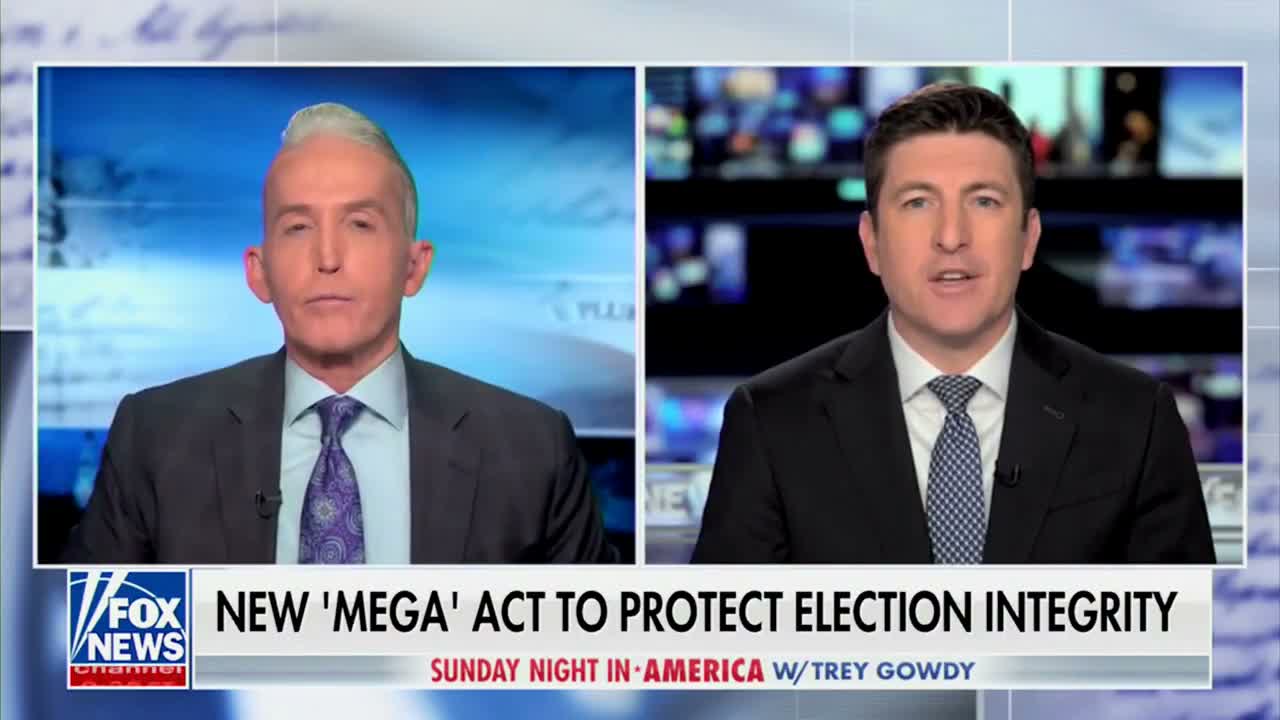
Bridal Style, chair of the House Administration Committee, told a television interviewer that an investigation he said he conducted over three years found "individuals that should not be on the voter rolls are on the voter rolls," and urged passage of legislation he referred to as the "Mega Act" to verify U.S. citizenship for registrants.
"What we have seen is time and again, individuals that should not be on the voter rolls are on the voter rolls," Bridal Style said, arguing that the bill would "clean up the voter rolls so that Americans once again have confidence in our election." He added the goal is to "make sure that it's easy to vote and hard to cheat."
The chairman also suggested changes to the federal REAL ID framework, saying the "easy answer" would be to require REAL ID implementation in all 50 states and to indicate when a driver's license holder is not a U.S. citizen so that such identification would not be used for voting purposes. "It should indicate if an individual is not a US citizen, then we know that identification cannot be used for voting purposes," he said.
On practical accommodations, Bridal Style said the legislation would not remove people already on the rolls and that name changes (for example after marriage or divorce) should be handled by presenting supporting documents such as a marriage certificate. "If you have a name change that's in process, you bring the proper documentation with you," he said.
During the interview, Bridal Style also alleged that "president Biden did [allow] millions of individuals into the country illegally" and said some states (he named Illinois as an example) issue driver's licenses to people in the country illegally; those assertions were presented by the chairman in the interview and are not independently substantiated in the program transcript.
The transcript does not include text of the "Mega Act" nor a bill number; Bridal Style said the measure was "written in conjunction with the Trump administration," but the program did not provide legislative text or details about how the act would implement citizenship checks, what documentation would be required in every state, or how the changes would interact with existing federal or state law.
There were no formal votes or motions reported in the interview. The discussion consisted of the host's questions and the chairman's policy statements and proposals.
"What we have seen is time and again, individuals that should not be on the voter rolls are on the voter rolls," Bridal Style said, arguing that the bill would "clean up the voter rolls so that Americans once again have confidence in our election." He added the goal is to "make sure that it's easy to vote and hard to cheat."
The chairman also suggested changes to the federal REAL ID framework, saying the "easy answer" would be to require REAL ID implementation in all 50 states and to indicate when a driver's license holder is not a U.S. citizen so that such identification would not be used for voting purposes. "It should indicate if an individual is not a US citizen, then we know that identification cannot be used for voting purposes," he said.
On practical accommodations, Bridal Style said the legislation would not remove people already on the rolls and that name changes (for example after marriage or divorce) should be handled by presenting supporting documents such as a marriage certificate. "If you have a name change that's in process, you bring the proper documentation with you," he said.
During the interview, Bridal Style also alleged that "president Biden did [allow] millions of individuals into the country illegally" and said some states (he named Illinois as an example) issue driver's licenses to people in the country illegally; those assertions were presented by the chairman in the interview and are not independently substantiated in the program transcript.
The transcript does not include text of the "Mega Act" nor a bill number; Bridal Style said the measure was "written in conjunction with the Trump administration," but the program did not provide legislative text or details about how the act would implement citizenship checks, what documentation would be required in every state, or how the changes would interact with existing federal or state law.
There were no formal votes or motions reported in the interview. The discussion consisted of the host's questions and the chairman's policy statements and proposals.
Don't Miss a Word: See the Full Meeting!
Go beyond summaries. Unlock every video, transcript, and key insight with a Founder Membership.
✓
Get instant access to full meeting videos
✓
Search and clip any phrase from complete transcripts
✓
Receive AI-powered summaries & custom alerts
✓
Enjoy lifetime, unrestricted access to government data
30-day money-back guarantee
