Panel adopts amendment asking DES to seek USDA waiver to restrict SNAP purchases; bill advances 7–5
January 26, 2026 | 2026 Legislature Arizona, Arizona
This article was created by AI summarizing key points discussed. AI makes mistakes, so for full details and context, please refer to the video of the full meeting. Please report any errors so we can fix them. Report an error »
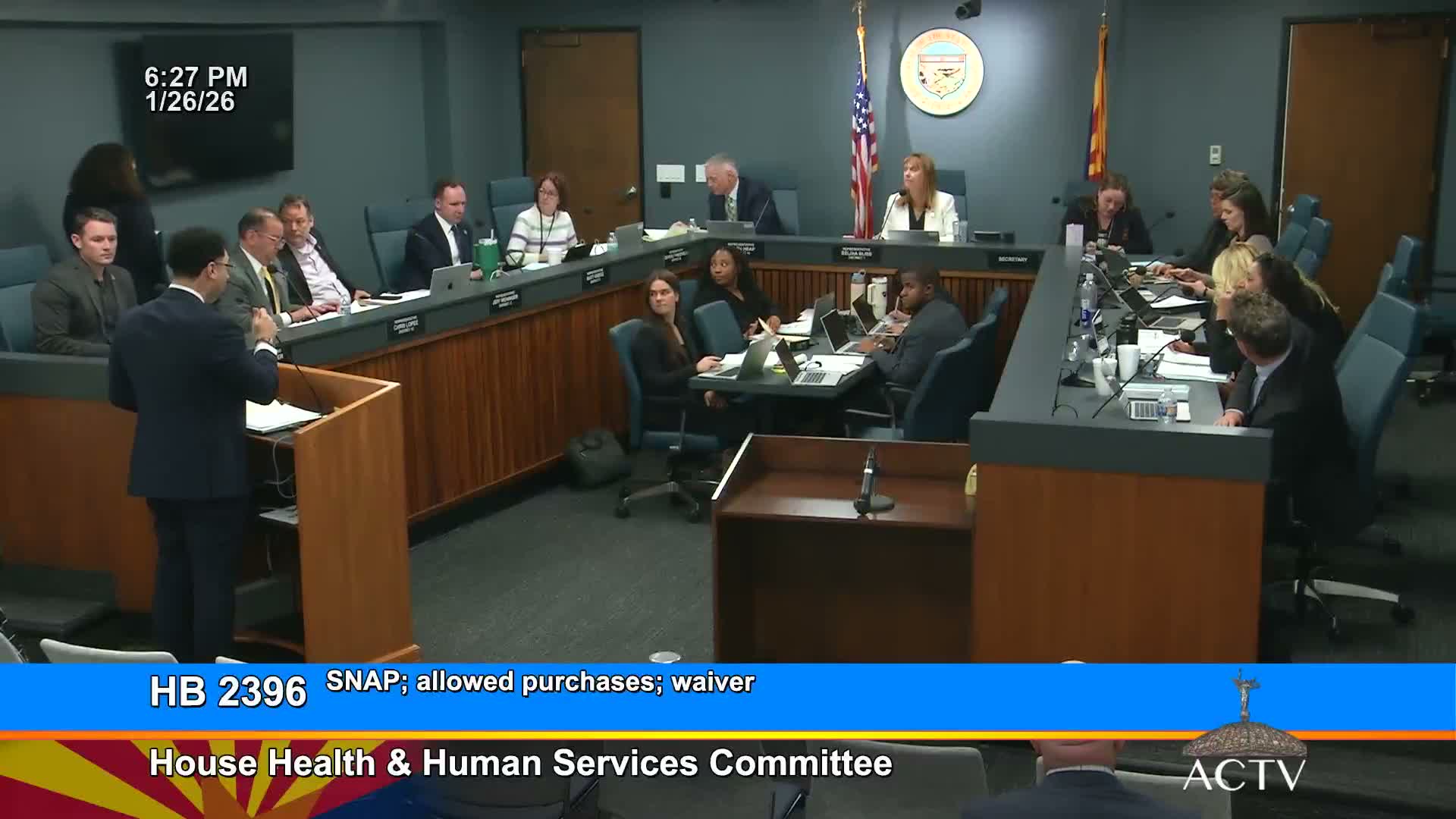
Representative Viasucci sponsored an amendment to HB23‑96 directing the Department of Economic Security (DES) to request a USDA waiver and, if necessary, pursue demonstration authority to limit the use of SNAP benefits to a state‑specified list (modeled on or aligned with WIC‑type items). The sponsor framed the change as a nutrition policy aimed at reducing sugar‑sweetened beverage purchases and improving long‑term health outcomes.
Testimony divided sharply. The William E. Morris Institute for Justice and other anti‑hunger advocates opposed restrictions, saying SNAP serves people with disabilities, seniors, the unhoused and rural residents who may lack refrigeration or access to full grocery stores; they warned about administrative burdens and unintended harm to vulnerable people. Access (the state Medicaid/benefits agency) testified neutral, noting many required data matches already exist but estimating IT costs to set up secure connections with the Department of Revenue at $50,000–$80,000 GF and pointing to other operational costs.
Policy witnesses and some members, citing CDC and related analyses about higher rates of obesity and diet‑related disease among low‑income populations, argued pilot limits or a targeted waiver could incentivize healthier purchases without reducing overall benefit levels.
Outcome: Committee adopted the Bliss amendment (01/22/2026, 08:43AM) authorizing DES to seek a USDA waiver for purchase restrictions and returned HB23‑96 as amended with a due‑pass recommendation by roll call (7 Ayes, 5 Nays). The amendment explicitly preserved benefit amounts and participation and required DES to provide guidance and a reasonable implementation period.
Testimony divided sharply. The William E. Morris Institute for Justice and other anti‑hunger advocates opposed restrictions, saying SNAP serves people with disabilities, seniors, the unhoused and rural residents who may lack refrigeration or access to full grocery stores; they warned about administrative burdens and unintended harm to vulnerable people. Access (the state Medicaid/benefits agency) testified neutral, noting many required data matches already exist but estimating IT costs to set up secure connections with the Department of Revenue at $50,000–$80,000 GF and pointing to other operational costs.
Policy witnesses and some members, citing CDC and related analyses about higher rates of obesity and diet‑related disease among low‑income populations, argued pilot limits or a targeted waiver could incentivize healthier purchases without reducing overall benefit levels.
Outcome: Committee adopted the Bliss amendment (01/22/2026, 08:43AM) authorizing DES to seek a USDA waiver for purchase restrictions and returned HB23‑96 as amended with a due‑pass recommendation by roll call (7 Ayes, 5 Nays). The amendment explicitly preserved benefit amounts and participation and required DES to provide guidance and a reasonable implementation period.
View the Full Meeting & All Its Details
This article offers just a summary. Unlock complete video, transcripts, and insights as a Founder Member.
✓
Watch full, unedited meeting videos
✓
Search every word spoken in unlimited transcripts
✓
AI summaries & real-time alerts (all government levels)
✓
Permanent access to expanding government content
30-day money-back guarantee
