Utah technical colleges report sharp enrollment and completion gains, warn of capacity crunch
February 03, 2026 | 2026 Utah Legislature, Utah Legislature, Utah Legislative Branch, Utah
This article was created by AI summarizing key points discussed. AI makes mistakes, so for full details and context, please refer to the video of the full meeting. Please report any errors so we can fix them. Report an error »
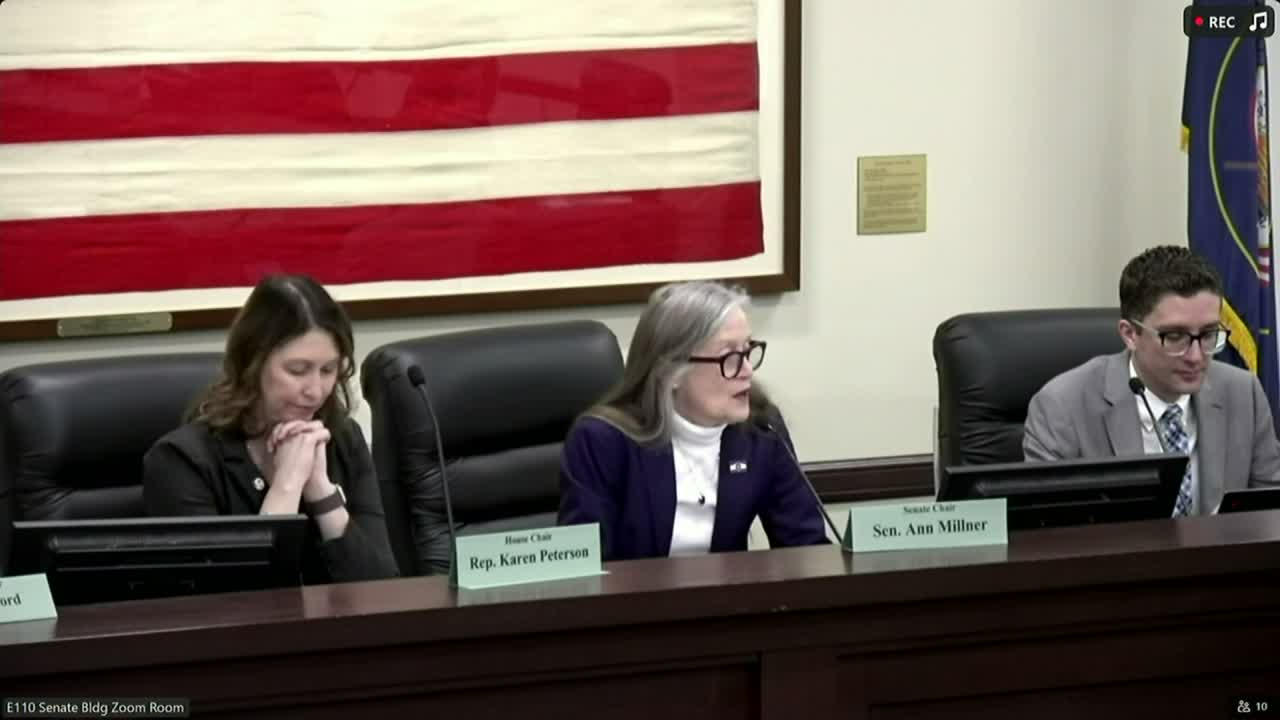
Bridgerland, Ogden Weber and Mountainland Technical Colleges told the Higher Education Appropriations Subcommittee that rapid enrollment and completion gains have stretched campus capacity and left thousands waiting for programs. College leaders asked the committee to sustain and expand system funding to hire instructors, expand instructional hours and build new facilities.
The message was consistent across three northern Utah institutions: targeted student supports and competency-based instruction have driven growth, but capacity now limits how many students the colleges can serve. "Our new enrollments grew 35% and the college served 7,558 students," Ogden Weber presenter Jim Taggart told the committee. He said certificate completions grew by 35% and that 98% of graduates found related employment, producing about $172,000,000 in first-year graduate wages.
At Bridgerland Technical College, executive vice president Lisa Moon credited an institution-wide student-success initiative and targeted scholarships for a multi-year rise in completions. Moon reported the college met its 2025 performance metrics and cited a 72.3% increase in graduates over six years. Bridgerland also highlighted efforts to expand concurrent enrollment and first-credential attainment.
Mountainland President Clay Christiansen emphasized the scale of unmet demand. He told legislators that waiting lists have grown from roughly 500 last year to more than 1,500 names this year and that those lists represent verifiable contacts of people ready to enter programs when capacity opens. "It breaks our heart to turn any of the students away," Christiansen said, and urged appropriations to reduce wait lists by funding additional instructional capacity.
Colleges outlined specific capacity needs. Ogden Weber said a new Wasatch Peaks Pathway Building will consolidate student services, house cybersecurity and digital design programs, and expand apprenticeship space to serve an additional 2,000 students per year; Taggart said the project is under budget and slated to break ground in spring. Mountainland described facility expansions including a new Payson campus and a soon-to-open Heber Valley site funded in part by land donations.
Legislators pressed on policy mechanics. Chair Milner and senators asked whether the system should shift from enrollment-based funding to capacity funding. College leaders supported capacity investments for high-demand programs but emphasized accountability: appropriations should be tied to verifiable wait lists, market demand and performance measures for completion and placement.
No formal votes on budget requests occurred in the hearing. Presenters said they support the Board of Higher Education's consensus budget and asked the subcommittee to preserve proportional technical college shares in the systemwide allocation for FY 26-27.
What happens next: colleges will receive follow-up requests as part of the consensus budget process and the subcommittee will consider appropriations and oversight measures during ongoing budget deliberations.
The message was consistent across three northern Utah institutions: targeted student supports and competency-based instruction have driven growth, but capacity now limits how many students the colleges can serve. "Our new enrollments grew 35% and the college served 7,558 students," Ogden Weber presenter Jim Taggart told the committee. He said certificate completions grew by 35% and that 98% of graduates found related employment, producing about $172,000,000 in first-year graduate wages.
At Bridgerland Technical College, executive vice president Lisa Moon credited an institution-wide student-success initiative and targeted scholarships for a multi-year rise in completions. Moon reported the college met its 2025 performance metrics and cited a 72.3% increase in graduates over six years. Bridgerland also highlighted efforts to expand concurrent enrollment and first-credential attainment.
Mountainland President Clay Christiansen emphasized the scale of unmet demand. He told legislators that waiting lists have grown from roughly 500 last year to more than 1,500 names this year and that those lists represent verifiable contacts of people ready to enter programs when capacity opens. "It breaks our heart to turn any of the students away," Christiansen said, and urged appropriations to reduce wait lists by funding additional instructional capacity.
Colleges outlined specific capacity needs. Ogden Weber said a new Wasatch Peaks Pathway Building will consolidate student services, house cybersecurity and digital design programs, and expand apprenticeship space to serve an additional 2,000 students per year; Taggart said the project is under budget and slated to break ground in spring. Mountainland described facility expansions including a new Payson campus and a soon-to-open Heber Valley site funded in part by land donations.
Legislators pressed on policy mechanics. Chair Milner and senators asked whether the system should shift from enrollment-based funding to capacity funding. College leaders supported capacity investments for high-demand programs but emphasized accountability: appropriations should be tied to verifiable wait lists, market demand and performance measures for completion and placement.
No formal votes on budget requests occurred in the hearing. Presenters said they support the Board of Higher Education's consensus budget and asked the subcommittee to preserve proportional technical college shares in the systemwide allocation for FY 26-27.
What happens next: colleges will receive follow-up requests as part of the consensus budget process and the subcommittee will consider appropriations and oversight measures during ongoing budget deliberations.
Don't Miss a Word: See the Full Meeting!
Go beyond summaries. Unlock every video, transcript, and key insight with a Founder Membership.
✓
Get instant access to full meeting videos
✓
Search and clip any phrase from complete transcripts
✓
Receive AI-powered summaries & custom alerts
✓
Enjoy lifetime, unrestricted access to government data
30-day money-back guarantee
