Sen. Nobles and unions back two‑hour behavioral‑health training for construction apprentices
February 02, 2026 | Legislative Sessions, Washington
This article was created by AI summarizing key points discussed. AI makes mistakes, so for full details and context, please refer to the video of the full meeting. Please report any errors so we can fix them. Report an error »
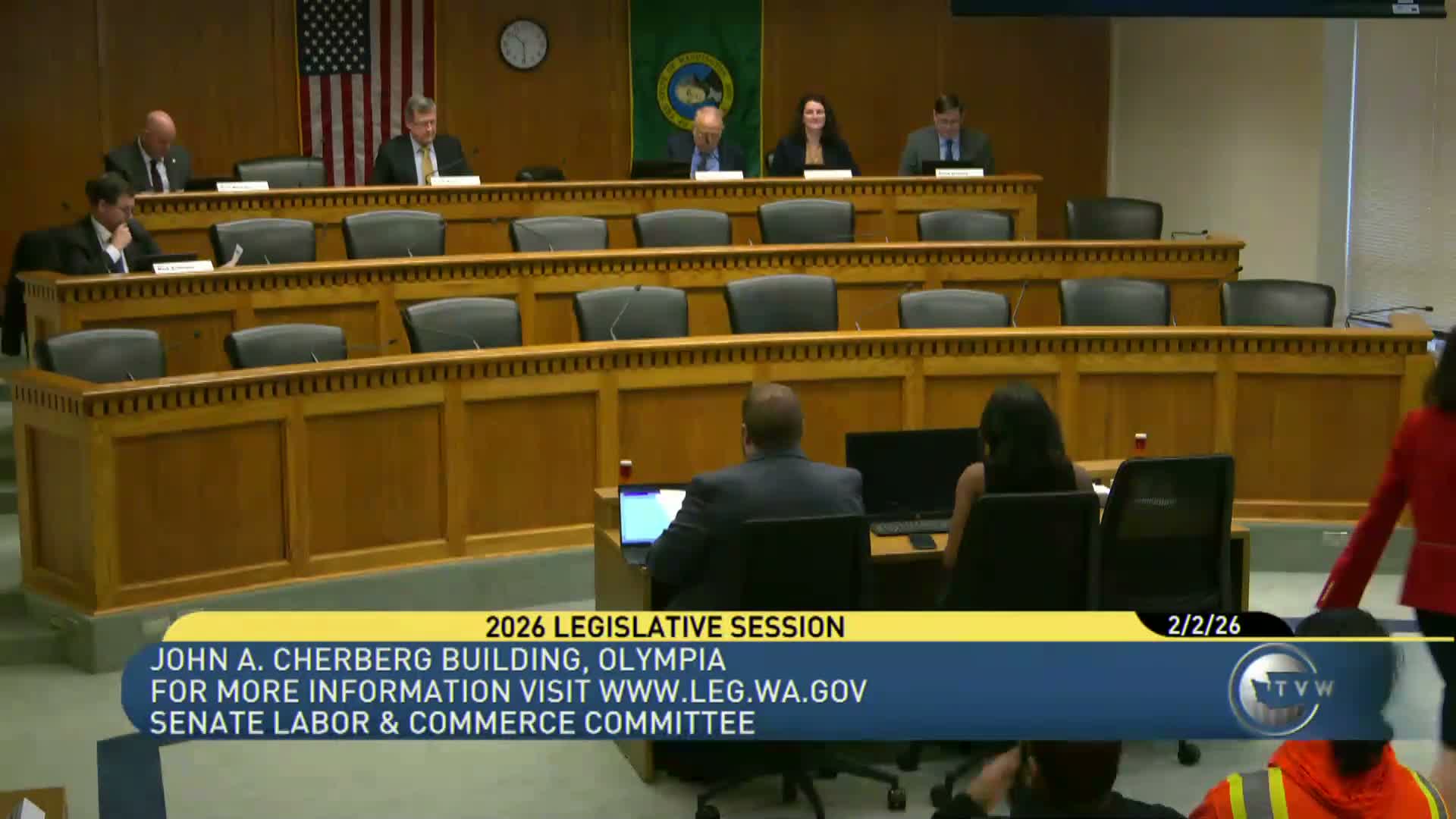
Senator Tijuana Nobles, sponsor of Senate Bill 62‑82, told the Labor and Commerce Committee on Feb. 2 that the bill requires registered construction apprenticeship programs to provide two hours of behavioral‑health and wellness training beginning July 1, 2027. Jared Sachs, committee staff, said the training would cover stigma reduction, recognizing signs of distress, suicide prevention, substance‑use disorder awareness and prevention, peer support and connecting workers to resources.
"This bill is about prevention. It's about dignity, and it's about culture change," Senator Nobles said, arguing construction workers face disproportionate suicide and substance‑use risk. Committee staff noted a fiscal note showing no fiscal impact.
Union and industry witnesses testified in support. Matthew Hefner, executive director of the Certified Electrical Workers of Washington, said the construction culture has masked mental‑health problems and endorsed adding training and a CEU amendment for journey‑level workers. "The suicide rates in the construction industry are four times higher than the national average," Hefner said, urging the committee to back cultural change and additional access to resources.
Chris Ellis, a representative with Bricklayers and Allied Craft Workers, shared a personal history of a suicide attempt and said short, early training could give new apprentices tools to identify warning signs among coworkers. "Two hours in apprenticeship trying to get to them at the beginning ... is a good first step," Ellis said.
Carolyn Logue of the Associated Builders and Contractors and Heather Kurtenbach of the Washington State Building and Construction Trades Council also supported the measure, citing employer and public‑safety benefits and the value of CEUs to reach journey‑level workers.
Committee members asked whether amendments are pending; staff and witnesses said amendments (including a continuing‑education‑unit change) have been submitted and that the bill must be passed out of committee by the following day. No final committee vote was recorded in the transcript.
The bill will next advance if the committee adopts scheduled amendments and votes to move it out of committee.
"This bill is about prevention. It's about dignity, and it's about culture change," Senator Nobles said, arguing construction workers face disproportionate suicide and substance‑use risk. Committee staff noted a fiscal note showing no fiscal impact.
Union and industry witnesses testified in support. Matthew Hefner, executive director of the Certified Electrical Workers of Washington, said the construction culture has masked mental‑health problems and endorsed adding training and a CEU amendment for journey‑level workers. "The suicide rates in the construction industry are four times higher than the national average," Hefner said, urging the committee to back cultural change and additional access to resources.
Chris Ellis, a representative with Bricklayers and Allied Craft Workers, shared a personal history of a suicide attempt and said short, early training could give new apprentices tools to identify warning signs among coworkers. "Two hours in apprenticeship trying to get to them at the beginning ... is a good first step," Ellis said.
Carolyn Logue of the Associated Builders and Contractors and Heather Kurtenbach of the Washington State Building and Construction Trades Council also supported the measure, citing employer and public‑safety benefits and the value of CEUs to reach journey‑level workers.
Committee members asked whether amendments are pending; staff and witnesses said amendments (including a continuing‑education‑unit change) have been submitted and that the bill must be passed out of committee by the following day. No final committee vote was recorded in the transcript.
The bill will next advance if the committee adopts scheduled amendments and votes to move it out of committee.
View the Full Meeting & All Its Details
This article offers just a summary. Unlock complete video, transcripts, and insights as a Founder Member.
✓
Watch full, unedited meeting videos
✓
Search every word spoken in unlimited transcripts
✓
AI summaries & real-time alerts (all government levels)
✓
Permanent access to expanding government content
30-day money-back guarantee
