Bill would hold owners and direct contractors liable for subcontractors' unpaid wages; workers tell personal stories
February 02, 2026 | Legislative Sessions, Washington
This article was created by AI summarizing key points discussed. AI makes mistakes, so for full details and context, please refer to the video of the full meeting. Please report any errors so we can fix them. Report an error »
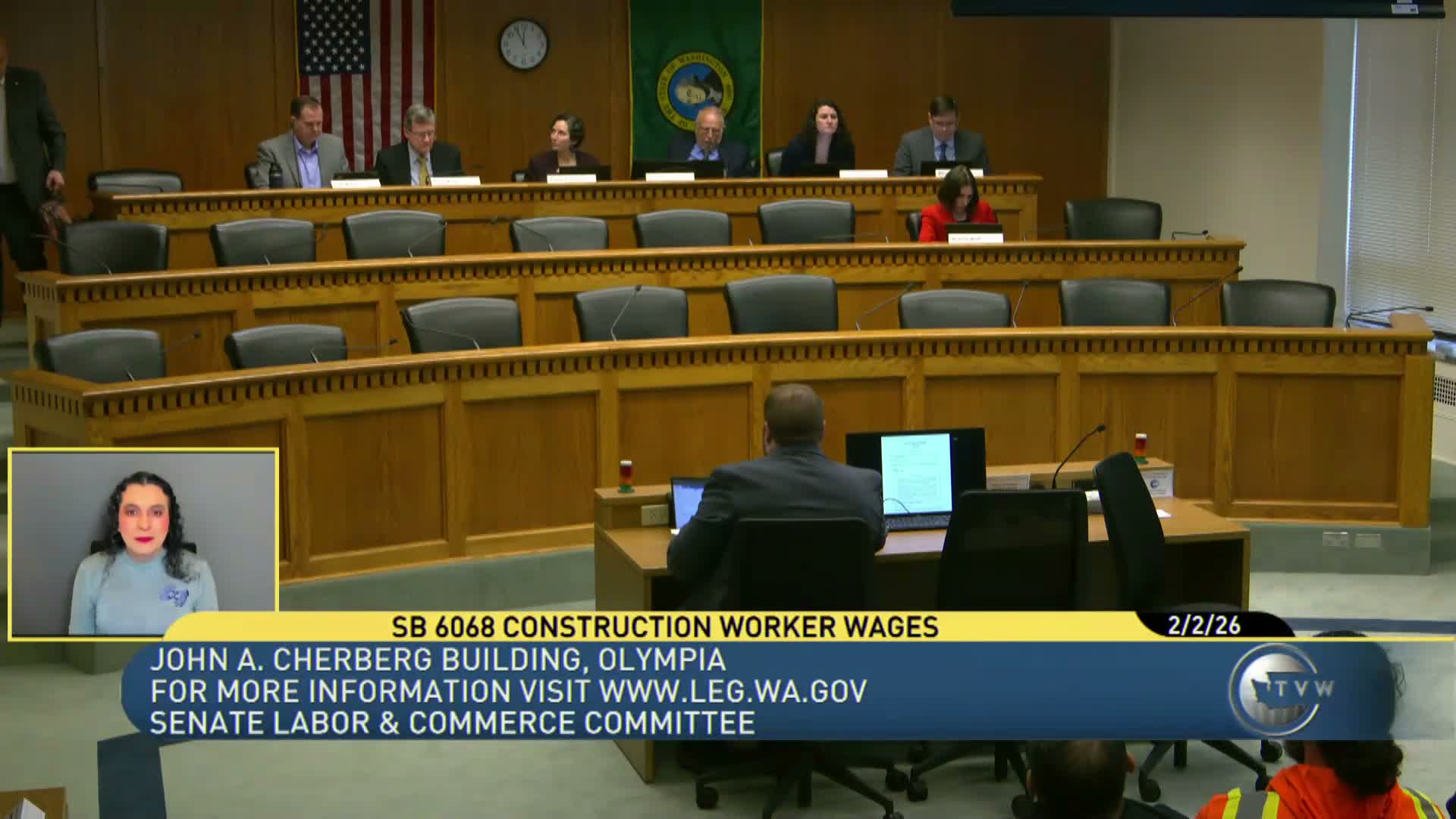
Committee staff presented the proposed substitute for Senate Bill 60‑68, which would make owners and direct contractors jointly and severally liable for unpaid wages, benefit contributions, missed meal and rest compensation and related damages owed to unrepresented employees of direct contractors or subcontractors at any tier. The bill includes a notice‑and‑cure period (21 calendar days) and mandatory penalties and double damages in civil actions.
Multiple workers testified with first‑hand accounts of unpaid wages, shorted checks and termination after raising pay issues. Cesar Escatel described being fired after seeking unpaid wages and receiving a partial personal check; another speaker said he was still owed more than $15,000 and that companies can evade liability by reorganizing under a new name.
Proponents including the Western Washington Regional Council of Carpenters argued that similar laws in other states have sped payments, improved compliance and created level competitive conditions for contractors. Boris Gresley testified that 11 states have enacted comparable measures and reported positive outcomes such as faster payment and increased worker protection.
Industry groups including AGC, Associated Builders and Contractors and the Building Industry Association expressed opposition or concern, saying the measure imposes sweeping liability on contractors who did not commit wage theft, could increase project costs, and may disadvantage smaller nonunion firms. AGC suggested targeted alternatives and noted the underground‑economy task force recommended other measures with broader consensus.
The committee concluded public testimony on SB 60‑68 in the hearing record; no final vote on the bill’s text appears in the provided transcript.
Multiple workers testified with first‑hand accounts of unpaid wages, shorted checks and termination after raising pay issues. Cesar Escatel described being fired after seeking unpaid wages and receiving a partial personal check; another speaker said he was still owed more than $15,000 and that companies can evade liability by reorganizing under a new name.
Proponents including the Western Washington Regional Council of Carpenters argued that similar laws in other states have sped payments, improved compliance and created level competitive conditions for contractors. Boris Gresley testified that 11 states have enacted comparable measures and reported positive outcomes such as faster payment and increased worker protection.
Industry groups including AGC, Associated Builders and Contractors and the Building Industry Association expressed opposition or concern, saying the measure imposes sweeping liability on contractors who did not commit wage theft, could increase project costs, and may disadvantage smaller nonunion firms. AGC suggested targeted alternatives and noted the underground‑economy task force recommended other measures with broader consensus.
The committee concluded public testimony on SB 60‑68 in the hearing record; no final vote on the bill’s text appears in the provided transcript.
View the Full Meeting & All Its Details
This article offers just a summary. Unlock complete video, transcripts, and insights as a Founder Member.
✓
Watch full, unedited meeting videos
✓
Search every word spoken in unlimited transcripts
✓
AI summaries & real-time alerts (all government levels)
✓
Permanent access to expanding government content
30-day money-back guarantee
