Committee reports out six public-safety bills — OII reporting changes, stalking supervision, nitrous-oxide restriction and inmate indigency cap among actions
February 02, 2026 | Legislative Sessions, Washington
This article was created by AI summarizing key points discussed. AI makes mistakes, so for full details and context, please refer to the video of the full meeting. Please report any errors so we can fix them. Report an error »
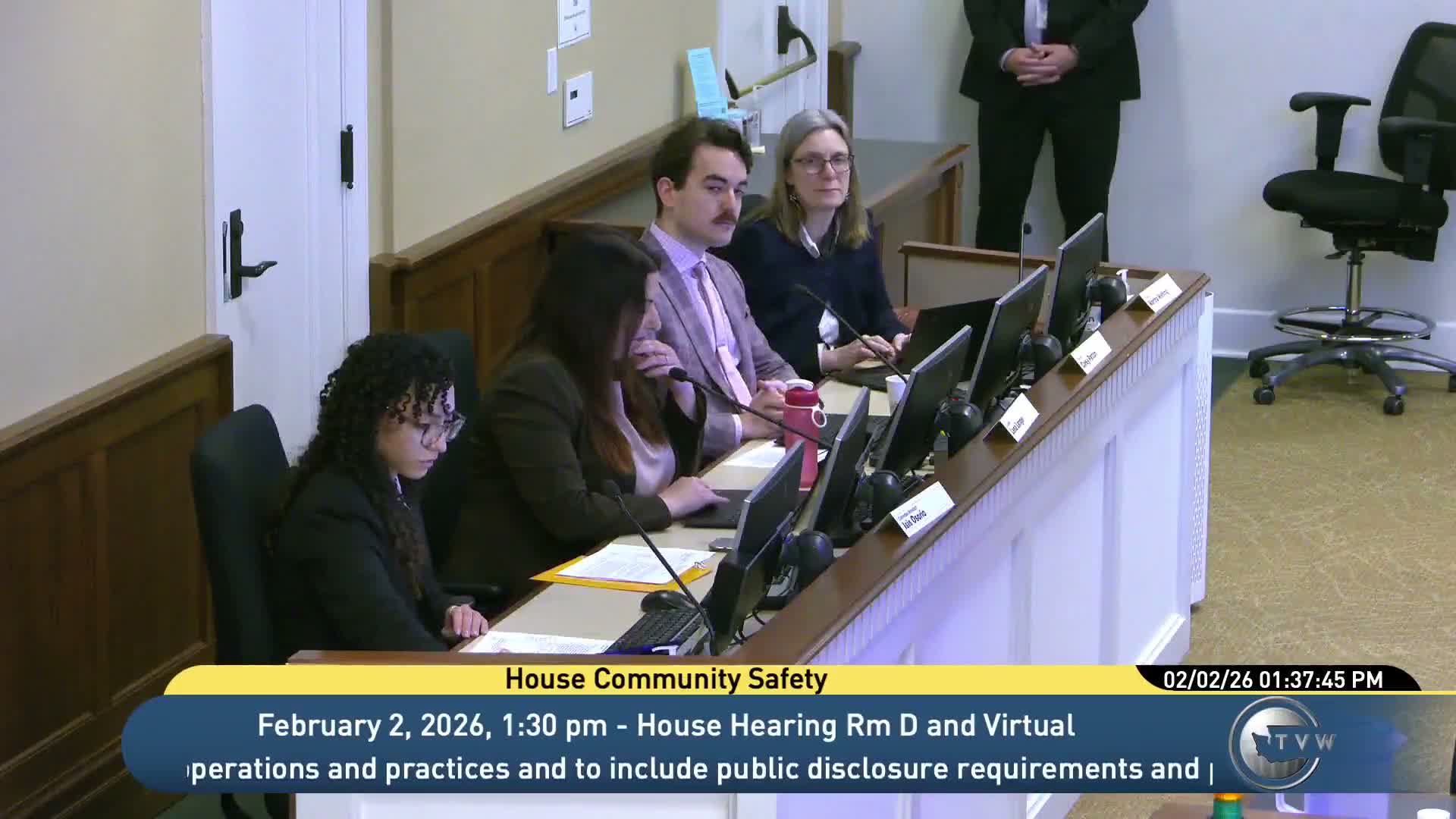
The House Community Safety Committee on Feb. 2 advanced a cluster of public-safety bills and recorded outcomes on most agenda items, deferring one for further consideration.
House Bill 23-10, which would elevate fourth-degree assault with a specified motivation to a class C felony when the perpetrator has a specified criminal history, was reported out by voice vote with all members present and voting in the affirmative. Members said the bill aligns escalation of sanctions with other repeat-offense statutes.
Substitute House Bill 25-08, which expands the Office of Independent Investigations' investigatory jurisdiction and adjusts reporting requirements for uses of force, moved out after adoption of Amendment PAT 346, a negotiated change with sheriffs’ and police chiefs that narrows immediate reporting requirements for non-deadly force and clarifies in‑custody death reporting procedures. Committee members described the amendment as a technical fix that streamlines OII operations.
House Bill 25-10, requiring DOC supervision for people convicted of stalking who are sentenced to community custody, was reported out unanimously. Supporters framed the bill as a prevention and victim-safety measure.
House Bill 25-32, restricting sale and distribution of nitrous oxide and carving out professional exceptions, was amended to add a veterinary exception (LANG 174) and reported out. Sponsors cited tragic testimony about abuse and urged limiting over-the-counter access while preserving professional and medical uses.
Substitute House Bill 25-39 (H3055.1) was reported out by roll call with a 6-3 tally. The substitute removes a proposed telephone-fund exemption and retains only an increase of the commissary indigency threshold from $25 to $100; proponents said inflation makes the change necessary while opponents called the increase large.
House Bill 24-90 (extraordinary medical placement) was presented and debated in staff briefing but the committee deferred action on that item to a later executive session.
Next steps: Most of the reported bills will move to the House floor; HB 24-90 will be taken up at the committee’s next executive session.
House Bill 23-10, which would elevate fourth-degree assault with a specified motivation to a class C felony when the perpetrator has a specified criminal history, was reported out by voice vote with all members present and voting in the affirmative. Members said the bill aligns escalation of sanctions with other repeat-offense statutes.
Substitute House Bill 25-08, which expands the Office of Independent Investigations' investigatory jurisdiction and adjusts reporting requirements for uses of force, moved out after adoption of Amendment PAT 346, a negotiated change with sheriffs’ and police chiefs that narrows immediate reporting requirements for non-deadly force and clarifies in‑custody death reporting procedures. Committee members described the amendment as a technical fix that streamlines OII operations.
House Bill 25-10, requiring DOC supervision for people convicted of stalking who are sentenced to community custody, was reported out unanimously. Supporters framed the bill as a prevention and victim-safety measure.
House Bill 25-32, restricting sale and distribution of nitrous oxide and carving out professional exceptions, was amended to add a veterinary exception (LANG 174) and reported out. Sponsors cited tragic testimony about abuse and urged limiting over-the-counter access while preserving professional and medical uses.
Substitute House Bill 25-39 (H3055.1) was reported out by roll call with a 6-3 tally. The substitute removes a proposed telephone-fund exemption and retains only an increase of the commissary indigency threshold from $25 to $100; proponents said inflation makes the change necessary while opponents called the increase large.
House Bill 24-90 (extraordinary medical placement) was presented and debated in staff briefing but the committee deferred action on that item to a later executive session.
Next steps: Most of the reported bills will move to the House floor; HB 24-90 will be taken up at the committee’s next executive session.
View the Full Meeting & All Its Details
This article offers just a summary. Unlock complete video, transcripts, and insights as a Founder Member.
✓
Watch full, unedited meeting videos
✓
Search every word spoken in unlimited transcripts
✓
AI summaries & real-time alerts (all government levels)
✓
Permanent access to expanding government content
30-day money-back guarantee
