Committee advances bill targeting data centers and other large energy users amid water and fee concerns
February 02, 2026 | Legislative Sessions, Washington
This article was created by AI summarizing key points discussed. AI makes mistakes, so for full details and context, please refer to the video of the full meeting. Please report any errors so we can fix them. Report an error »
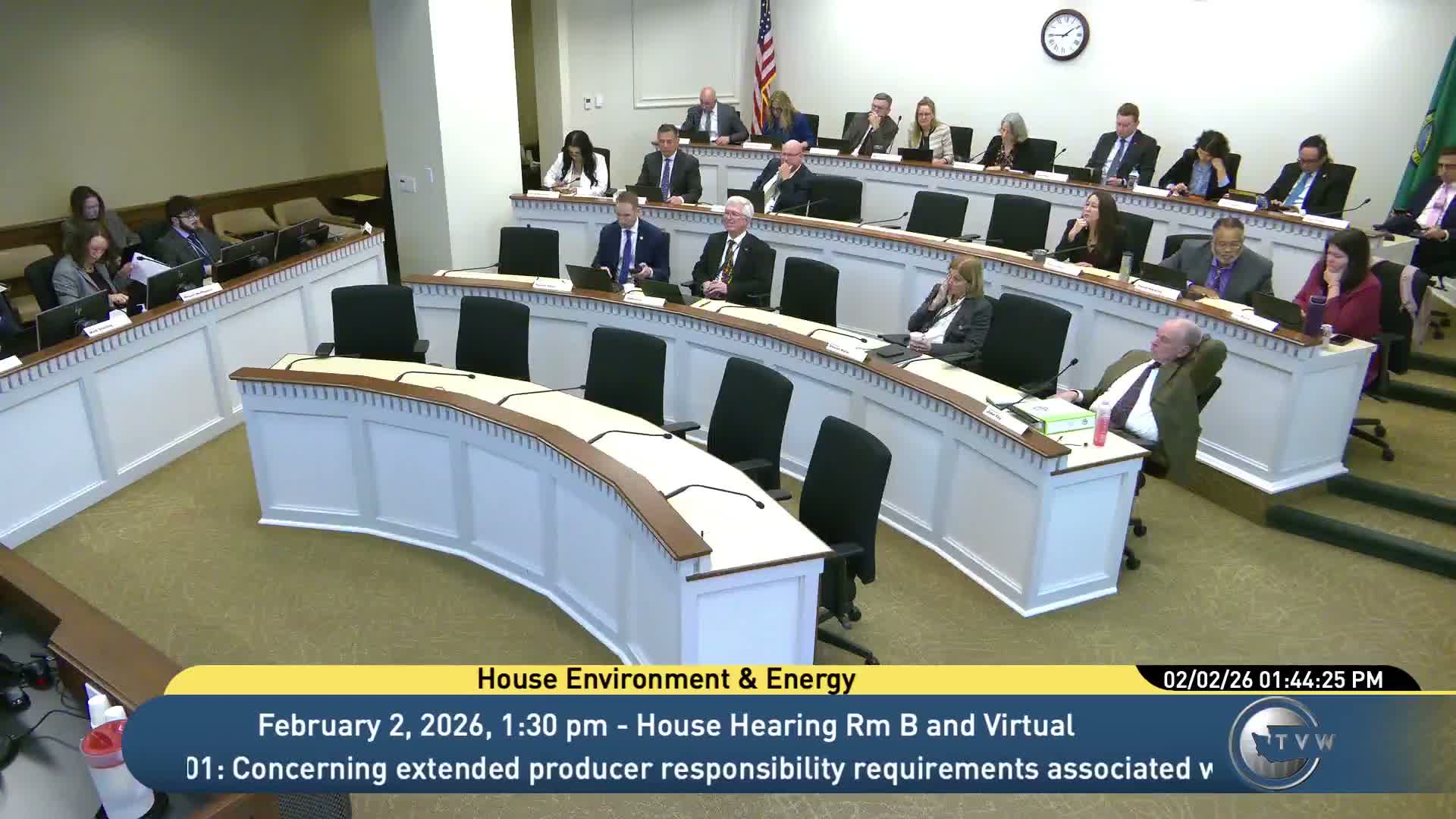
The committee voted to report substitute House Bill 25 15 out of committee with a due‑pass recommendation following extended debate over fees, water use, reporting requirements and protections for tribes and workers.
Megan McFadden, committee staff, summarized the substitute (H‑3354.1): it establishes reporting and permitting disclosures for emerging large energy‑use facilities (defined in the substitute as facilities with an aggregate maximum contract demand of 20 megawatts or more and NAICS codes that reference data centers and similar industries), prohibits Ecology from distributing no‑cost allowances under the cap‑and‑invest program for such facilities, creates an annual fee (with an appropriated account), revises exit‑fee calculations to cover stranded utility costs, requires demand‑response provisions that do not increase diesel generator use, and adds water‑quality and air permit information to reporting requirements.
Chair D'Oleo framed the bill around concerns about growing energy and water demands tied to AI and cloud technologies and referenced tribal treaty obligations: the bill aims to provide transparency about water use and effluent and to protect rivers and fish populations. “This bill provides some safeguards in terms of some transparency around what water use is and the effluence,” Chair D'Oleo said.
Representative Ybarra described positive local impacts from data centers in his district, noting new community facilities supported by local data‑center development and arguing that data centers have helped his towns economically. “If you get them in your town, they won't be taking the water ... we're using hydro, plentiful hydro energy in the areas I live in,” Ybarra said.
Several members including Representative Dye and Representative Barnard raised concerns about fees and potential disincentives to locate data centers in the state; Barnard urged clarity on whether the definition is limited to data centers or could apply to other large facilities. Representative Barrow characterized the bill as imposing a heavy fiscal burden on industry and said he would vote no.
The committee recorded a close roll call, 11 ayes and 10 nays, and reported substitute House Bill 25 15 out of committee with a due‑pass recommendation.
What happens next: the substitute advances for further consideration where the fee structure, reporting scope and interactions with existing cap‑and‑invest allowances may be further debated.
Megan McFadden, committee staff, summarized the substitute (H‑3354.1): it establishes reporting and permitting disclosures for emerging large energy‑use facilities (defined in the substitute as facilities with an aggregate maximum contract demand of 20 megawatts or more and NAICS codes that reference data centers and similar industries), prohibits Ecology from distributing no‑cost allowances under the cap‑and‑invest program for such facilities, creates an annual fee (with an appropriated account), revises exit‑fee calculations to cover stranded utility costs, requires demand‑response provisions that do not increase diesel generator use, and adds water‑quality and air permit information to reporting requirements.
Chair D'Oleo framed the bill around concerns about growing energy and water demands tied to AI and cloud technologies and referenced tribal treaty obligations: the bill aims to provide transparency about water use and effluent and to protect rivers and fish populations. “This bill provides some safeguards in terms of some transparency around what water use is and the effluence,” Chair D'Oleo said.
Representative Ybarra described positive local impacts from data centers in his district, noting new community facilities supported by local data‑center development and arguing that data centers have helped his towns economically. “If you get them in your town, they won't be taking the water ... we're using hydro, plentiful hydro energy in the areas I live in,” Ybarra said.
Several members including Representative Dye and Representative Barnard raised concerns about fees and potential disincentives to locate data centers in the state; Barnard urged clarity on whether the definition is limited to data centers or could apply to other large facilities. Representative Barrow characterized the bill as imposing a heavy fiscal burden on industry and said he would vote no.
The committee recorded a close roll call, 11 ayes and 10 nays, and reported substitute House Bill 25 15 out of committee with a due‑pass recommendation.
What happens next: the substitute advances for further consideration where the fee structure, reporting scope and interactions with existing cap‑and‑invest allowances may be further debated.
View the Full Meeting & All Its Details
This article offers just a summary. Unlock complete video, transcripts, and insights as a Founder Member.
✓
Watch full, unedited meeting videos
✓
Search every word spoken in unlimited transcripts
✓
AI summaries & real-time alerts (all government levels)
✓
Permanent access to expanding government content
30-day money-back guarantee
