Bill to convert PTBA labor representative to voting seat draws sharp debate over accountability and conflicts
February 02, 2026 | Legislative Sessions, Washington
This article was created by AI summarizing key points discussed. AI makes mistakes, so for full details and context, please refer to the video of the full meeting. Please report any errors so we can fix them. Report an error »
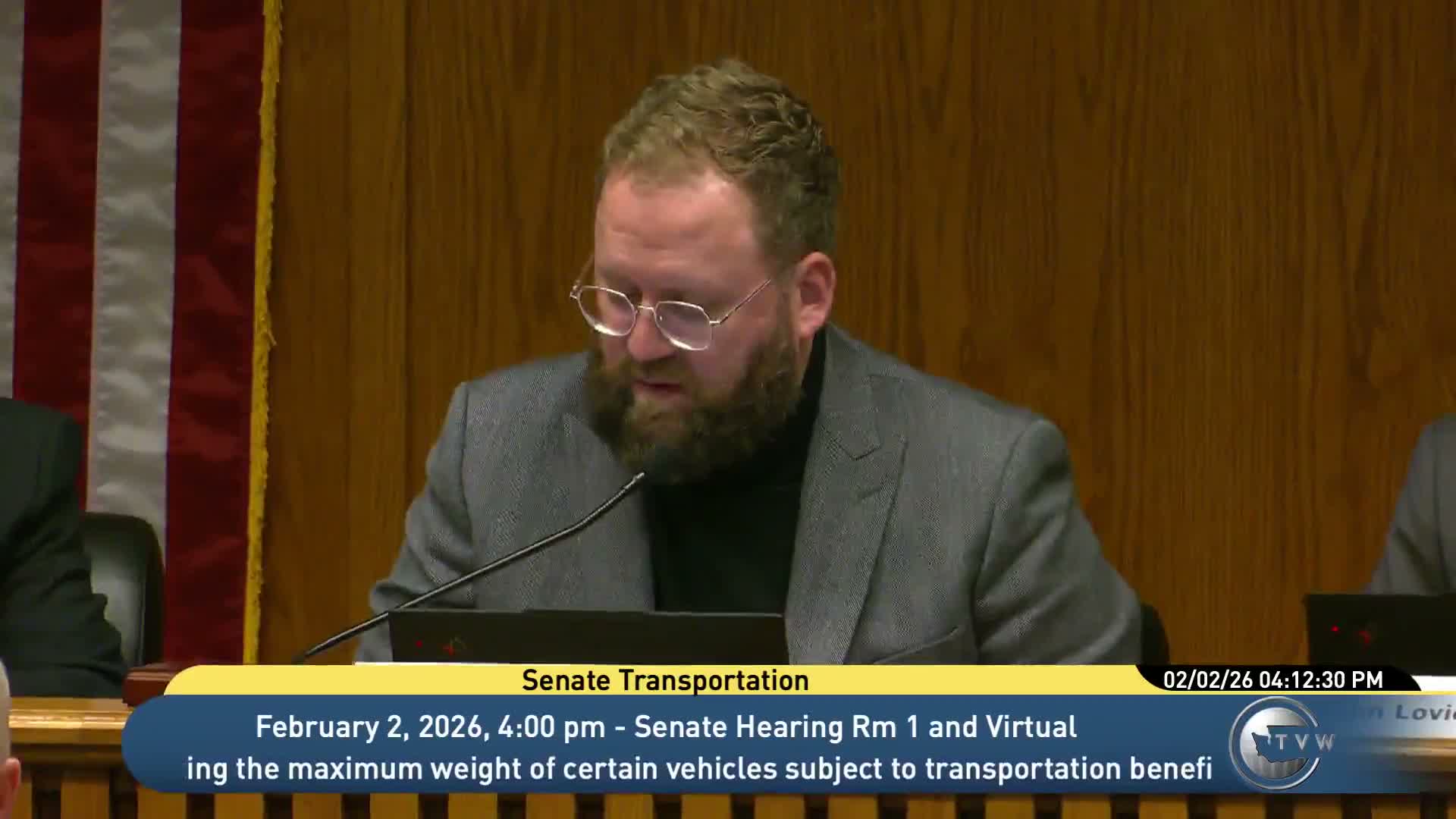
The Senate Transportation Committee heard testimony on Senate Bill 6,253, a proposal to turn the current nonvoting labor‑recommended seat on public transportation benefit area (PTBA) governing boards into a voting position subject to specified exclusions.
Clint McCarthy, staff to the committee, explained PTBAs are municipal corporations that operate transit in specified jurisdictions and that boards currently include a nonvoting labor representative if the PTBA has unionized employees. The proposed bill would make the labor‑recommended seat voting, while prohibiting that member from attending executive sessions and from voting on issues involving labor negotiations, employer‑employee disputes and chief executive officer performance.
Vice Chair Krishnadassan, the bill's sponsor, said the goal is to ensure frontline transit workers have a meaningful, on‑the‑record voice in funding, planning and operations. "This experience can offer valuable insight into funding, planning, and operational needs of our transit system," the sponsor said, and emphasized carve‑outs that would exclude labor representatives from executive sessions on matters that affect their employment.
Union leaders including Kirsten Price (ATU Local 1765 financial secretary), Mark Neville (ATU Local 1765 president) and Greg Woodfield (ATU Local 587) testified in support, arguing that frontline experience improves board decision‑making and that codified carve‑outs would produce consistent input across PTBAs. Leila Perkins described safety and mental‑health concerns among drivers and urged the committee to give workers a voice.
Michael Shaw of the Washington State Transit Association testified in opposition, warning the bill does not add sufficient limits on what the labor representative can vote upon and expressing concern about conflicts of interest and the possibility that votes affecting a labor representative's compensation or contract could be challenged under the state municipal ethics code.
Charles Prestrud of the Washington Policy Center also opposed the bill on accountability grounds, saying union appointees would not be elected by or necessarily resident in the taxing district and could reduce public accountability.
The committee heard both procedural/technical questions (how many PTBAs exist and current board compositions) and policy arguments about governance, worker input and accountability. The staff reported no fiscal impact on the bill. The hearing closed with no committee action taken.
Clint McCarthy, staff to the committee, explained PTBAs are municipal corporations that operate transit in specified jurisdictions and that boards currently include a nonvoting labor representative if the PTBA has unionized employees. The proposed bill would make the labor‑recommended seat voting, while prohibiting that member from attending executive sessions and from voting on issues involving labor negotiations, employer‑employee disputes and chief executive officer performance.
Vice Chair Krishnadassan, the bill's sponsor, said the goal is to ensure frontline transit workers have a meaningful, on‑the‑record voice in funding, planning and operations. "This experience can offer valuable insight into funding, planning, and operational needs of our transit system," the sponsor said, and emphasized carve‑outs that would exclude labor representatives from executive sessions on matters that affect their employment.
Union leaders including Kirsten Price (ATU Local 1765 financial secretary), Mark Neville (ATU Local 1765 president) and Greg Woodfield (ATU Local 587) testified in support, arguing that frontline experience improves board decision‑making and that codified carve‑outs would produce consistent input across PTBAs. Leila Perkins described safety and mental‑health concerns among drivers and urged the committee to give workers a voice.
Michael Shaw of the Washington State Transit Association testified in opposition, warning the bill does not add sufficient limits on what the labor representative can vote upon and expressing concern about conflicts of interest and the possibility that votes affecting a labor representative's compensation or contract could be challenged under the state municipal ethics code.
Charles Prestrud of the Washington Policy Center also opposed the bill on accountability grounds, saying union appointees would not be elected by or necessarily resident in the taxing district and could reduce public accountability.
The committee heard both procedural/technical questions (how many PTBAs exist and current board compositions) and policy arguments about governance, worker input and accountability. The staff reported no fiscal impact on the bill. The hearing closed with no committee action taken.
View the Full Meeting & All Its Details
This article offers just a summary. Unlock complete video, transcripts, and insights as a Founder Member.
✓
Watch full, unedited meeting videos
✓
Search every word spoken in unlimited transcripts
✓
AI summaries & real-time alerts (all government levels)
✓
Permanent access to expanding government content
30-day money-back guarantee
