Bill would allow electronic signatures for insurer vehicle title transfers to speed payments
February 02, 2026 | Legislative Sessions, Washington
This article was created by AI summarizing key points discussed. AI makes mistakes, so for full details and context, please refer to the video of the full meeting. Please report any errors so we can fix them. Report an error »
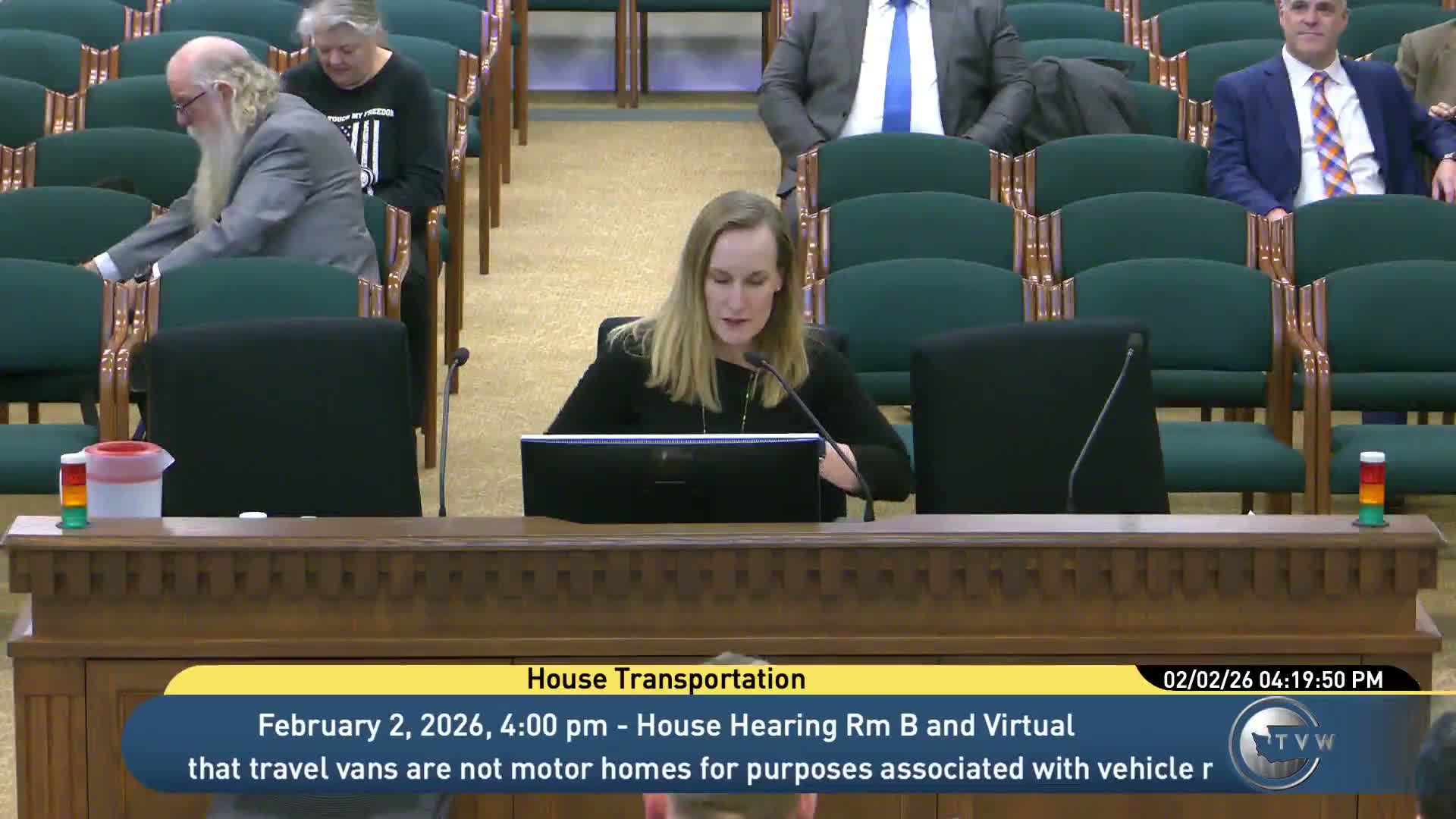
House Bill 2,604 would remove the notarization requirement for documents transferring vehicle ownership to an insurer after a total loss and for a limited power of attorney used solely for that transfer, explicitly allowing electronic signatures and printed documents.
Lily Smith, committee staff, explained the current practice: DOL provides a form that requires notarization, or owners can use a power of attorney that itself requires notarization or particular witnesses. The bill specifies that neither the transfer documents nor a limited power of attorney used for that purpose "need to have notarized signatures" and may use electronic signatures.
Sponsor Representative Addison Richards said the bill is a "good government bill" aimed at easing the burden on people in remote areas who must travel to obtain notarization and title transfers after a total loss. He noted that 44 other states have adopted similar approaches.
Industry witnesses from Copart described examples of hardship and delay when owners must travel or wait for mailed paperwork to sign and notarize documents: Ben Buckholtz said some owners take hour‑long bus rides with children or pay for rides to salvage yards to complete title work, and Mark Binder said eliminating notarization for these low‑risk transfers would speed payments and reduce hardship for single‑vehicle families and elderly owners.
Both the Department of Licensing and the Office of the Insurance Commissioner were described in testimony as neutral on the bill's language. The committee closed the public hearing on HB 2,604 and adjourned without taking vote action in the recorded session.
Lily Smith, committee staff, explained the current practice: DOL provides a form that requires notarization, or owners can use a power of attorney that itself requires notarization or particular witnesses. The bill specifies that neither the transfer documents nor a limited power of attorney used for that purpose "need to have notarized signatures" and may use electronic signatures.
Sponsor Representative Addison Richards said the bill is a "good government bill" aimed at easing the burden on people in remote areas who must travel to obtain notarization and title transfers after a total loss. He noted that 44 other states have adopted similar approaches.
Industry witnesses from Copart described examples of hardship and delay when owners must travel or wait for mailed paperwork to sign and notarize documents: Ben Buckholtz said some owners take hour‑long bus rides with children or pay for rides to salvage yards to complete title work, and Mark Binder said eliminating notarization for these low‑risk transfers would speed payments and reduce hardship for single‑vehicle families and elderly owners.
Both the Department of Licensing and the Office of the Insurance Commissioner were described in testimony as neutral on the bill's language. The committee closed the public hearing on HB 2,604 and adjourned without taking vote action in the recorded session.
View the Full Meeting & All Its Details
This article offers just a summary. Unlock complete video, transcripts, and insights as a Founder Member.
✓
Watch full, unedited meeting videos
✓
Search every word spoken in unlimited transcripts
✓
AI summaries & real-time alerts (all government levels)
✓
Permanent access to expanding government content
30-day money-back guarantee
