House committee hears heated testimony on bill to raise health insurance premium tax
February 03, 2026 | Legislative Sessions, Washington
This article was created by AI summarizing key points discussed. AI makes mistakes, so for full details and context, please refer to the video of the full meeting. Please report any errors so we can fix them. Report an error »
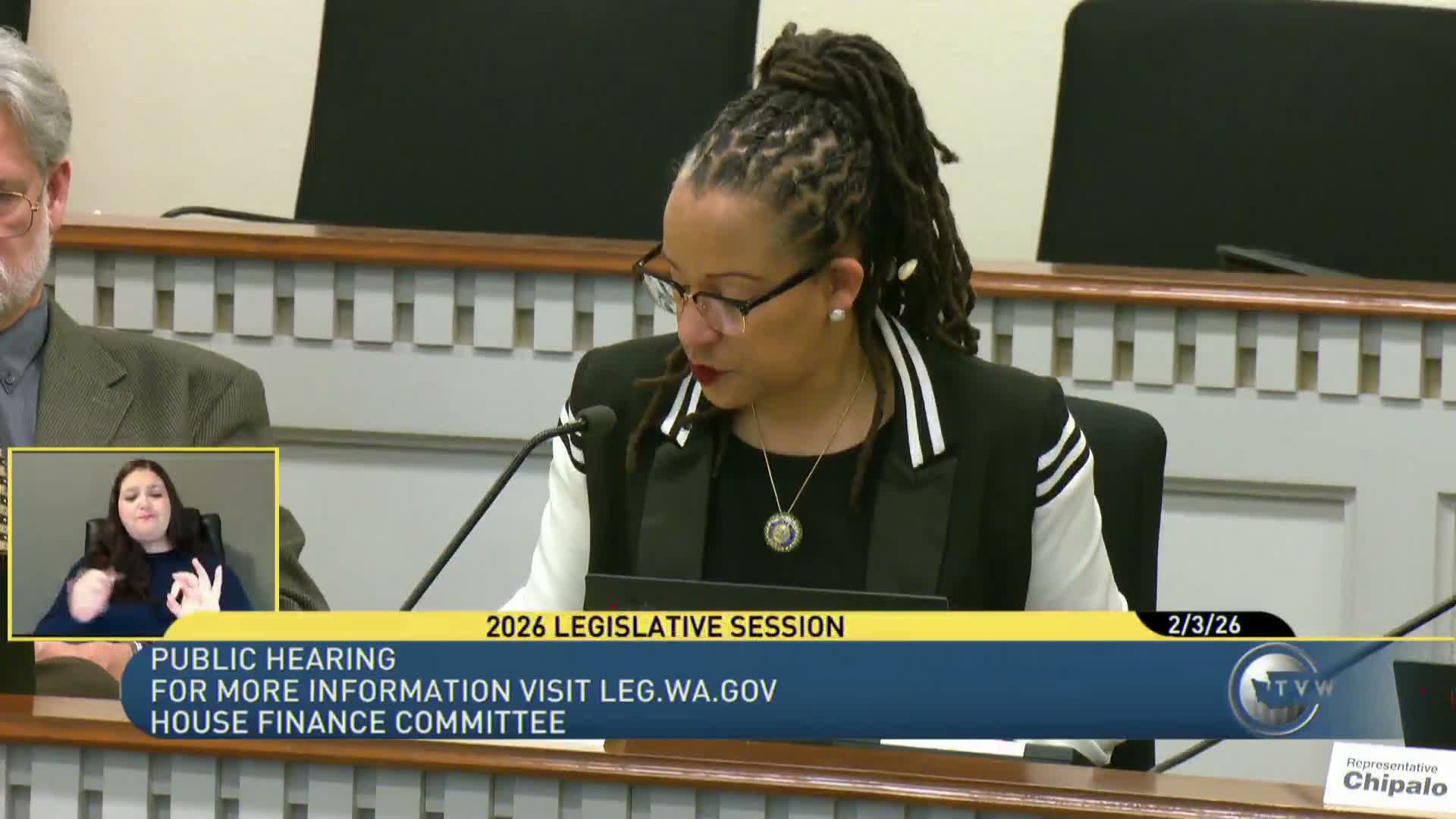
Representative (prime sponsor, name not stated in transcript) presented House Bill 2626 as a targeted revenue measure to bolster state healthcare funding after federal changes that may cost coverage for hundreds of thousands of Washingtonians. The bill would raise the insurance premium tax on health maintenance organizations, health care service contractors and certain arrangements from 2% to 3% beginning March 1, 2027; it would repeal a dentistry-related exemption and impose a new 1% tax on some disability and group stop‑loss insurers beginning March 1, 2028.
The staff briefing by John Bernitzky summarized the bill’s fiscal estimates. The Office of the Insurance Commissioner told the committee the measure could increase state general fund receipts materially, with preliminary estimates cited for biennia, and that administrative changes could be absorbed within current operations.
Opposition testimony came from health plans, dental carriers and business groups, who argued the tax increase would be passed to consumers and employers and worsen affordability. David Foster of the Association of Washington Healthcare Plans said the 1 percentage-point increase would translate to per-member monthly increases—for example, roughly $5.82 per member per month for Medicaid plans and higher for individual markets—and could raise family premiums by hundreds of dollars a year. Emily Whitman of the Association of Washington Business and other trade witnesses warned that small businesses already facing double-digit premium growth would be further squeezed, potentially leading employers to reduce coverage or layoffs.
Industry witnesses also raised distributional concerns: Chris Bandley of the National Association of Insurance and Financial Advisors noted that large self‑funded employers typically are not subject to the premium tax, so the burden would fall on fully insured individuals, families and small employers. Gary Strandigan of Premera Blue Cross described how insurers’ existing tax obligations are already sizable and said the change would increase costs the company would likely pass on to customers.
Supporters and conditional supporters urged the committee to use revenues to blunt coverage losses and prevent pass‑through to consumers. Jim Freeberg of the Patient Coalition said premium taxes historically support industry regulation but that revenues should be directed to premium subsidies for exchange plans or other safety‑net support. Sam Hatzenbuehler of the Economic Opportunity Institute said he was skeptical of premium assessments but acknowledged the state's fiscal need and urged that funds be dedicated to subsidies and that language be added to curb carrier pass‑through.
Committee members asked procedural and substantive questions about pass‑through risk and which entities would be taxed. The sponsor and staff noted an amendment under consideration intended to prohibit pass‑through of the new 1% to consumers; staff said they would follow up with detailed lists of affected insurer types.
No formal action or vote was taken; the committee closed public testimony after panels heard both opposition and support and moved on to other bills. The issue remains pending and may return with amendment language clarifying pass‑through restrictions and specifying use of revenue.
The staff briefing by John Bernitzky summarized the bill’s fiscal estimates. The Office of the Insurance Commissioner told the committee the measure could increase state general fund receipts materially, with preliminary estimates cited for biennia, and that administrative changes could be absorbed within current operations.
Opposition testimony came from health plans, dental carriers and business groups, who argued the tax increase would be passed to consumers and employers and worsen affordability. David Foster of the Association of Washington Healthcare Plans said the 1 percentage-point increase would translate to per-member monthly increases—for example, roughly $5.82 per member per month for Medicaid plans and higher for individual markets—and could raise family premiums by hundreds of dollars a year. Emily Whitman of the Association of Washington Business and other trade witnesses warned that small businesses already facing double-digit premium growth would be further squeezed, potentially leading employers to reduce coverage or layoffs.
Industry witnesses also raised distributional concerns: Chris Bandley of the National Association of Insurance and Financial Advisors noted that large self‑funded employers typically are not subject to the premium tax, so the burden would fall on fully insured individuals, families and small employers. Gary Strandigan of Premera Blue Cross described how insurers’ existing tax obligations are already sizable and said the change would increase costs the company would likely pass on to customers.
Supporters and conditional supporters urged the committee to use revenues to blunt coverage losses and prevent pass‑through to consumers. Jim Freeberg of the Patient Coalition said premium taxes historically support industry regulation but that revenues should be directed to premium subsidies for exchange plans or other safety‑net support. Sam Hatzenbuehler of the Economic Opportunity Institute said he was skeptical of premium assessments but acknowledged the state's fiscal need and urged that funds be dedicated to subsidies and that language be added to curb carrier pass‑through.
Committee members asked procedural and substantive questions about pass‑through risk and which entities would be taxed. The sponsor and staff noted an amendment under consideration intended to prohibit pass‑through of the new 1% to consumers; staff said they would follow up with detailed lists of affected insurer types.
No formal action or vote was taken; the committee closed public testimony after panels heard both opposition and support and moved on to other bills. The issue remains pending and may return with amendment language clarifying pass‑through restrictions and specifying use of revenue.
View the Full Meeting & All Its Details
This article offers just a summary. Unlock complete video, transcripts, and insights as a Founder Member.
✓
Watch full, unedited meeting videos
✓
Search every word spoken in unlimited transcripts
✓
AI summaries & real-time alerts (all government levels)
✓
Permanent access to expanding government content
30-day money-back guarantee
