Bill would lift special exemptions for Centralia coal plant; supporters and industry note implementation concerns
February 03, 2026 | Legislative Sessions, Washington
This article was created by AI summarizing key points discussed. AI makes mistakes, so for full details and context, please refer to the video of the full meeting. Please report any errors so we can fix them. Report an error »
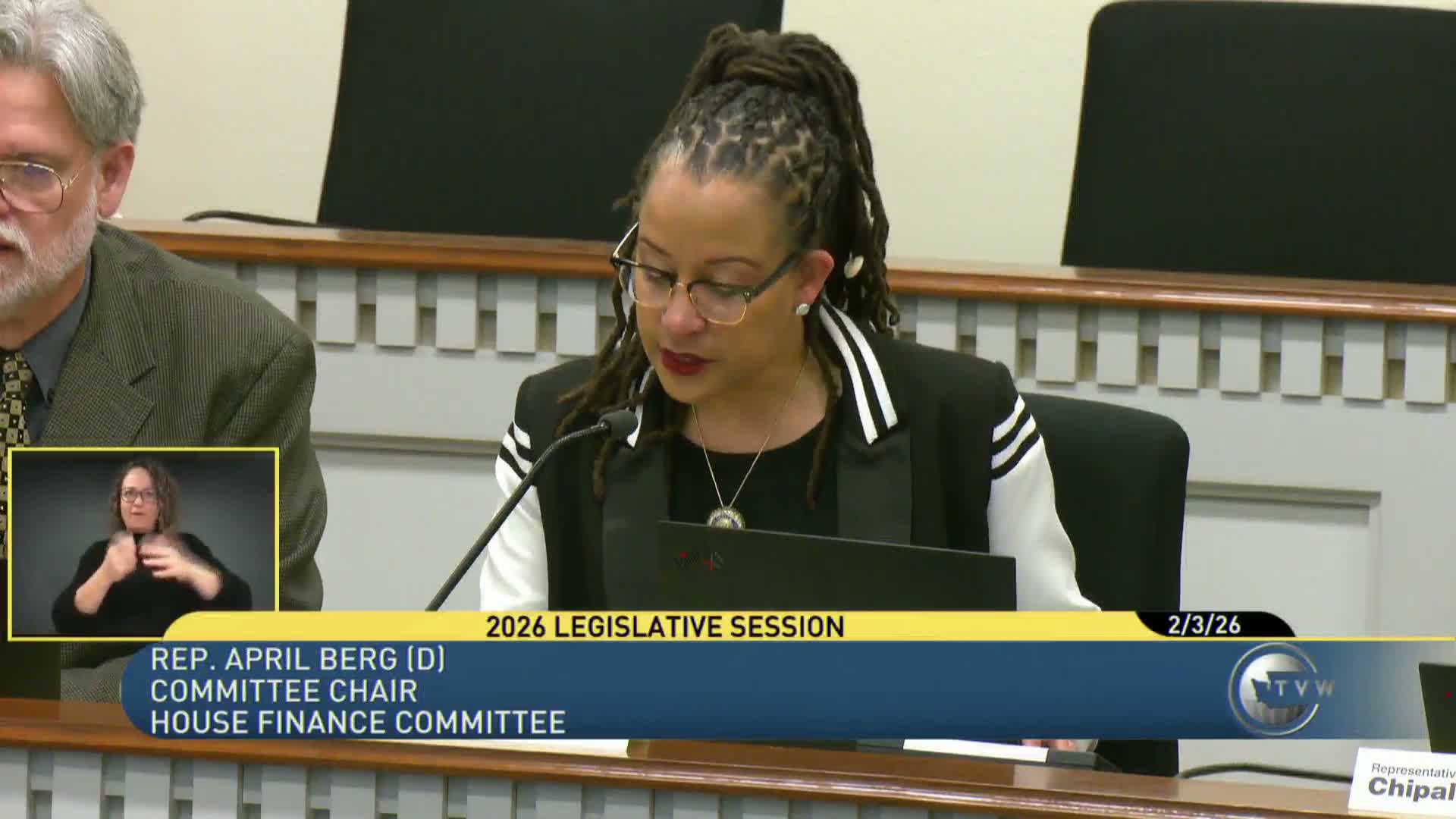
House Bill 2367, presented to the House Finance Committee staff by Tracy Taylor and Megan McFadden, would narrow and ultimately end statutory and regulatory exemptions for emissions at older coal-fired base-load plants, specifically targeting legacy treatment for a Centralia facility covered by a 2011 memorandum of agreement. The bill has three principal provisions: limit exempted coal emissions to those occurring before 2026; remove statutory constraints preventing agencies from imposing additional greenhouse gas standards on affected facilities; and repeal sales and use tax exemptions for coal purchased for qualifying plants.
Sponsor Representative Joe Fitzgibbon said the bill intends to eliminate special treatment granted in the 2011 agreement with TransAlta and help the Centralia site transition to cleaner forms of generation using existing infrastructure. Fitzgibbon noted the MOA included commitments—such as investments in community and workforce development—and said both sides have largely fulfilled the agreement’s terms; HB 2367 would allow the facility to be governed by current climate policy and taxation rules going forward.
Industry and trade witnesses who testified later were not uniformly opposed to the underlying policy but urged statutory fixes to avoid destabilizing the Climate Commitment Act allowance market. Peter Gudliewski of the Association of Washington Business and Sofia Steele Conley of WISPA recommended directing the Department of Ecology to adjust allowance budgets or create additional credits if this plant is brought under the cap-and-trade program to preserve market stability. Leah Missick of Climate Solutions urged adoption, citing environmental harms associated with continued coal use and arguing that exemptions should expire.
Staff told the committee that repealing the coal sales and use tax exemption includes an emergency clause, and because fewer than three taxpayers claim the exemption the Department could not disclose revenue impacts; staff said agencies listed on the fiscal note would have no implementation costs.
The committee did not take a vote; the public hearing was suspended and resumed in the same session to receive additional testimony. The record shows stakeholders asking technical questions about allowance supply and market effects; sponsors and staff said amendments or technical fixes may be circulated to address those concerns.
Sponsor Representative Joe Fitzgibbon said the bill intends to eliminate special treatment granted in the 2011 agreement with TransAlta and help the Centralia site transition to cleaner forms of generation using existing infrastructure. Fitzgibbon noted the MOA included commitments—such as investments in community and workforce development—and said both sides have largely fulfilled the agreement’s terms; HB 2367 would allow the facility to be governed by current climate policy and taxation rules going forward.
Industry and trade witnesses who testified later were not uniformly opposed to the underlying policy but urged statutory fixes to avoid destabilizing the Climate Commitment Act allowance market. Peter Gudliewski of the Association of Washington Business and Sofia Steele Conley of WISPA recommended directing the Department of Ecology to adjust allowance budgets or create additional credits if this plant is brought under the cap-and-trade program to preserve market stability. Leah Missick of Climate Solutions urged adoption, citing environmental harms associated with continued coal use and arguing that exemptions should expire.
Staff told the committee that repealing the coal sales and use tax exemption includes an emergency clause, and because fewer than three taxpayers claim the exemption the Department could not disclose revenue impacts; staff said agencies listed on the fiscal note would have no implementation costs.
The committee did not take a vote; the public hearing was suspended and resumed in the same session to receive additional testimony. The record shows stakeholders asking technical questions about allowance supply and market effects; sponsors and staff said amendments or technical fixes may be circulated to address those concerns.
View the Full Meeting & All Its Details
This article offers just a summary. Unlock complete video, transcripts, and insights as a Founder Member.
✓
Watch full, unedited meeting videos
✓
Search every word spoken in unlimited transcripts
✓
AI summaries & real-time alerts (all government levels)
✓
Permanent access to expanding government content
30-day money-back guarantee
