State housing officials outline $166M deployment, call for predictable funding and capacity building
February 02, 2026 | Senate, Committees, Legislative, New Mexico
This article was created by AI summarizing key points discussed. AI makes mistakes, so for full details and context, please refer to the video of the full meeting. Please report any errors so we can fix them. Report an error »
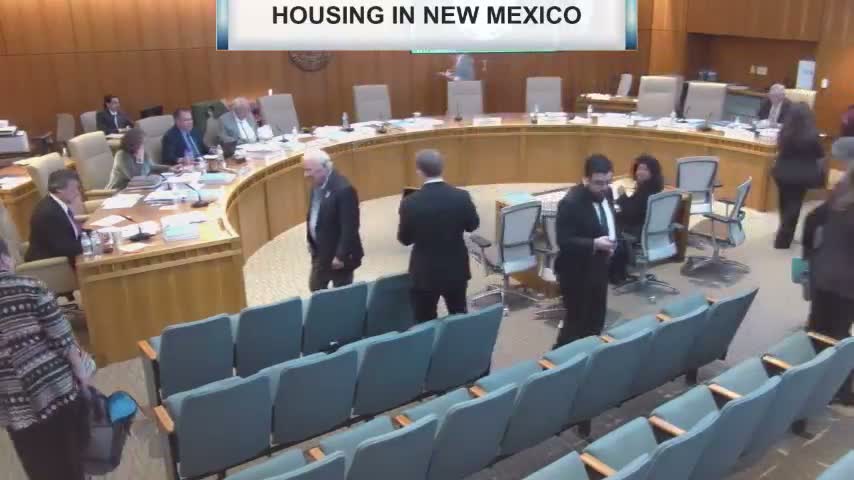
State housing officials told the Senate Finance subcommittee they have awarded roughly $166 million across multiple programs and stressed that more predictable, recurring funding is necessary to maintain project pipelines and build local capacity.
Secretary Nayir (Office of Housing) framed the problem as both supply and demand: rents in New Mexico have risen about 60% and home purchase prices about 70% since 2017, she said, and one-time infusions of cash are useful but do not produce the predictability markets need for steady construction. Nayir described three phases of the funding effort: rapid grants to bridge shovel-ready projects, capacity-building for local governments, and a competitive RFP phase that awarded points for projects outside metro areas.
What’s been awarded and the pace
Housing New Mexico and the Finance Authority recapped allocations: $166M in total, 84 awards, about $74M awarded and roughly 45% expended to date. Officials said many projects take 18–30 months from predevelopment through construction and that several projects already closed, several are under construction, and others are in permitting or awaiting closing.
Program tradeoffs: mortgages vs buydown; for-sale vs rental
Officials discussed two homeownership-support options requested for analysis: a 3% low-interest mortgage model that would require large capital infusions and a 1% interest-rate buydown that would stretch farther for more households at lower per-household subsidy. Housing New Mexico staff suggested a targeted approach: deep subsidy (3% mortgage) for the lowest-income households and a buydown or down-payment assistance for a larger number of moderate-income buyers.
Officials also argued the state should pursue policies to encourage for-sale workforce housing because for-sale investments recycle capital faster than 30-year rental loans and can therefore have higher short-term turnaround impact.
Rural capacity and coordination
Panelists described challenges in rural communities where applicants lack technical capacity and local governments have limited ability to assemble complete capital stacks. They urged more technical assistance, coordinated portals and underwriting standards across agencies, and predictable annual allocations (Housing Trust Fund distributions were cited) to let developers plan.
Where the committee stands
Committee members applauded progress and urged continued coordination across agencies. Presenters promised more granular spend-down data and said they would work with senators on specifics such as school-district workforce housing and potential pilot programs (Zip 0% interest for builders, rapid rehousing and restorative programs for vacant/foreclosed homes). The committee recessed and signaled further questions in subsequent hearings.
Secretary Nayir (Office of Housing) framed the problem as both supply and demand: rents in New Mexico have risen about 60% and home purchase prices about 70% since 2017, she said, and one-time infusions of cash are useful but do not produce the predictability markets need for steady construction. Nayir described three phases of the funding effort: rapid grants to bridge shovel-ready projects, capacity-building for local governments, and a competitive RFP phase that awarded points for projects outside metro areas.
What’s been awarded and the pace
Housing New Mexico and the Finance Authority recapped allocations: $166M in total, 84 awards, about $74M awarded and roughly 45% expended to date. Officials said many projects take 18–30 months from predevelopment through construction and that several projects already closed, several are under construction, and others are in permitting or awaiting closing.
Program tradeoffs: mortgages vs buydown; for-sale vs rental
Officials discussed two homeownership-support options requested for analysis: a 3% low-interest mortgage model that would require large capital infusions and a 1% interest-rate buydown that would stretch farther for more households at lower per-household subsidy. Housing New Mexico staff suggested a targeted approach: deep subsidy (3% mortgage) for the lowest-income households and a buydown or down-payment assistance for a larger number of moderate-income buyers.
Officials also argued the state should pursue policies to encourage for-sale workforce housing because for-sale investments recycle capital faster than 30-year rental loans and can therefore have higher short-term turnaround impact.
Rural capacity and coordination
Panelists described challenges in rural communities where applicants lack technical capacity and local governments have limited ability to assemble complete capital stacks. They urged more technical assistance, coordinated portals and underwriting standards across agencies, and predictable annual allocations (Housing Trust Fund distributions were cited) to let developers plan.
Where the committee stands
Committee members applauded progress and urged continued coordination across agencies. Presenters promised more granular spend-down data and said they would work with senators on specifics such as school-district workforce housing and potential pilot programs (Zip 0% interest for builders, rapid rehousing and restorative programs for vacant/foreclosed homes). The committee recessed and signaled further questions in subsequent hearings.
View the Full Meeting & All Its Details
This article offers just a summary. Unlock complete video, transcripts, and insights as a Founder Member.
✓
Watch full, unedited meeting videos
✓
Search every word spoken in unlimited transcripts
✓
AI summaries & real-time alerts (all government levels)
✓
Permanent access to expanding government content
30-day money-back guarantee
