WV Senate Health Committee hears testimony on bill targeting out‑of‑state shipment of abortion drugs
February 03, 2026 | 2026 Legislature WV, West Virginia
This article was created by AI summarizing key points discussed. AI makes mistakes, so for full details and context, please refer to the video of the full meeting. Please report any errors so we can fix them. Report an error »
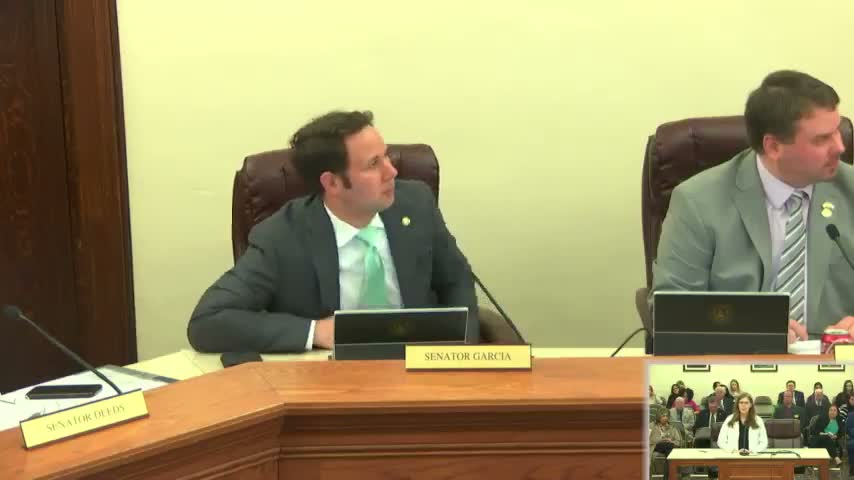
CHARLESTON, W.Va. — The West Virginia Senate Health Committee took testimony and legal briefing Tuesday on Senate Bill 173, a proposal to bar out‑of‑state persons or entities from sending drugs intended to induce abortion to West Virginia residents.
Counsel explained that the bill defines an "abortifacient" by reference to state law and creates four alternative triggers for liability: (1) sending an abortifacient by mail or courier to a West Virginia resident; (2) placing an abortifacient "in the stream of commerce" knowing it will be used in West Virginia; (3) prescribing an abortifacient to a West Virginia resident regardless of the prescriber’s location; or (4) disseminating an abortifacient in West Virginia without a valid prescription. Counsel said the bill would make non‑licensed actors who willfully violate the law guilty of a felony punishable by a determinate term of imprisonment of not less than three and not more than 10 years, permit injunctive relief and allow damages of $10,000 for each wrongful act. The bill does not authorize criminal charges against the woman who receives the medication, counsel said. The measure would be effective within 90 days of passage and has a second reference to the Judiciary Committee.
Supporters testified that online vendors and some telehealth models are enabling uncontrolled access to medication that can be used to perform abortions without medical oversight. Thomas Dinkel, who identified himself as state captain for Students for Life of America in West Virginia, told the committee he purchased pills from what he described as an easy‑to‑find website, said the site asked no age or medical screening questions, and that pills arrived in discreet packaging "in less than a week." Dinkel said he received roughly 30 pills across two packages, which he said could be used to induce multiple abortions, and described outreach material that, in his view, encourages use in states with restrictions. "There was no medical screening, no legal verification, no consultation with a licensed physician," he said.
A virtual witness who identified herself as Laurie Castillo, a Mid‑Atlantic regional coordinator for Students for Life of America, described campus advertising using the term "Plan C" to market pills and disputed low complication rates cited by others. Castillo cited an insurance‑claims analysis she said found roughly a 10.93 percent adverse‑event rate requiring medical follow‑up and warned the committee that anonymous online distribution creates opportunities for coercion and abuse.
Medical testimony pushed back on those characterizations. Dr. Nicole Perry Bryce, an OB‑GYN resident training in West Virginia, told the committee medication abortion is "safe" and effective when provided with medical screening and monitoring. She said certain retrospective insurance‑claims studies can overstate causation because diagnosis codes may appear near, but not due to, medication exposure. Citing FDA monitoring and other controlled studies, Dr. Bryce said the combined mifepristone–misoprostol regimen has a substantially lower serious‑adverse‑event rate than some witnesses claimed and that there is not robust, evidence‑based data to support a reliable "abortion‑pill reversal" protocol.
Committee members probed legal and practical issues: whether the bill would run into dormant‑commerce‑clause challenges where other states have "shield" laws, how the statute’s knowledge/intent language would be proved, and how civil private causes of action (the bill allows suits without a prior criminal indictment or conviction) would function in practice. Several senators raised hypotheticals about West Virginians who travel to nearby states for care, and physicians warned that uncertainty and criminal exposure could deter clinicians from practicing in West Virginia and worsen an existing shortage of OB‑GYN services.
The bill includes a continuing‑education requirement for licensed medical professionals — two hours within a year of initial licensure and again with renewal — on the "dangers of the abortion pill" and the claimed efficacy of "abortion pill reversal." One senator proposed an amendment to strike the CME requirement as unduly burdensome; counsel summarized the amendment, and the chair recessed the committee with plans to resume after other scheduled business to take up the amendment and further debate.
No final vote on SB 173 occurred during the session. The committee took evidence, heard contested expert and lay testimony, and left the measure pending further consideration.
Authorities and procedural notes: counsel cited state statutory language incorporated by reference (West Virginia code section referenced in committee explanation). The committee recorded a unanimous voice approval of minutes at the start of the session and postponed consideration of the amendment and final action on SB 173 until the committee reconvened later in the day.
Next steps: the committee will reconvene after judiciary or finance and resume consideration of SB 173 and the pending amendment on the continuing education requirement.
Counsel explained that the bill defines an "abortifacient" by reference to state law and creates four alternative triggers for liability: (1) sending an abortifacient by mail or courier to a West Virginia resident; (2) placing an abortifacient "in the stream of commerce" knowing it will be used in West Virginia; (3) prescribing an abortifacient to a West Virginia resident regardless of the prescriber’s location; or (4) disseminating an abortifacient in West Virginia without a valid prescription. Counsel said the bill would make non‑licensed actors who willfully violate the law guilty of a felony punishable by a determinate term of imprisonment of not less than three and not more than 10 years, permit injunctive relief and allow damages of $10,000 for each wrongful act. The bill does not authorize criminal charges against the woman who receives the medication, counsel said. The measure would be effective within 90 days of passage and has a second reference to the Judiciary Committee.
Supporters testified that online vendors and some telehealth models are enabling uncontrolled access to medication that can be used to perform abortions without medical oversight. Thomas Dinkel, who identified himself as state captain for Students for Life of America in West Virginia, told the committee he purchased pills from what he described as an easy‑to‑find website, said the site asked no age or medical screening questions, and that pills arrived in discreet packaging "in less than a week." Dinkel said he received roughly 30 pills across two packages, which he said could be used to induce multiple abortions, and described outreach material that, in his view, encourages use in states with restrictions. "There was no medical screening, no legal verification, no consultation with a licensed physician," he said.
A virtual witness who identified herself as Laurie Castillo, a Mid‑Atlantic regional coordinator for Students for Life of America, described campus advertising using the term "Plan C" to market pills and disputed low complication rates cited by others. Castillo cited an insurance‑claims analysis she said found roughly a 10.93 percent adverse‑event rate requiring medical follow‑up and warned the committee that anonymous online distribution creates opportunities for coercion and abuse.
Medical testimony pushed back on those characterizations. Dr. Nicole Perry Bryce, an OB‑GYN resident training in West Virginia, told the committee medication abortion is "safe" and effective when provided with medical screening and monitoring. She said certain retrospective insurance‑claims studies can overstate causation because diagnosis codes may appear near, but not due to, medication exposure. Citing FDA monitoring and other controlled studies, Dr. Bryce said the combined mifepristone–misoprostol regimen has a substantially lower serious‑adverse‑event rate than some witnesses claimed and that there is not robust, evidence‑based data to support a reliable "abortion‑pill reversal" protocol.
Committee members probed legal and practical issues: whether the bill would run into dormant‑commerce‑clause challenges where other states have "shield" laws, how the statute’s knowledge/intent language would be proved, and how civil private causes of action (the bill allows suits without a prior criminal indictment or conviction) would function in practice. Several senators raised hypotheticals about West Virginians who travel to nearby states for care, and physicians warned that uncertainty and criminal exposure could deter clinicians from practicing in West Virginia and worsen an existing shortage of OB‑GYN services.
The bill includes a continuing‑education requirement for licensed medical professionals — two hours within a year of initial licensure and again with renewal — on the "dangers of the abortion pill" and the claimed efficacy of "abortion pill reversal." One senator proposed an amendment to strike the CME requirement as unduly burdensome; counsel summarized the amendment, and the chair recessed the committee with plans to resume after other scheduled business to take up the amendment and further debate.
No final vote on SB 173 occurred during the session. The committee took evidence, heard contested expert and lay testimony, and left the measure pending further consideration.
Authorities and procedural notes: counsel cited state statutory language incorporated by reference (West Virginia code section referenced in committee explanation). The committee recorded a unanimous voice approval of minutes at the start of the session and postponed consideration of the amendment and final action on SB 173 until the committee reconvened later in the day.
Next steps: the committee will reconvene after judiciary or finance and resume consideration of SB 173 and the pending amendment on the continuing education requirement.
View the Full Meeting & All Its Details
This article offers just a summary. Unlock complete video, transcripts, and insights as a Founder Member.
✓
Watch full, unedited meeting videos
✓
Search every word spoken in unlimited transcripts
✓
AI summaries & real-time alerts (all government levels)
✓
Permanent access to expanding government content
30-day money-back guarantee
