Denton Historic Landmark Commission approves partial first-floor rehab at 122 N. Locust
January 12, 2026 | Denton City, Denton County, Texas
This article was created by AI summarizing key points discussed. AI makes mistakes, so for full details and context, please refer to the video of the full meeting. Please report any errors so we can fix them. Report an error »
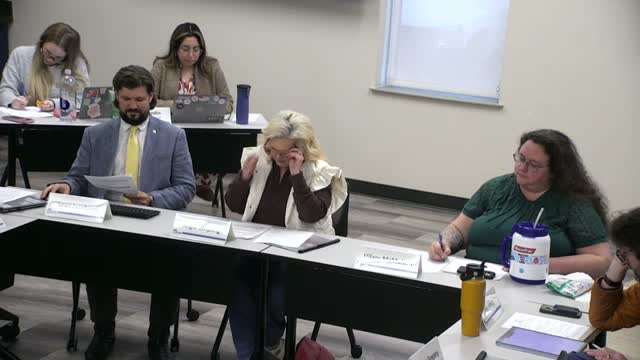
The Denton Historic Landmark Commission on Jan. 12 approved a certificate of appropriateness for partial rehabilitation of the first-floor façade at 122 North Locust Street, endorsing staff's recommendation to install larger 5-by-6 matte-black bifold-style windows.
Associate planner Shawn Jacobson told commissioners the building dates to about 1875 but has undergone significant alterations and is not a contributing structure to the National Register district. Jacobson said the project meets the Denton Square District's facade and fenestration standards and "staff is recommending approval as submitted; we recommend the use of Option 2." The recommendation relied on Secretary of the Interior standards for rehabilitation, staff said.
The applicant presented two options: a narrower 4-by-6 window layout and a wider 5-by-6 arrangement. The larger windows were described as closer to the historic window proportions on surrounding square buildings and allow operable interaction between interior and street. Jacobson noted the proposal will preserve the building's remaining original metal columns and use differentiated new work to fit the existing building.
Commissioners asked for clarity on temporary windows, supply timing and enforcement. The applicant said custom bifold windows have a 7-to-9-week lead time and that temporary picture windows would be installed until the bifolds arrive; he told the commission he hoped to have the work finished "before May 1, roughly." The chair pressed for firm limits, saying she wanted "to make sure that we have that very, very clear on what that's going to look like and the time frames" so the temporary work does not become a permanent backdoor change. Jacobson said staff will include written conditions in the approval letter and that building safety inspectors will check compliance.
After discussion, a commissioner moved to accept staff recommendations for Option 2. The motion was seconded and the chair announced the motion passed as presented for Option 2. The commission did not record a roll-call tally in the meeting transcript.
Next steps for the property include the condition language Jacobson described, issuance of the COA and subsequent permitting and inspections to verify compliance with the timeline and product substitutions laid out in staff conditions.
Associate planner Shawn Jacobson told commissioners the building dates to about 1875 but has undergone significant alterations and is not a contributing structure to the National Register district. Jacobson said the project meets the Denton Square District's facade and fenestration standards and "staff is recommending approval as submitted; we recommend the use of Option 2." The recommendation relied on Secretary of the Interior standards for rehabilitation, staff said.
The applicant presented two options: a narrower 4-by-6 window layout and a wider 5-by-6 arrangement. The larger windows were described as closer to the historic window proportions on surrounding square buildings and allow operable interaction between interior and street. Jacobson noted the proposal will preserve the building's remaining original metal columns and use differentiated new work to fit the existing building.
Commissioners asked for clarity on temporary windows, supply timing and enforcement. The applicant said custom bifold windows have a 7-to-9-week lead time and that temporary picture windows would be installed until the bifolds arrive; he told the commission he hoped to have the work finished "before May 1, roughly." The chair pressed for firm limits, saying she wanted "to make sure that we have that very, very clear on what that's going to look like and the time frames" so the temporary work does not become a permanent backdoor change. Jacobson said staff will include written conditions in the approval letter and that building safety inspectors will check compliance.
After discussion, a commissioner moved to accept staff recommendations for Option 2. The motion was seconded and the chair announced the motion passed as presented for Option 2. The commission did not record a roll-call tally in the meeting transcript.
Next steps for the property include the condition language Jacobson described, issuance of the COA and subsequent permitting and inspections to verify compliance with the timeline and product substitutions laid out in staff conditions.
Don't Miss a Word: See the Full Meeting!
Go beyond summaries. Unlock every video, transcript, and key insight with a Founder Membership.
✓
Get instant access to full meeting videos
✓
Search and clip any phrase from complete transcripts
✓
Receive AI-powered summaries & custom alerts
✓
Enjoy lifetime, unrestricted access to government data
30-day money-back guarantee
