Senate committee advances domestic‑terrorism designation bill despite broad civil‑liberties objections
February 03, 2026 | 2026 Legislature FL, Florida
This article was created by AI summarizing key points discussed. AI makes mistakes, so for full details and context, please refer to the video of the full meeting. Please report any errors so we can fix them. Report an error »
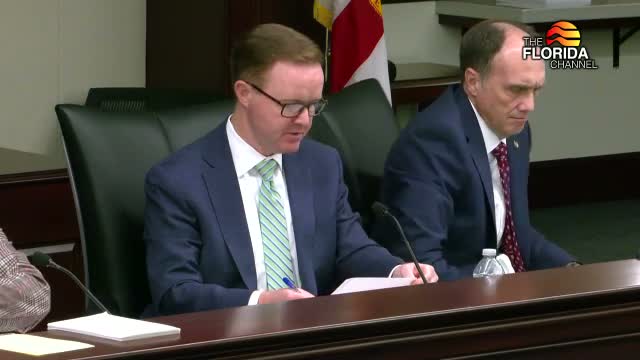
Tallahassee — The Senate Judiciary committee on Thursday advanced SB 16‑32, legislation that would create a state process to designate domestic terrorist organizations and bar Florida courts from enforcing foreign or religious laws that conflict with the U.S. or Florida constitutions.
Sponsor Sen. Grahl said the bill is focused on conduct, not belief, and on preserving constitutional and public‑safety standards. “SB 16‑32 is a constitution‑first public safety bill,” Grahl said when introducing the measure.
Supporters told the committee the measure fills a statutory gap and mirrors federal procedures for designating organizations. Grahl and other backers said due process is incorporated: the chief domestic security officer would provide notice, the governor and cabinet would consider designations, and a designee could challenge the action in circuit court within 30 days.
But the measure drew intense criticism from an unusually large and diverse set of witnesses who warned the bill’s definitions — including phrases such as “intimidate, injure, or coerce a civilian population” and “acts dangerous to human life” — are overloaded and could be used to label lawful protest, civil disobedience or minority religious practices as terrorism.
“While the title of this bill claims to protect American principles, the text does the exact opposite,” Marilee Marks, a policy consultant, told the committee. Civil‑liberties groups and union representatives said the proposal lacks guardrails and could be applied unevenly.
Witnesses also pushed back on provisions aimed at universities and students. Committee questioning probed whether ordinary acts of protest or sharing online material could be construed as “promoting” a designated organization. Grahl said the bill is fact‑intensive and would require intent to commit or encourage violent or dangerous acts before criminal sanctions could apply.
The bill produced a heated public record. Some critics said the measure would empower a small political body to brand organizations as terrorist groups; others said it was necessary to respond to evolving threats to public safety.
After roughly three hours of testimony and debate, with the sponsor saying he welcomed follow‑up conversations and refinements, the committee reported the bill favorably on an 8‑3 vote. The bill will advance to additional committees in the Senate process.
Sponsor Sen. Grahl said the bill is focused on conduct, not belief, and on preserving constitutional and public‑safety standards. “SB 16‑32 is a constitution‑first public safety bill,” Grahl said when introducing the measure.
Supporters told the committee the measure fills a statutory gap and mirrors federal procedures for designating organizations. Grahl and other backers said due process is incorporated: the chief domestic security officer would provide notice, the governor and cabinet would consider designations, and a designee could challenge the action in circuit court within 30 days.
But the measure drew intense criticism from an unusually large and diverse set of witnesses who warned the bill’s definitions — including phrases such as “intimidate, injure, or coerce a civilian population” and “acts dangerous to human life” — are overloaded and could be used to label lawful protest, civil disobedience or minority religious practices as terrorism.
“While the title of this bill claims to protect American principles, the text does the exact opposite,” Marilee Marks, a policy consultant, told the committee. Civil‑liberties groups and union representatives said the proposal lacks guardrails and could be applied unevenly.
Witnesses also pushed back on provisions aimed at universities and students. Committee questioning probed whether ordinary acts of protest or sharing online material could be construed as “promoting” a designated organization. Grahl said the bill is fact‑intensive and would require intent to commit or encourage violent or dangerous acts before criminal sanctions could apply.
The bill produced a heated public record. Some critics said the measure would empower a small political body to brand organizations as terrorist groups; others said it was necessary to respond to evolving threats to public safety.
After roughly three hours of testimony and debate, with the sponsor saying he welcomed follow‑up conversations and refinements, the committee reported the bill favorably on an 8‑3 vote. The bill will advance to additional committees in the Senate process.
View the Full Meeting & All Its Details
This article offers just a summary. Unlock complete video, transcripts, and insights as a Founder Member.
✓
Watch full, unedited meeting videos
✓
Search every word spoken in unlimited transcripts
✓
AI summaries & real-time alerts (all government levels)
✓
Permanent access to expanding government content
30-day money-back guarantee
