Senate committee advances bill limiting local government DEI programs after hours of testimony
February 03, 2026 | 2026 Legislature FL, Florida
This article was created by AI summarizing key points discussed. AI makes mistakes, so for full details and context, please refer to the video of the full meeting. Please report any errors so we can fix them. Report an error »
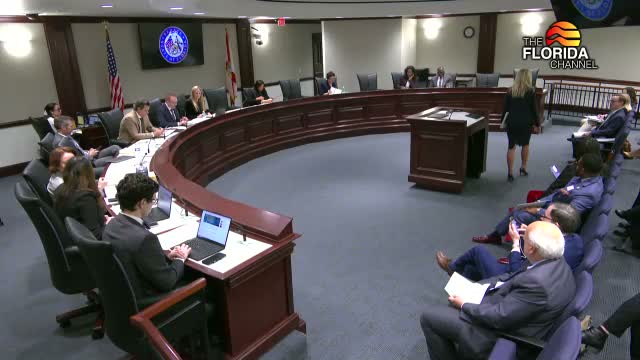
The Senate Community Affairs Committee on Tuesday voted to report favorably on SB 11 34, which would restrict counties and municipalities from funding, promoting or taking official actions related to diversity, equity and inclusion programs.
Sponsor Sen. Yarbrough said the bill targets what he described as state‑style 'DEI' efforts that use public dollars to support programs he called inappropriate. "The bill prohibits counties and municipalities from funding, promoting, or taking official actions such as adopting ordinances, resolutions, rules, regulations, programs, or policies related to DEI," Yarbrough said in his presentation to the committee.
Supporters of the bill urged limits on what they called bureaucratic DEI offices and trainings. Anthony Verdugo of the Christian Family Coalition said the measure would 'restore the constitutional standard of color blindness' and prevent what he described as a system that "pits one group against another." Several other witnesses who testified in support echoed concerns about perceived overreach in local DEI programs.
Opponents warned the bill is overly broad and could curtail legitimate local programs. John Harris Mauer of Equality Florida called the proposal "political theater that could cause real harm," arguing the language was vague and invited frivolous lawsuits. Jonathan Weber of the Southern Poverty Law Center said the bill's definition of DEI was "overbroad," and that routine observances or historically grounded civic programming could be swept up by the ban.
Multiple senators pressed the sponsor for specificity and exceptions. Sen. Jones asked whether programs that target health disparities or services for historically underserved groups would be prohibited; Yarbrough pointed to exceptions in the bill text for mandatory compliance with federal or state law and for certain observances, and acknowledged he was willing to work on clearer language. Members also discussed whether existing contracts should be voided on enactment and whether the bill's misfeasance/malfeasance language created a risk of removal from office; Yarbrough said the bill's effective date was pushed to Jan. 1, 2027, and he was open to amendments to avoid unintended contract disruption.
Public testimony included a range of perspectives. Witnesses who opposed the bill warned it could restrict city or county proclamations such as Black History Month observances and local outreach to populations with distinct needs; others who opposed the bill said it could imperil targeted public‑health or educational initiatives. Supporters described DEI practices as administrative waste or as discriminatory in practice.
After debate and public comment the committee called the roll. The clerk recorded the following votes on SB 11 34: Yes — Sen. Leake; Sen. Pasadomoe; Sen. Pizzo; Sen. Trumbull; Vice Chair Masullo; Chair McLean. No — Sen. Jones; Sen. Sharif. The motion to report the bill favorably passed and SB 11 34 was reported favorably out of committee.
Next steps: SB 11 34 will proceed in the legislative process toward its next committee or floor consideration, where sponsors said they expect to refine the text to add clarifying exceptions for specific programs and contracts.
Sponsor Sen. Yarbrough said the bill targets what he described as state‑style 'DEI' efforts that use public dollars to support programs he called inappropriate. "The bill prohibits counties and municipalities from funding, promoting, or taking official actions such as adopting ordinances, resolutions, rules, regulations, programs, or policies related to DEI," Yarbrough said in his presentation to the committee.
Supporters of the bill urged limits on what they called bureaucratic DEI offices and trainings. Anthony Verdugo of the Christian Family Coalition said the measure would 'restore the constitutional standard of color blindness' and prevent what he described as a system that "pits one group against another." Several other witnesses who testified in support echoed concerns about perceived overreach in local DEI programs.
Opponents warned the bill is overly broad and could curtail legitimate local programs. John Harris Mauer of Equality Florida called the proposal "political theater that could cause real harm," arguing the language was vague and invited frivolous lawsuits. Jonathan Weber of the Southern Poverty Law Center said the bill's definition of DEI was "overbroad," and that routine observances or historically grounded civic programming could be swept up by the ban.
Multiple senators pressed the sponsor for specificity and exceptions. Sen. Jones asked whether programs that target health disparities or services for historically underserved groups would be prohibited; Yarbrough pointed to exceptions in the bill text for mandatory compliance with federal or state law and for certain observances, and acknowledged he was willing to work on clearer language. Members also discussed whether existing contracts should be voided on enactment and whether the bill's misfeasance/malfeasance language created a risk of removal from office; Yarbrough said the bill's effective date was pushed to Jan. 1, 2027, and he was open to amendments to avoid unintended contract disruption.
Public testimony included a range of perspectives. Witnesses who opposed the bill warned it could restrict city or county proclamations such as Black History Month observances and local outreach to populations with distinct needs; others who opposed the bill said it could imperil targeted public‑health or educational initiatives. Supporters described DEI practices as administrative waste or as discriminatory in practice.
After debate and public comment the committee called the roll. The clerk recorded the following votes on SB 11 34: Yes — Sen. Leake; Sen. Pasadomoe; Sen. Pizzo; Sen. Trumbull; Vice Chair Masullo; Chair McLean. No — Sen. Jones; Sen. Sharif. The motion to report the bill favorably passed and SB 11 34 was reported favorably out of committee.
Next steps: SB 11 34 will proceed in the legislative process toward its next committee or floor consideration, where sponsors said they expect to refine the text to add clarifying exceptions for specific programs and contracts.
View the Full Meeting & All Its Details
This article offers just a summary. Unlock complete video, transcripts, and insights as a Founder Member.
✓
Watch full, unedited meeting videos
✓
Search every word spoken in unlimited transcripts
✓
AI summaries & real-time alerts (all government levels)
✓
Permanent access to expanding government content
30-day money-back guarantee
