Lawmakers advance broad tax-modification cleanup bill; committee debates SALT treatment and fiscal impact
February 02, 2026 | 2026 Utah Legislature, Utah Legislature, Utah Legislative Branch, Utah
This article was created by AI summarizing key points discussed. AI makes mistakes, so for full details and context, please refer to the video of the full meeting. Please report any errors so we can fix them. Report an error »
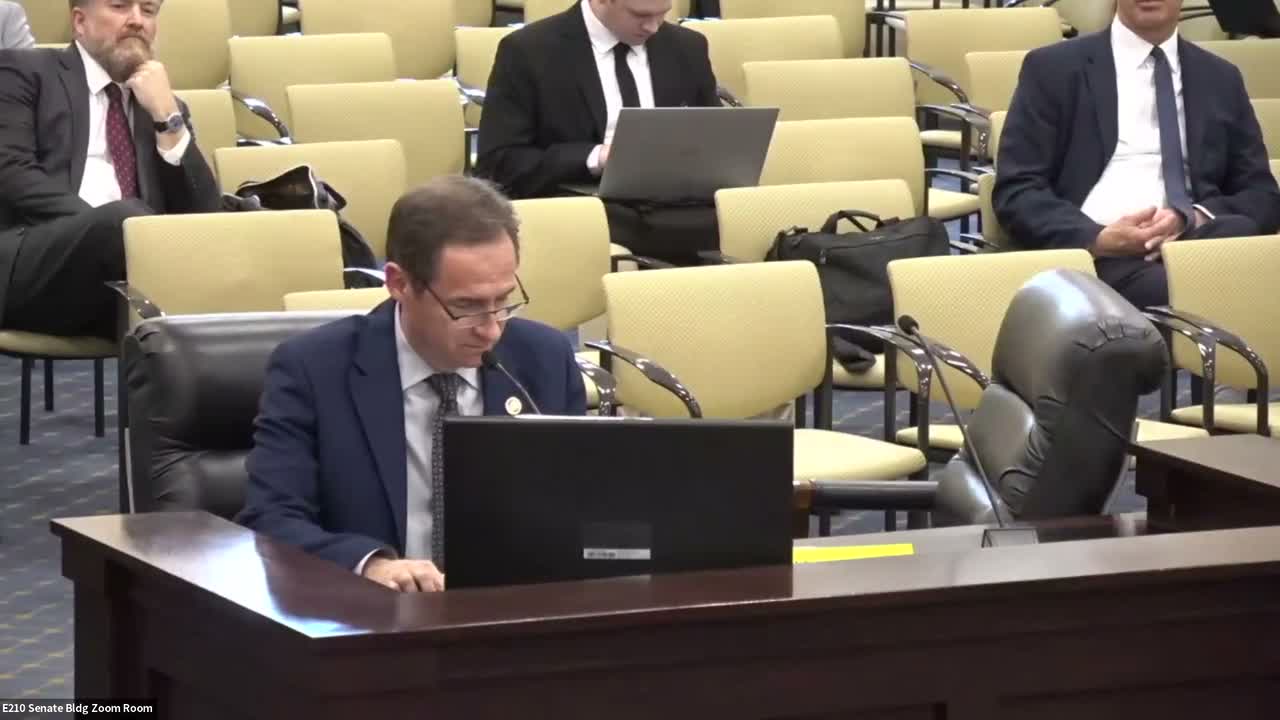
The Senate Revenue and Taxation Committee voted Feb. 2, 2026, to favorably recommend House Bill 77, a broad tax-modification bill described by the sponsor as the committee’s annual cleanup vehicle.
Representative Elison, the bill sponsor, outlined provisions across income, sales and use, property, and privilege taxes. Key changes include clarifying how unrelated business income is treated for charities (adding allocated income), repealing an obsolete federal-dependent inheritance tax (Title 59, Chapter 11), consolidating privilege-tax exemptions for convenience, integrating low-income housing tax credit review into regular review cycles, and making the pass-through entity workaround permanent by removing its sunset.
Commissioner John Ballentine of the Utah State Tax Commission joined the presentation to explain technical elements. Ballentine described the permanent pass-through workaround for state treatment of the federal SALT change and said that a post-interim addition to the bill—the state-and-local-tax add-back provision—gave rise to a $4,000,000 fiscal note. ‘‘Without the bill the way it's written, there would be a small group of taxpayers would have a $4,000,000 tax increase. With the bill the way it's written, there's a $4,000,000 reduction in revenues to the state of Utah,’’ Ballentine said.
Committee members discussed how the SALT-related change interacts with federal limits (previously a $10,000 cap versus a $40,000 figure referenced for federal reporting) and whether the SALT issue should be split into another bill if funding concerns could jeopardize the broader cleanup package. Senator Harper asked directly whether the fiscal note represents a positive or negative effect on the state’s bottom line; Ballentine reiterated it was a policy choice for the legislature.
Representative Elison also described sales-tax clarifications for short-term rentals intended to close a loophole some providers used to exclude tangible personal property from taxation, distribution rules for county sales-tax revenue to newly incorporated cities during holdover, property-tax reporting-threshold increases, expanded appeal rights for property-tax relief denials, and other housekeeping provisions.
After discussion and without public comment, the committee voted 6–0 to pass HB 77 with a favorable recommendation. The bill will proceed to the Senate floor for further consideration.
Representative Elison, the bill sponsor, outlined provisions across income, sales and use, property, and privilege taxes. Key changes include clarifying how unrelated business income is treated for charities (adding allocated income), repealing an obsolete federal-dependent inheritance tax (Title 59, Chapter 11), consolidating privilege-tax exemptions for convenience, integrating low-income housing tax credit review into regular review cycles, and making the pass-through entity workaround permanent by removing its sunset.
Commissioner John Ballentine of the Utah State Tax Commission joined the presentation to explain technical elements. Ballentine described the permanent pass-through workaround for state treatment of the federal SALT change and said that a post-interim addition to the bill—the state-and-local-tax add-back provision—gave rise to a $4,000,000 fiscal note. ‘‘Without the bill the way it's written, there would be a small group of taxpayers would have a $4,000,000 tax increase. With the bill the way it's written, there's a $4,000,000 reduction in revenues to the state of Utah,’’ Ballentine said.
Committee members discussed how the SALT-related change interacts with federal limits (previously a $10,000 cap versus a $40,000 figure referenced for federal reporting) and whether the SALT issue should be split into another bill if funding concerns could jeopardize the broader cleanup package. Senator Harper asked directly whether the fiscal note represents a positive or negative effect on the state’s bottom line; Ballentine reiterated it was a policy choice for the legislature.
Representative Elison also described sales-tax clarifications for short-term rentals intended to close a loophole some providers used to exclude tangible personal property from taxation, distribution rules for county sales-tax revenue to newly incorporated cities during holdover, property-tax reporting-threshold increases, expanded appeal rights for property-tax relief denials, and other housekeeping provisions.
After discussion and without public comment, the committee voted 6–0 to pass HB 77 with a favorable recommendation. The bill will proceed to the Senate floor for further consideration.
Don't Miss a Word: See the Full Meeting!
Go beyond summaries. Unlock every video, transcript, and key insight with a Founder Membership.
✓
Get instant access to full meeting videos
✓
Search and clip any phrase from complete transcripts
✓
Receive AI-powered summaries & custom alerts
✓
Enjoy lifetime, unrestricted access to government data
30-day money-back guarantee
