Panel hears bill to allow ‘Flex Buy’ style auto loans; industry backs change, consumer regulator urges caution
February 03, 2026 | 2026 Legislature ME, Maine
This article was created by AI summarizing key points discussed. AI makes mistakes, so for full details and context, please refer to the video of the full meeting. Please report any errors so we can fix them. Report an error »
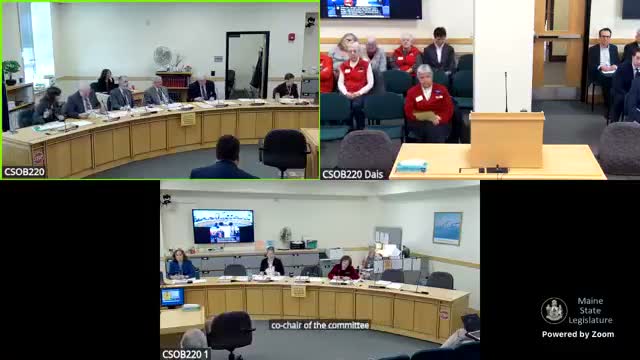
Senator Chip Curry introduced LD 2056 as a way to expand financing options for Maine drivers, saying he filed the bill “on behalf of and at the encouragement of the Ford Motor Company.” The proposal would permit simple‑interest auto loans whose scheduled payments may vary within disclosed limits instead of being “substantially equal” each month under current Maine law.
Michelle Elder, regional director for state government affairs at Ford Motor Company, told the committee that Ford Credit’s Flex Buy program has been offered in 45 states and “offers a payment structure focused on providing lower payments for the first 3 years of the contract … and then increasing at month 37.” Elder said Flex Buy uses a fixed interest rate with customer ownership, no prepayment penalties and full disclosure of the payment schedule at loan origination.
Supporters from the retail side said the product helps affordability. Kevin Tessio of Darling’s Auto Group said flexible schedules can reduce monthly payments “in most cases, 15 to 18% less in those first 3 years,” and Jay Darling and Bruce Garrity (Maine Automobile Dealers Association) urged the committee to modernize Maine’s consumer credit code to allow the product and keep business in state.
Opponents urged caution. Linda Conti, Superintendent of the Bureau of Consumer Credit Protection, said Maine’s existing requirement that payments be substantially equal gives borrowers predictable monthly bills and warned unequal schedules risk leaving consumers facing higher payments at the same time the car depreciates. “I’m concerned that the benefits of the program will be outweighed by the harm to the consumer who cannot make later increased payments,” Conti said.
Committee members pressed industry witnesses on underwriting and outcomes. Ford’s witness said loan qualification is the same as for standard loans and that default rates for Flex Buy customers are “around 1%,” but several members asked for state‑level and cross‑state delinquency and default statistics and typical examples showing the month‑36 to month‑37 payment jump. Staff and proponents agreed to provide additional amortization examples and performance data for the work session.
No vote was taken; the committee closed the public hearing and asked for follow‑up materials, including delinquency/default data and sample amortization schedules, before taking action.
What’s next: The committee moved LD 2056 to work session and requested additional information from Ford, dealers and state regulators. The hearing record contains testimony from industry, trade groups and the Bureau of Consumer Credit Protection; members signaled they would consider guardrails (limits by vehicle type, disclosures, or exclusions) in drafting any amendment.
Michelle Elder, regional director for state government affairs at Ford Motor Company, told the committee that Ford Credit’s Flex Buy program has been offered in 45 states and “offers a payment structure focused on providing lower payments for the first 3 years of the contract … and then increasing at month 37.” Elder said Flex Buy uses a fixed interest rate with customer ownership, no prepayment penalties and full disclosure of the payment schedule at loan origination.
Supporters from the retail side said the product helps affordability. Kevin Tessio of Darling’s Auto Group said flexible schedules can reduce monthly payments “in most cases, 15 to 18% less in those first 3 years,” and Jay Darling and Bruce Garrity (Maine Automobile Dealers Association) urged the committee to modernize Maine’s consumer credit code to allow the product and keep business in state.
Opponents urged caution. Linda Conti, Superintendent of the Bureau of Consumer Credit Protection, said Maine’s existing requirement that payments be substantially equal gives borrowers predictable monthly bills and warned unequal schedules risk leaving consumers facing higher payments at the same time the car depreciates. “I’m concerned that the benefits of the program will be outweighed by the harm to the consumer who cannot make later increased payments,” Conti said.
Committee members pressed industry witnesses on underwriting and outcomes. Ford’s witness said loan qualification is the same as for standard loans and that default rates for Flex Buy customers are “around 1%,” but several members asked for state‑level and cross‑state delinquency and default statistics and typical examples showing the month‑36 to month‑37 payment jump. Staff and proponents agreed to provide additional amortization examples and performance data for the work session.
No vote was taken; the committee closed the public hearing and asked for follow‑up materials, including delinquency/default data and sample amortization schedules, before taking action.
What’s next: The committee moved LD 2056 to work session and requested additional information from Ford, dealers and state regulators. The hearing record contains testimony from industry, trade groups and the Bureau of Consumer Credit Protection; members signaled they would consider guardrails (limits by vehicle type, disclosures, or exclusions) in drafting any amendment.
View the Full Meeting & All Its Details
This article offers just a summary. Unlock complete video, transcripts, and insights as a Founder Member.
✓
Watch full, unedited meeting videos
✓
Search every word spoken in unlimited transcripts
✓
AI summaries & real-time alerts (all government levels)
✓
Permanent access to expanding government content
30-day money-back guarantee
