House Health and Human Services advances broad slate of bills; committee approves multiple subcommittee recommendations
February 03, 2026 | 2026 Legislature VA, Virginia
This article was created by AI summarizing key points discussed. AI makes mistakes, so for full details and context, please refer to the video of the full meeting. Please report any errors so we can fix them. Report an error »
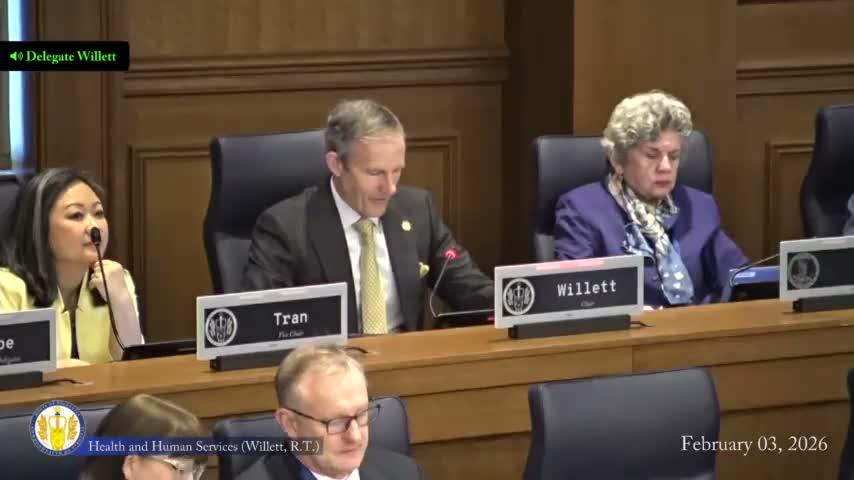
The House Committee on Health and Human Services on Wednesday moved a broad package of bills through committee after subcommittee reports and votes.
Behavioral health and health professions subcommittee chairs reported several measures that the full committee approved. The committee reported HB 225 (creating a Marcus Alert evaluation task force) with a substitute and approved it 19–0. HB 309 (procedures and liability protections connected to temporary detention and hospital custody pending court authorization) passed 19–0 with substitute. HB 513, which expands overdose-fatality review teams to examine veteran suicides and adds a Department of Veterans Services representative, was reported with a substitute and passed 19–0. HB 681, clarifying that certain retired law enforcement officers are included in emergency custody statutes, passed 19–0.
Health professions items included HB 156 (continuing-education and attestation requirements to improve timely signing of death certificates), which carried 19–0, and HB 452 (an amendment adding a sunset of July 1, 2029), which reported 11–6. HB 465, a technical amendment to the advisory board on behavior analysis requiring licensed behavior analysts to hold specified seats, reported 18–0.
The social services subcommittee advanced several bills. HB 66 directs the Department of Medical Assistance Services and Department of Social Services to modernize eligibility and administrative technology, requires an implementation plan to the governor and legislative chairs by Dec. 1, 2026, and was reported with substitute and referred to appropriations by a vote of 20–0. HB 37 (repealing a sunset to disregard certain SSDI income for developmental disability waivers) reported 18–0. HB 4 25 (expanding remote patient monitoring Medicaid coverage to all pregnant and postpartum people, not only high-risk pregnancies) reported with substitute and referral to appropriations, passing 19–1. HB 12 84 (adding patient-generated consultations and audio-only telemedicine to provider-to-provider consultation rules) reported with substitute and was referred to appropriations 20–0.
Most measures received committee approval on voice or recorded votes after brief floor-style motions; several were referred to appropriations when a fiscal pathway was needed. Committee members asked procedural and implementation questions for multiple bills, including how proposed changes would interact with existing provider systems and whether local departments or providers would require new software interfaces.
What’s next: Many bills forwarded to appropriations or the next committee steps; chairs asked staff and patrons to continue stakeholder outreach on measures where implementation details (IT modernization, provider interfaces, recurring program procedures) remain to be specified.
Behavioral health and health professions subcommittee chairs reported several measures that the full committee approved. The committee reported HB 225 (creating a Marcus Alert evaluation task force) with a substitute and approved it 19–0. HB 309 (procedures and liability protections connected to temporary detention and hospital custody pending court authorization) passed 19–0 with substitute. HB 513, which expands overdose-fatality review teams to examine veteran suicides and adds a Department of Veterans Services representative, was reported with a substitute and passed 19–0. HB 681, clarifying that certain retired law enforcement officers are included in emergency custody statutes, passed 19–0.
Health professions items included HB 156 (continuing-education and attestation requirements to improve timely signing of death certificates), which carried 19–0, and HB 452 (an amendment adding a sunset of July 1, 2029), which reported 11–6. HB 465, a technical amendment to the advisory board on behavior analysis requiring licensed behavior analysts to hold specified seats, reported 18–0.
The social services subcommittee advanced several bills. HB 66 directs the Department of Medical Assistance Services and Department of Social Services to modernize eligibility and administrative technology, requires an implementation plan to the governor and legislative chairs by Dec. 1, 2026, and was reported with substitute and referred to appropriations by a vote of 20–0. HB 37 (repealing a sunset to disregard certain SSDI income for developmental disability waivers) reported 18–0. HB 4 25 (expanding remote patient monitoring Medicaid coverage to all pregnant and postpartum people, not only high-risk pregnancies) reported with substitute and referral to appropriations, passing 19–1. HB 12 84 (adding patient-generated consultations and audio-only telemedicine to provider-to-provider consultation rules) reported with substitute and was referred to appropriations 20–0.
Most measures received committee approval on voice or recorded votes after brief floor-style motions; several were referred to appropriations when a fiscal pathway was needed. Committee members asked procedural and implementation questions for multiple bills, including how proposed changes would interact with existing provider systems and whether local departments or providers would require new software interfaces.
What’s next: Many bills forwarded to appropriations or the next committee steps; chairs asked staff and patrons to continue stakeholder outreach on measures where implementation details (IT modernization, provider interfaces, recurring program procedures) remain to be specified.
Don't Miss a Word: See the Full Meeting!
Go beyond summaries. Unlock every video, transcript, and key insight with a Founder Membership.
✓
Get instant access to full meeting videos
✓
Search and clip any phrase from complete transcripts
✓
Receive AI-powered summaries & custom alerts
✓
Enjoy lifetime, unrestricted access to government data
30-day money-back guarantee
