House committee advances broad landlord-tenant package; several bills amended and sent to appropriations
February 03, 2026 | 2026 Legislature VA, Virginia
This article was created by AI summarizing key points discussed. AI makes mistakes, so for full details and context, please refer to the video of the full meeting. Please report any errors so we can fix them. Report an error »
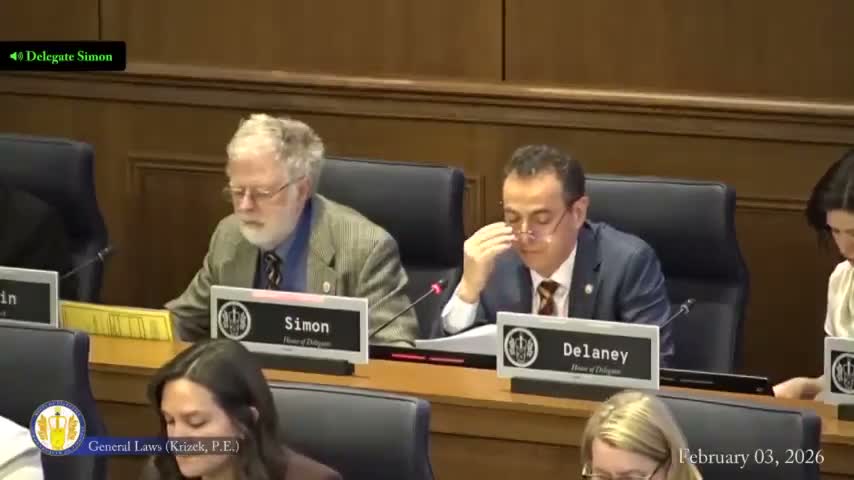
A cluster of landlord-tenant bills moved through the committee, with sponsors explaining amendments intended to clarify tenant protections, landlord obligations and court procedures before the measures go to Appropriations.
Chair Simon handled the housing sequence. On HB 281 (Delia Colson patron), the committee adopted a council line amendment adding subsection F clarifying that nothing in the section alters a landlord’s right to amend amounts requested at trial. As amended, the sponsor summarized the bill’s effect: "it removes the provision requiring that a tenant in possession of a dwelling unit prior to asserting a defense against an action for rent or possession, pay into a court the amount of rent found by the court to be due and unpaid..." The committee reported HB 281 as amended (clerk reported 14–6).
Other bills in the package included:
- HB 519 (Martinez): Adds air conditioning, when supplied by the landlord, to the list of services that constitute an "essential service" under the Virginia Residential Landlord Tenant Act; subcommittee recommended reporting with amendments and the committee reported the bill as amended (clerk reported 14–6).
- HB 616 (Anthony): Requires landlords, upon written request, to provide a rent ledger within 10 business days to support rental assistance applications; subcommittee recommended reporting 8–2 and the committee reported the bill as amended (clerk reported 15–5). The sponsor described technical edits to align the bill with standard accounting practices and to avoid regulating utilities.
- HB 834 (McClure): Before a landlord may give 21 days' notice to terminate a rental agreement for damage by fire or casualty, the landlord must make a reasonable effort to meet with the tenant to discuss alternatives and offer a substantially similar unit if one is available; the bill reported 17–3.
- HB 837 (McClure): Alters eligibility for eviction diversion programs and requires courts that implement diversion to provide program information, including eligibility, with any summons for unlawful detainer; reported as amended (clerk reported 15–5).
- HB 1005 (Tran): Mandates that landlords accept multiple lawful payment forms (check, EFT, debit/credit or money order), provide written receipts and prohibits charging maintenance/repair fees unless necessitated by tenant violation; reported as amended (clerk reported 14–6).
- HB 1078 (Hernandez): Aimed at limiting financial collateral consequences for tenants with dismissed or nonsuited unlawful detainers. Sponsors worked to address landlord concerns with compromise amendments, including reducing a proposed fee cap from $1,000 to $250 and clarifying that lawful consideration of an applicant’s rental payment history is not precluded by the subsection; subcommittee recommended reporting 5–4 and the committee reported the bill as amended (clerk reported 15–5).
Votes at a glance (selected): HB 281 (reported as amended) — 14–6; HB 519 (reported as amended) — 14–6; HB 616 (reported as amended) — 15–5; HB 834 — 17–3; HB 837 (reported as amended) — 15–5; HB 1005 (reported as amended) — 14–6; HB 1078 (reported as amended) — 15–5.
Why it matters: Together, the bills seek to streamline tenant access to records, broaden what counts as an essential service, modify eviction diversion procedures and reduce downstream financial harms from dismissed eviction cases. Several measures depend on court implementation and on approvals by Appropriations for any fiscal impacts.
What’s next: The package and individual bills have been reported to Appropriations or carried over as noted and may be subject to further amendment as they move through the House process.
Chair Simon handled the housing sequence. On HB 281 (Delia Colson patron), the committee adopted a council line amendment adding subsection F clarifying that nothing in the section alters a landlord’s right to amend amounts requested at trial. As amended, the sponsor summarized the bill’s effect: "it removes the provision requiring that a tenant in possession of a dwelling unit prior to asserting a defense against an action for rent or possession, pay into a court the amount of rent found by the court to be due and unpaid..." The committee reported HB 281 as amended (clerk reported 14–6).
Other bills in the package included:
- HB 519 (Martinez): Adds air conditioning, when supplied by the landlord, to the list of services that constitute an "essential service" under the Virginia Residential Landlord Tenant Act; subcommittee recommended reporting with amendments and the committee reported the bill as amended (clerk reported 14–6).
- HB 616 (Anthony): Requires landlords, upon written request, to provide a rent ledger within 10 business days to support rental assistance applications; subcommittee recommended reporting 8–2 and the committee reported the bill as amended (clerk reported 15–5). The sponsor described technical edits to align the bill with standard accounting practices and to avoid regulating utilities.
- HB 834 (McClure): Before a landlord may give 21 days' notice to terminate a rental agreement for damage by fire or casualty, the landlord must make a reasonable effort to meet with the tenant to discuss alternatives and offer a substantially similar unit if one is available; the bill reported 17–3.
- HB 837 (McClure): Alters eligibility for eviction diversion programs and requires courts that implement diversion to provide program information, including eligibility, with any summons for unlawful detainer; reported as amended (clerk reported 15–5).
- HB 1005 (Tran): Mandates that landlords accept multiple lawful payment forms (check, EFT, debit/credit or money order), provide written receipts and prohibits charging maintenance/repair fees unless necessitated by tenant violation; reported as amended (clerk reported 14–6).
- HB 1078 (Hernandez): Aimed at limiting financial collateral consequences for tenants with dismissed or nonsuited unlawful detainers. Sponsors worked to address landlord concerns with compromise amendments, including reducing a proposed fee cap from $1,000 to $250 and clarifying that lawful consideration of an applicant’s rental payment history is not precluded by the subsection; subcommittee recommended reporting 5–4 and the committee reported the bill as amended (clerk reported 15–5).
Votes at a glance (selected): HB 281 (reported as amended) — 14–6; HB 519 (reported as amended) — 14–6; HB 616 (reported as amended) — 15–5; HB 834 — 17–3; HB 837 (reported as amended) — 15–5; HB 1005 (reported as amended) — 14–6; HB 1078 (reported as amended) — 15–5.
Why it matters: Together, the bills seek to streamline tenant access to records, broaden what counts as an essential service, modify eviction diversion procedures and reduce downstream financial harms from dismissed eviction cases. Several measures depend on court implementation and on approvals by Appropriations for any fiscal impacts.
What’s next: The package and individual bills have been reported to Appropriations or carried over as noted and may be subject to further amendment as they move through the House process.
Don't Miss a Word: See the Full Meeting!
Go beyond summaries. Unlock every video, transcript, and key insight with a Founder Membership.
✓
Get instant access to full meeting videos
✓
Search and clip any phrase from complete transcripts
✓
Receive AI-powered summaries & custom alerts
✓
Enjoy lifetime, unrestricted access to government data
30-day money-back guarantee
