Committee advances short bill creating affirmative defense for conduct authorized by statute, drawing sharp public pushback
February 02, 2026 | 2026 Utah Legislature, Utah Legislature, Utah Legislative Branch, Utah
This article was created by AI summarizing key points discussed. AI makes mistakes, so for full details and context, please refer to the video of the full meeting. Please report any errors so we can fix them. Report an error »
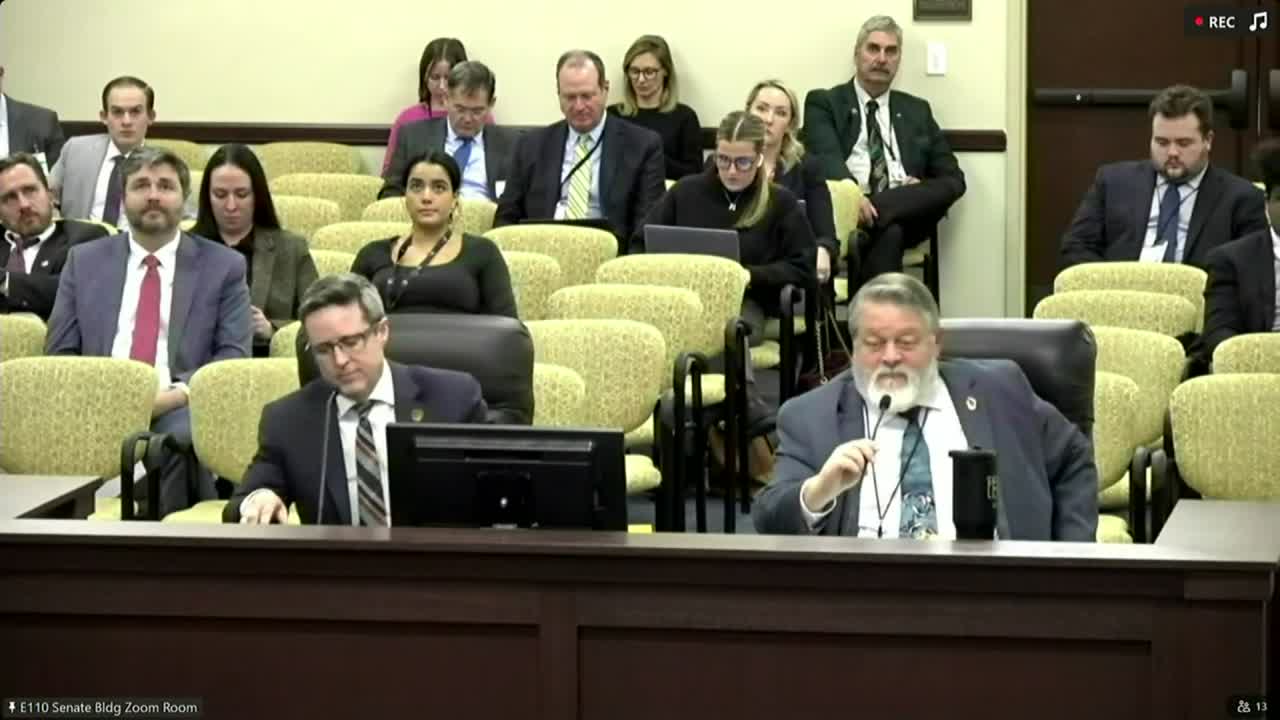
Representative Colin Jack and Attorney General Derek Brown presented House Bill 330, a compact measure that would create an affirmative defense where harm results from conduct, omission or condition that "was authorized or required" by statute, permit, license, rule or similar government instrument. Sponsors framed the bill as preserving legislative and regulatory primacy and preventing courts from effectively re-writing policy.
"We're not going to be ruled by lawsuits," Representative Jack said, arguing the measure protects businesses and regulated entities from post-hoc liability when they follow authorizing law or permits. Attorney General Brown described HB330 as an "affirmative defense," not blanket immunity for misconduct: "If there's misconduct, if there's a design defect, if there's fraud, those kind of things, well, that that wouldn't be covered by this."
The bill prompted extensive public comment. Rachel Sykes, a plaintiffs' personal-injury attorney, told the committee she represents nursing-home and troubled-teen facility victims and opposed HB330 as written. "I oppose this bill because... it's going to abrogate a bad actor's duty to behave safely and reasonably because they're going to come in and say, well, we follow this regulatory checklist," Sykes said, warning the draft is broad enough to be used to defeat legitimate negligence claims.
Other plaintiff and personal-injury attorneys raised similar concerns about nursing-home staffing, licensed contractors, childcare facilities and licensed drivers; they warned a licensing or permitting defense could be abused to avoid liability even where minimum standards were insufficient or poorly enforced. Business groups, including the U.S. Chamber of Commerce, testified in support, saying the bill provides predictability and prevents opportunistic litigation tied to national cases.
The sponsor said he will work with committee members and stakeholders to add guardrails between committee passage and floor consideration. The committee voted to favorably recommend HB330 to the House; the sponsor committed to consider narrower language to address public concerns.
"We're not going to be ruled by lawsuits," Representative Jack said, arguing the measure protects businesses and regulated entities from post-hoc liability when they follow authorizing law or permits. Attorney General Brown described HB330 as an "affirmative defense," not blanket immunity for misconduct: "If there's misconduct, if there's a design defect, if there's fraud, those kind of things, well, that that wouldn't be covered by this."
The bill prompted extensive public comment. Rachel Sykes, a plaintiffs' personal-injury attorney, told the committee she represents nursing-home and troubled-teen facility victims and opposed HB330 as written. "I oppose this bill because... it's going to abrogate a bad actor's duty to behave safely and reasonably because they're going to come in and say, well, we follow this regulatory checklist," Sykes said, warning the draft is broad enough to be used to defeat legitimate negligence claims.
Other plaintiff and personal-injury attorneys raised similar concerns about nursing-home staffing, licensed contractors, childcare facilities and licensed drivers; they warned a licensing or permitting defense could be abused to avoid liability even where minimum standards were insufficient or poorly enforced. Business groups, including the U.S. Chamber of Commerce, testified in support, saying the bill provides predictability and prevents opportunistic litigation tied to national cases.
The sponsor said he will work with committee members and stakeholders to add guardrails between committee passage and floor consideration. The committee voted to favorably recommend HB330 to the House; the sponsor committed to consider narrower language to address public concerns.
Don't Miss a Word: See the Full Meeting!
Go beyond summaries. Unlock every video, transcript, and key insight with a Founder Membership.
✓
Get instant access to full meeting videos
✓
Search and clip any phrase from complete transcripts
✓
Receive AI-powered summaries & custom alerts
✓
Enjoy lifetime, unrestricted access to government data
30-day money-back guarantee
