Senate approves package of measures on naloxone, opioid fatality review and ID access for unhoused youth
February 02, 2026 | 2026 Utah Legislature, Utah Legislature, Utah Legislative Branch, Utah
This article was created by AI summarizing key points discussed. AI makes mistakes, so for full details and context, please refer to the video of the full meeting. Please report any errors so we can fix them. Report an error »
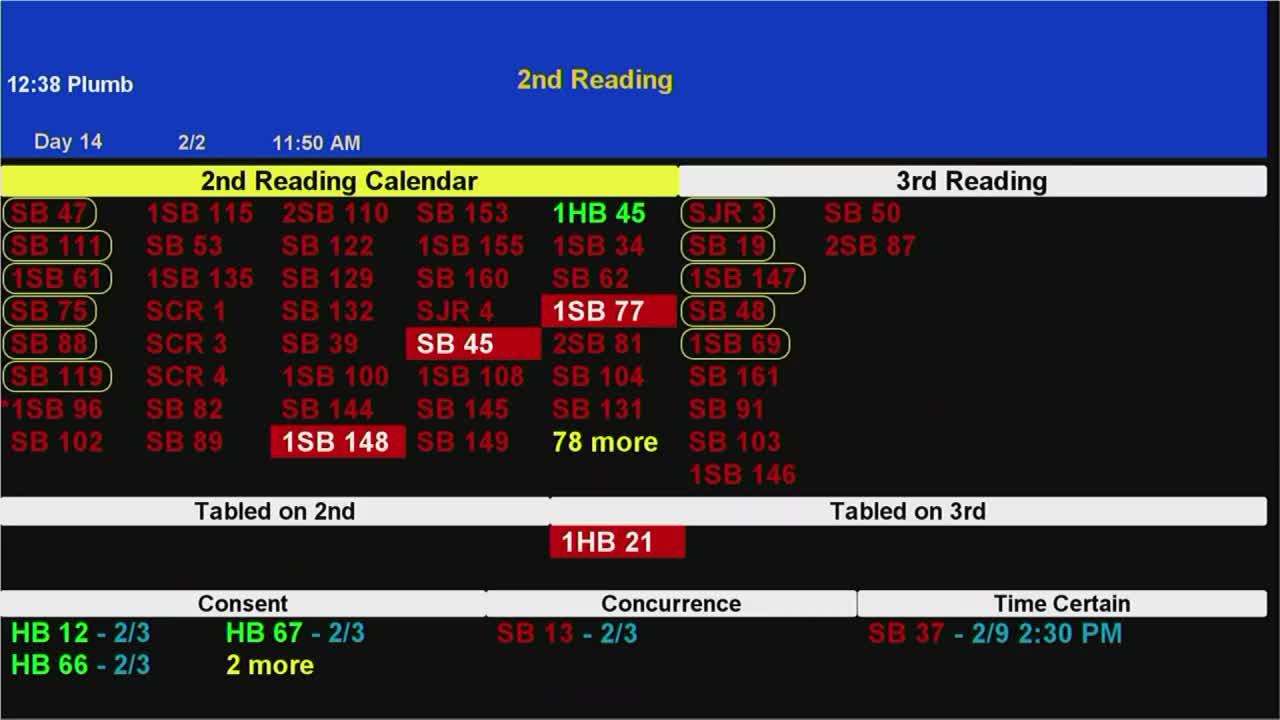
The Senate advanced a group of measures addressing overdose response, opioid fatality reviews and access to identification documents for unhoused and foster youth.
Senator Plumb described SB 103 as a technical correction to prior law to ensure unhoused youth, youth in foster care and recent foster care graduates can obtain birth certificates, college transcripts and driver’s licenses needed for work, school and services. "This bill is actually a very simple fix... the goal of this bill was to get barriers broken down for our youth, to our unsheltered youth and our youth in foster care," Plumb said. The Senate recorded 26 yea, 0 nay and 3 absent and read SB 103 a third time.
Plumb also sponsored SB 87, a naloxone amendment. She explained the amendment process and a second substitute that would allow certain naloxone rescue kits past their printed expiration date to be furnished for an additional two years after reviewing stability data. "Naloxone's the antidote for an overdose," Plumb said, and noted "kits from the nineties are still 95% plus intact" in stability testing cited on the floor. Supporters argued the change would reduce waste and cost for state and local public health agencies. The Senate adopted the substitute and read SB 87 for a third time; the roll call on the floor recorded the bill as having passed third reading.
On SB 96, Plumb said the medical examiner's office needs access to certain treatment records to perform opioid fatality reviews; current federal rules (42 CFR) limit access while someone is in treatment. "Once somebody's passed, including that in the overall evaluation of what got them to that unfortunate place feels like it is the right thing," she said. The Senate read the first substitute of SB 96 for a third time with a unanimous roll call as read on the floor.
Sponsors framed the three bills as part of a coordinated policy effort developed with legislators, public health officials and national groups (including NCSL) to address overdose prevention, data access for reviews and practical barriers to identity documents.
The bills passed on third reading and will proceed through the legislative process as scheduled.
Senator Plumb described SB 103 as a technical correction to prior law to ensure unhoused youth, youth in foster care and recent foster care graduates can obtain birth certificates, college transcripts and driver’s licenses needed for work, school and services. "This bill is actually a very simple fix... the goal of this bill was to get barriers broken down for our youth, to our unsheltered youth and our youth in foster care," Plumb said. The Senate recorded 26 yea, 0 nay and 3 absent and read SB 103 a third time.
Plumb also sponsored SB 87, a naloxone amendment. She explained the amendment process and a second substitute that would allow certain naloxone rescue kits past their printed expiration date to be furnished for an additional two years after reviewing stability data. "Naloxone's the antidote for an overdose," Plumb said, and noted "kits from the nineties are still 95% plus intact" in stability testing cited on the floor. Supporters argued the change would reduce waste and cost for state and local public health agencies. The Senate adopted the substitute and read SB 87 for a third time; the roll call on the floor recorded the bill as having passed third reading.
On SB 96, Plumb said the medical examiner's office needs access to certain treatment records to perform opioid fatality reviews; current federal rules (42 CFR) limit access while someone is in treatment. "Once somebody's passed, including that in the overall evaluation of what got them to that unfortunate place feels like it is the right thing," she said. The Senate read the first substitute of SB 96 for a third time with a unanimous roll call as read on the floor.
Sponsors framed the three bills as part of a coordinated policy effort developed with legislators, public health officials and national groups (including NCSL) to address overdose prevention, data access for reviews and practical barriers to identity documents.
The bills passed on third reading and will proceed through the legislative process as scheduled.
View the Full Meeting & All Its Details
This article offers just a summary. Unlock complete video, transcripts, and insights as a Founder Member.
✓
Watch full, unedited meeting videos
✓
Search every word spoken in unlimited transcripts
✓
AI summaries & real-time alerts (all government levels)
✓
Permanent access to expanding government content
30-day money-back guarantee
