Committee Weighs $30M SchoolAI RFA to Expand Purpose‑Built AI in Utah Classrooms
February 02, 2026 | 2026 Utah Legislature, Utah Legislature, Utah Legislative Branch, Utah
This article was created by AI summarizing key points discussed. AI makes mistakes, so for full details and context, please refer to the video of the full meeting. Please report any errors so we can fix them. Report an error »
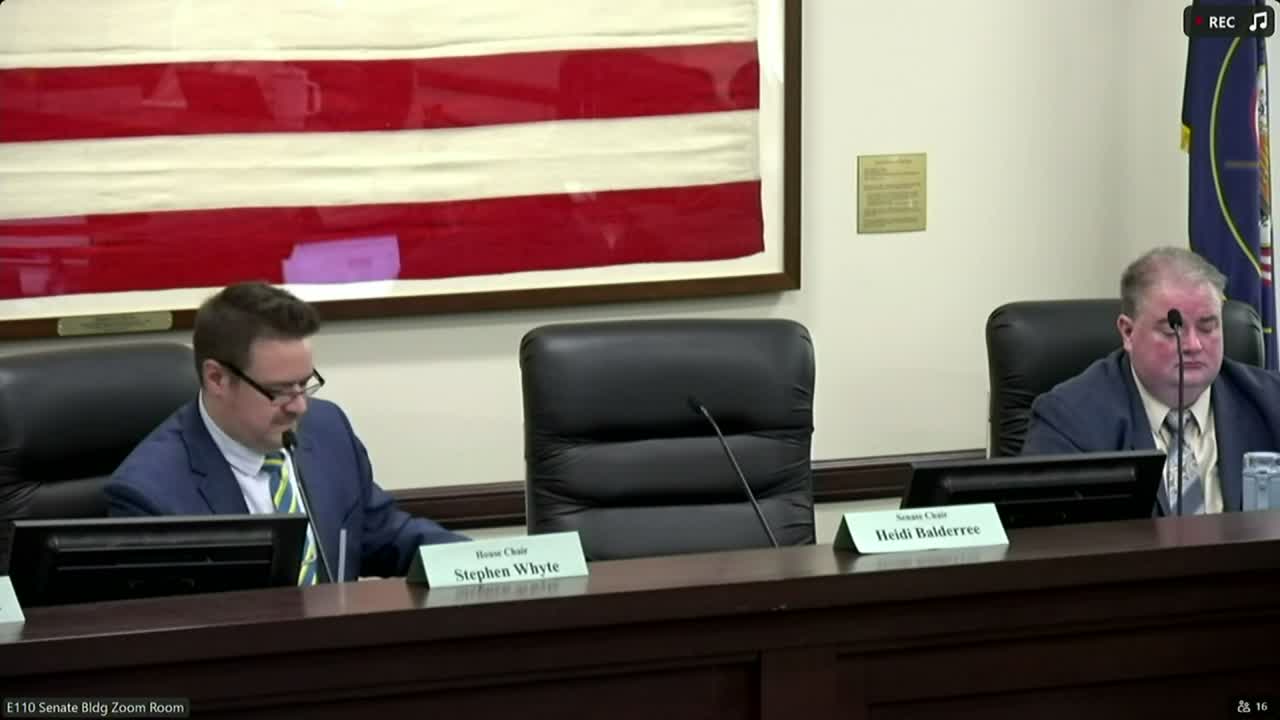
Representative White and SchoolAI cofounder Kevin Morrill asked the Public Education Appropriations Committee to consider a one‑time, three‑year investment in a Utah‑based education AI platform.
Representative White framed the request as a bid to keep Utah “in the driver's seat” on responsible, state‑aligned classroom AI. He cited concerns about off‑the‑shelf large language models and quoted Governor Cox’s comment that, as Representative White paraphrased it, “unfettered AI is making our kids stupid.”
Kevin Morrill told a classroom anecdote in which a veteran teacher regained confidence and postponed retirement after using SchoolAI to identify students’ immediate instructional needs. "She was planning to retire...and since understanding where her kids were...she planned to continue teaching for 2 more years," Morrill said.
The RFA requests $30,000,000 one‑time to be spent over three years (presenters proposed splitting it as $10,000,000 per year). Proposed activities include expanding access, developing parent‑facing visibility tools, coordinating with state agencies (USBE, UEN), and standing up a council for AI safety and innovation to guide procurement and implementation.
Committee members asked whether the work would follow the state's RFP/process and how ongoing maintenance would be funded after the one‑time appropriation. Morrill and Representative White said the proposal would follow procurement rules and stressed the RFA is structured to be scalable; they described the three‑year timeline as designed to reach measurable milestones and to allow the state to reassess future funding after results are demonstrated.
Questions from lawmakers also focused on classroom time, parental awareness and device access; presenters said classroom use would be limited to short, teacher‑directed activities, that a parent‑visibility feature was planned, and that use could occur on existing school devices or in computer labs.
What’s next: The committee asked follow‑up questions and signaled interest in procurement and oversight details before a potential appropriation decision.
Representative White framed the request as a bid to keep Utah “in the driver's seat” on responsible, state‑aligned classroom AI. He cited concerns about off‑the‑shelf large language models and quoted Governor Cox’s comment that, as Representative White paraphrased it, “unfettered AI is making our kids stupid.”
Kevin Morrill told a classroom anecdote in which a veteran teacher regained confidence and postponed retirement after using SchoolAI to identify students’ immediate instructional needs. "She was planning to retire...and since understanding where her kids were...she planned to continue teaching for 2 more years," Morrill said.
The RFA requests $30,000,000 one‑time to be spent over three years (presenters proposed splitting it as $10,000,000 per year). Proposed activities include expanding access, developing parent‑facing visibility tools, coordinating with state agencies (USBE, UEN), and standing up a council for AI safety and innovation to guide procurement and implementation.
Committee members asked whether the work would follow the state's RFP/process and how ongoing maintenance would be funded after the one‑time appropriation. Morrill and Representative White said the proposal would follow procurement rules and stressed the RFA is structured to be scalable; they described the three‑year timeline as designed to reach measurable milestones and to allow the state to reassess future funding after results are demonstrated.
Questions from lawmakers also focused on classroom time, parental awareness and device access; presenters said classroom use would be limited to short, teacher‑directed activities, that a parent‑visibility feature was planned, and that use could occur on existing school devices or in computer labs.
What’s next: The committee asked follow‑up questions and signaled interest in procurement and oversight details before a potential appropriation decision.
Don't Miss a Word: See the Full Meeting!
Go beyond summaries. Unlock every video, transcript, and key insight with a Founder Membership.
✓
Get instant access to full meeting videos
✓
Search and clip any phrase from complete transcripts
✓
Receive AI-powered summaries & custom alerts
✓
Enjoy lifetime, unrestricted access to government data
30-day money-back guarantee
