Refuge Utah seeks $7.5M to expand shelter, victim services and transitional housing
February 02, 2026 | 2026 Utah Legislature, Utah Legislature, Utah Legislative Branch, Utah
This article was created by AI summarizing key points discussed. AI makes mistakes, so for full details and context, please refer to the video of the full meeting. Please report any errors so we can fix them. Report an error »
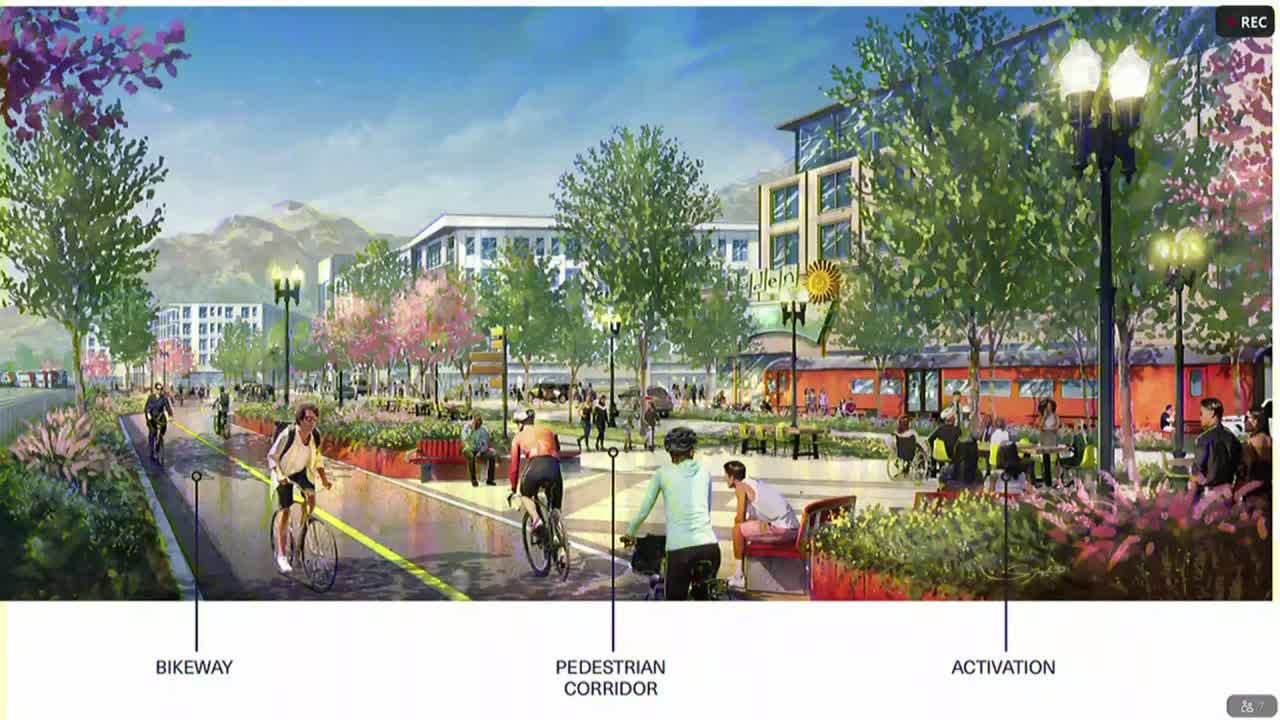
Senator Baldry introduced Refuge Utah’s request for a comprehensive victim-services campus. Ashley Taylor described a campus plan that would consolidate an expanded emergency safe house, a victim-services center with therapy and group treatment space, childcare, and transitional housing on a single site.
Taylor said current facilities house 25 beds and that the proposed campus would expand capacity to as many as 138 beds overall; Phase 1 would include an emergency safe house with 48 bedrooms and a victim services center. Refuge Utah reported $9.5 million raised to date, $11 million in commitments in progress, and requested $7.5 million in one-time state funding to complete Phase 1 of the $28 million project.
Survivor and board member Lindsay Hackford testified about being turned away when shelters were full and urged the committee to "make room for the next person who calls," describing the risk faced by survivors who are unable to access emergency shelter. Committee members asked about average length of stay (presenters said target 30 days, current average about 45 days), turn-away rates (presenters said about 450 requests turned away last year), and scalability. Presenters said they would accept partial funding and that state involvement often helps catalyze private fundraising.
No appropriation was approved Feb. 2; presenters said they are ready to break ground later in the calendar year pending funding.
Taylor said current facilities house 25 beds and that the proposed campus would expand capacity to as many as 138 beds overall; Phase 1 would include an emergency safe house with 48 bedrooms and a victim services center. Refuge Utah reported $9.5 million raised to date, $11 million in commitments in progress, and requested $7.5 million in one-time state funding to complete Phase 1 of the $28 million project.
Survivor and board member Lindsay Hackford testified about being turned away when shelters were full and urged the committee to "make room for the next person who calls," describing the risk faced by survivors who are unable to access emergency shelter. Committee members asked about average length of stay (presenters said target 30 days, current average about 45 days), turn-away rates (presenters said about 450 requests turned away last year), and scalability. Presenters said they would accept partial funding and that state involvement often helps catalyze private fundraising.
No appropriation was approved Feb. 2; presenters said they are ready to break ground later in the calendar year pending funding.
View the Full Meeting & All Its Details
This article offers just a summary. Unlock complete video, transcripts, and insights as a Founder Member.
✓
Watch full, unedited meeting videos
✓
Search every word spoken in unlimited transcripts
✓
AI summaries & real-time alerts (all government levels)
✓
Permanent access to expanding government content
30-day money-back guarantee
