Committee backs bill to let cities set zoning rules for microschools, clarifies capacity and safety requirements
January 26, 2026 | 2026 Utah Legislature, Utah Legislature, Utah Legislative Branch, Utah
This article was created by AI summarizing key points discussed. AI makes mistakes, so for full details and context, please refer to the video of the full meeting. Please report any errors so we can fix them. Report an error »
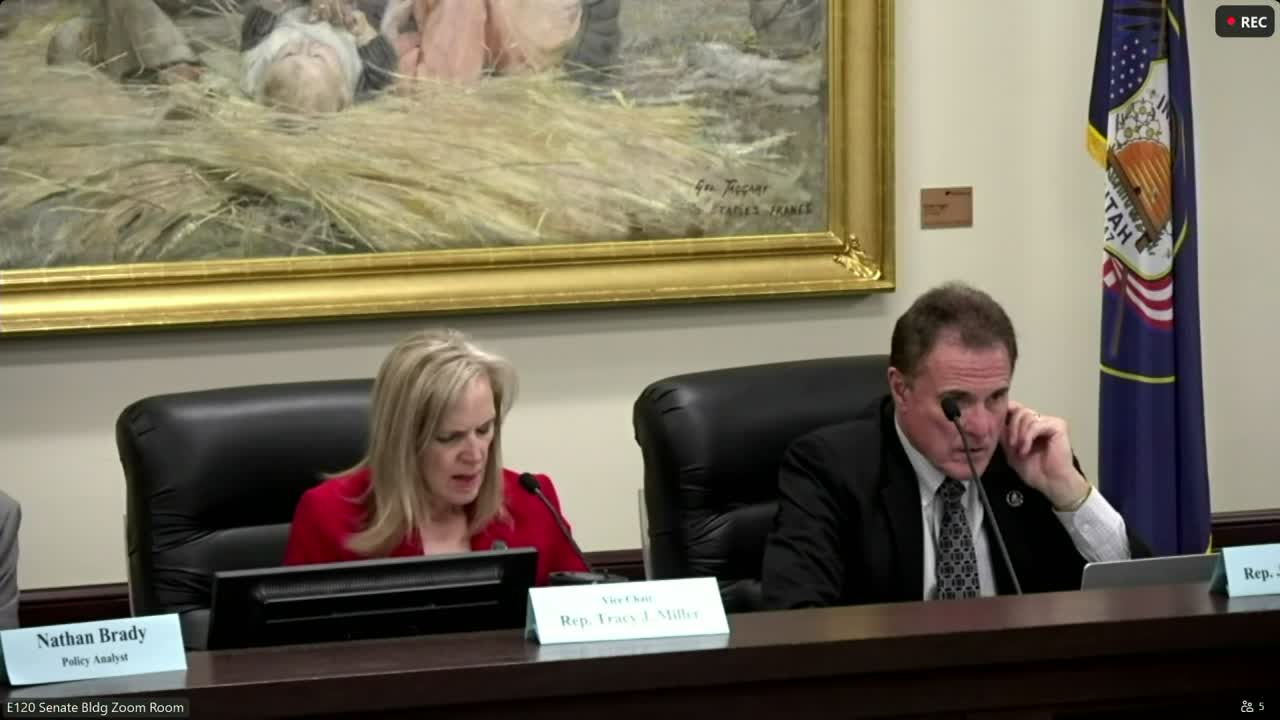
Representative DeFe told the House Political Subdivisions Committee that vague wording in last year’s microschool law left open the possibility that large micro‑school entities of up to 100 students could operate inside single‑family residential neighborhoods, citing a case in Kaysville where the city worked with school operators to find a more suitable site.
The substitute to House Bill 126 clarifies intent and “gives the cities and counties the tools they need to set reasonable zoning limits,” DeFe said, saying the change “does not prohibit home based micro schools, home school co‑ops, and learning groups” and instead preserves local control. She added the substitute includes a provision that student capacities and occupancies must comply with state building and fire codes.
Kaysville City Manager Jason Christiansen spoke in support, calling the substitute “a win‑win” and saying it provides reasonable regulations to avoid unintended consequences for cities. John England of the Libertas Institute said the revised language addressed the institute’s concerns and advised that clear local ordinances help microschool founders know where they can and cannot locate.
An online commenter, Seth Stewart, a homeschooling parent, urged the committee to reconsider, saying the bill could “compel micro education providers to upgrade their facilities when that may not be physically necessary,” creating a financial barrier for small, nature‑based or co‑op models. Stewart argued the change could narrow school choice for parents. DeFe responded that the substitute does not place new restrictions on home‑based micro‑schools and that it merely clarifies existing law.
The committee adopted the first substitute for HB 126 by voice vote and then voted to favorably recommend HB 126 (first substitute) out of committee; the transcript reports those actions as passing unanimously.
The substitute to House Bill 126 clarifies intent and “gives the cities and counties the tools they need to set reasonable zoning limits,” DeFe said, saying the change “does not prohibit home based micro schools, home school co‑ops, and learning groups” and instead preserves local control. She added the substitute includes a provision that student capacities and occupancies must comply with state building and fire codes.
Kaysville City Manager Jason Christiansen spoke in support, calling the substitute “a win‑win” and saying it provides reasonable regulations to avoid unintended consequences for cities. John England of the Libertas Institute said the revised language addressed the institute’s concerns and advised that clear local ordinances help microschool founders know where they can and cannot locate.
An online commenter, Seth Stewart, a homeschooling parent, urged the committee to reconsider, saying the bill could “compel micro education providers to upgrade their facilities when that may not be physically necessary,” creating a financial barrier for small, nature‑based or co‑op models. Stewart argued the change could narrow school choice for parents. DeFe responded that the substitute does not place new restrictions on home‑based micro‑schools and that it merely clarifies existing law.
The committee adopted the first substitute for HB 126 by voice vote and then voted to favorably recommend HB 126 (first substitute) out of committee; the transcript reports those actions as passing unanimously.
Don't Miss a Word: See the Full Meeting!
Go beyond summaries. Unlock every video, transcript, and key insight with a Founder Membership.
✓
Get instant access to full meeting videos
✓
Search and clip any phrase from complete transcripts
✓
Receive AI-powered summaries & custom alerts
✓
Enjoy lifetime, unrestricted access to government data
30-day money-back guarantee
