Panel approves tougher penalties, impound authority and rapid fingerprint scan for drivers with no ID; debate centers on equity and enforcement
January 23, 2026 | 2026 Utah Legislature, Utah Legislature, Utah Legislative Branch, Utah
This article was created by AI summarizing key points discussed. AI makes mistakes, so for full details and context, please refer to the video of the full meeting. Please report any errors so we can fix them. Report an error »
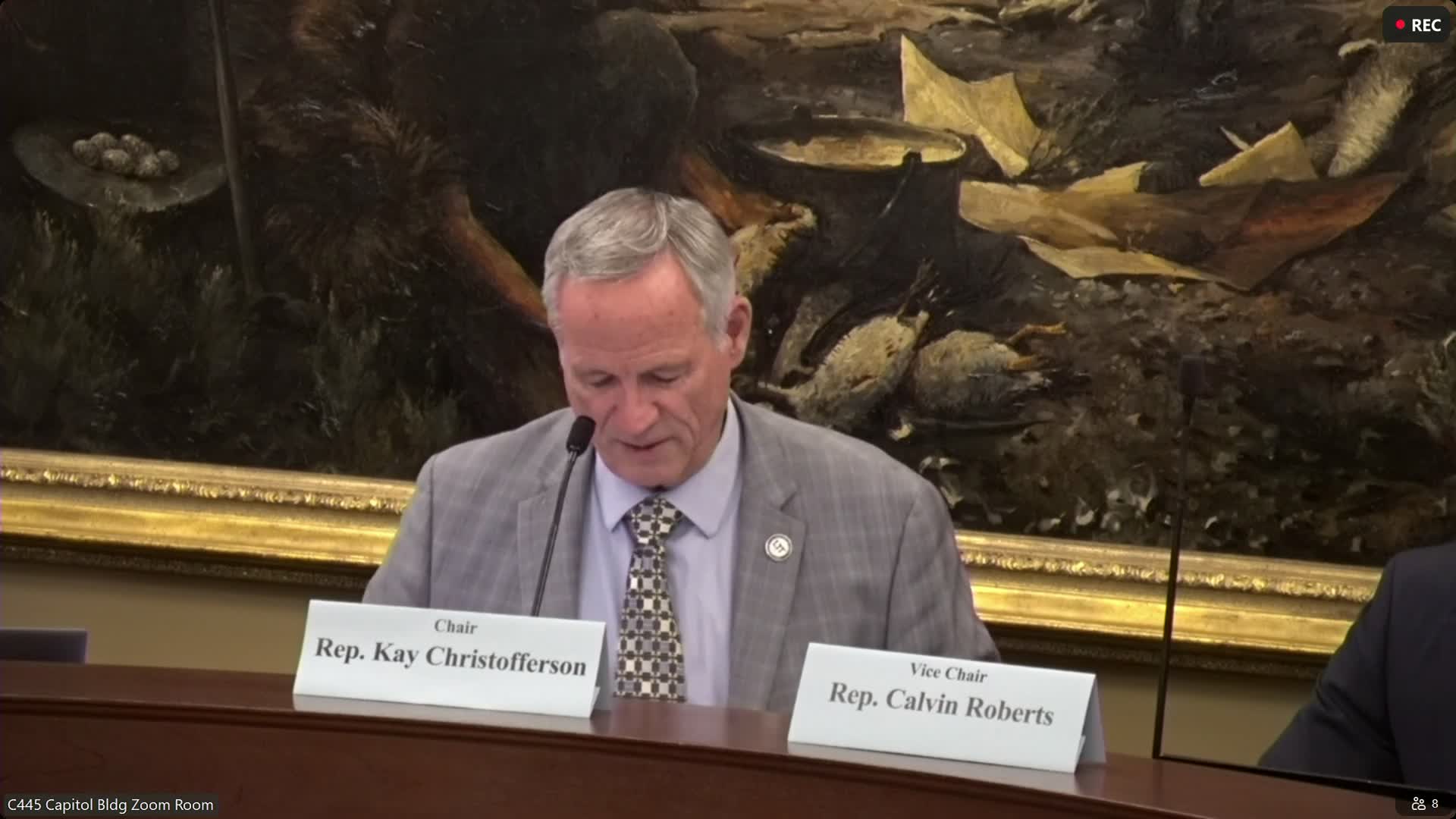
Lawmakers on the House Transportation Committee voted on Tuesday to advance legislation that would elevate 'driving without a valid credential' to a Class C misdemeanor, add vehicle‑impound authority and allow law enforcement to run a rapid fingerprint scan against national databases when an individual has no identification.
Representative McPherson, the sponsor, told the committee the bill addresses a growing enforcement problem in Utah. He cited agency data and said some jurisdictions report a substantial share of crashes, hit‑and‑runs and DUIs involve drivers without credentials. McPherson said law enforcement requested the ability to perform a rapid fingerprint scan at a stop "to see if that person is currently on the wanted list," and stressed the sponsor’s language that the scan "does not create a record." He also said the change would align penalties and add mandatory impound authority in certain cases.
Committee members pressed the sponsor on several points. Representative Dominguez and others warned the bill could disproportionately affect immigrant communities and people who face barriers to obtaining a driver's‑privilege card; they urged outreach, expanded language access and possible parallel legislation to increase access to credentials. Representative Ivory and others expressed concern about the financial harm impoundment and fees would inflict on low‑income families.
Law‑enforcement witnesses testified in support. Marcus Yockey of the Utah Department of Public Safety described the Automated Fingerprint Identification System and related networks the department uses. Colonel Greg Holly (Utah Highway Patrol) told the committee DPS and statewide law enforcement supported the bill and the exceptions that leave discretion to officers.
The committee adopted amendment 2 (which clarified the fingerprinting language and other technical points) by a recorded committee vote of 10–1, with Representative Dominguez the lone 'no' on that amendment. The committee then advanced HB 136 as amended with a roll‑call vote of 9–3 (Romero, Ivory and Dominguez voting no). Sponsor McPherson said stakeholders across the state were engaged in drafting the measure but said changes could be made in later stages.
Representative McPherson, the sponsor, told the committee the bill addresses a growing enforcement problem in Utah. He cited agency data and said some jurisdictions report a substantial share of crashes, hit‑and‑runs and DUIs involve drivers without credentials. McPherson said law enforcement requested the ability to perform a rapid fingerprint scan at a stop "to see if that person is currently on the wanted list," and stressed the sponsor’s language that the scan "does not create a record." He also said the change would align penalties and add mandatory impound authority in certain cases.
Committee members pressed the sponsor on several points. Representative Dominguez and others warned the bill could disproportionately affect immigrant communities and people who face barriers to obtaining a driver's‑privilege card; they urged outreach, expanded language access and possible parallel legislation to increase access to credentials. Representative Ivory and others expressed concern about the financial harm impoundment and fees would inflict on low‑income families.
Law‑enforcement witnesses testified in support. Marcus Yockey of the Utah Department of Public Safety described the Automated Fingerprint Identification System and related networks the department uses. Colonel Greg Holly (Utah Highway Patrol) told the committee DPS and statewide law enforcement supported the bill and the exceptions that leave discretion to officers.
The committee adopted amendment 2 (which clarified the fingerprinting language and other technical points) by a recorded committee vote of 10–1, with Representative Dominguez the lone 'no' on that amendment. The committee then advanced HB 136 as amended with a roll‑call vote of 9–3 (Romero, Ivory and Dominguez voting no). Sponsor McPherson said stakeholders across the state were engaged in drafting the measure but said changes could be made in later stages.
Don't Miss a Word: See the Full Meeting!
Go beyond summaries. Unlock every video, transcript, and key insight with a Founder Membership.
✓
Get instant access to full meeting videos
✓
Search and clip any phrase from complete transcripts
✓
Receive AI-powered summaries & custom alerts
✓
Enjoy lifetime, unrestricted access to government data
30-day money-back guarantee
