Substitute gives judges discretion to limit 'compensatory service' in school‑zone speeding cases
January 23, 2026 | 2026 Utah Legislature, Utah Legislature, Utah Legislative Branch, Utah
This article was created by AI summarizing key points discussed. AI makes mistakes, so for full details and context, please refer to the video of the full meeting. Please report any errors so we can fix them. Report an error »
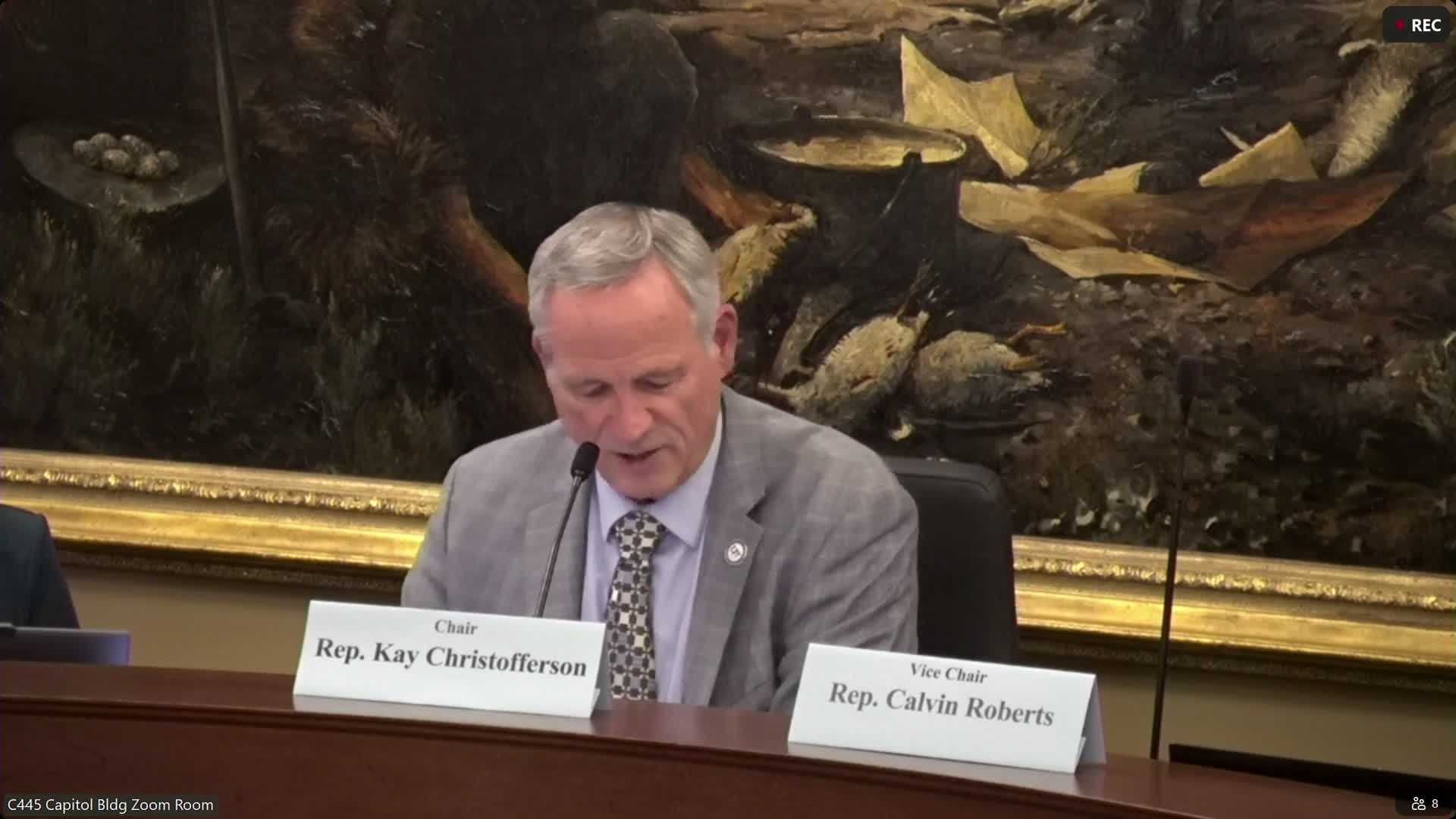
Representative Moss told the committee that courts have increasingly ordered offenders to perform 'compensatory service'—standing with a school crossing guard—in lower‑level school‑zone speeding cases, and that the practice has sometimes distracted and burdened crossing guards and local officers.
Her substitute changes the statute so a court may order compensatory service only after coordination with the local school and law‑enforcement agency and generally limits the sanction to more egregious cases. Sponsor and law‑enforcement witnesses said the change preserves school‑zone safety while avoiding instances where unvetted individuals are placed near children or where officers must be diverted from other duties.
A technical house amendment removed an obsolete phrase tied to bail forfeiture; the committee adopted the amendment and passed the substitute with a favorable recommendation by unanimous voice vote.
Her substitute changes the statute so a court may order compensatory service only after coordination with the local school and law‑enforcement agency and generally limits the sanction to more egregious cases. Sponsor and law‑enforcement witnesses said the change preserves school‑zone safety while avoiding instances where unvetted individuals are placed near children or where officers must be diverted from other duties.
A technical house amendment removed an obsolete phrase tied to bail forfeiture; the committee adopted the amendment and passed the substitute with a favorable recommendation by unanimous voice vote.
View the Full Meeting & All Its Details
This article offers just a summary. Unlock complete video, transcripts, and insights as a Founder Member.
✓
Watch full, unedited meeting videos
✓
Search every word spoken in unlimited transcripts
✓
AI summaries & real-time alerts (all government levels)
✓
Permanent access to expanding government content
30-day money-back guarantee
