State agencies tell Utah commission most federal guidance letters pose implementation burdens but no immediate operational change
January 09, 2026 | 2026 Utah Legislature, Utah Legislature, Utah Legislative Branch, Utah
This article was created by AI summarizing key points discussed. AI makes mistakes, so for full details and context, please refer to the video of the full meeting. Please report any errors so we can fix them. Report an error »
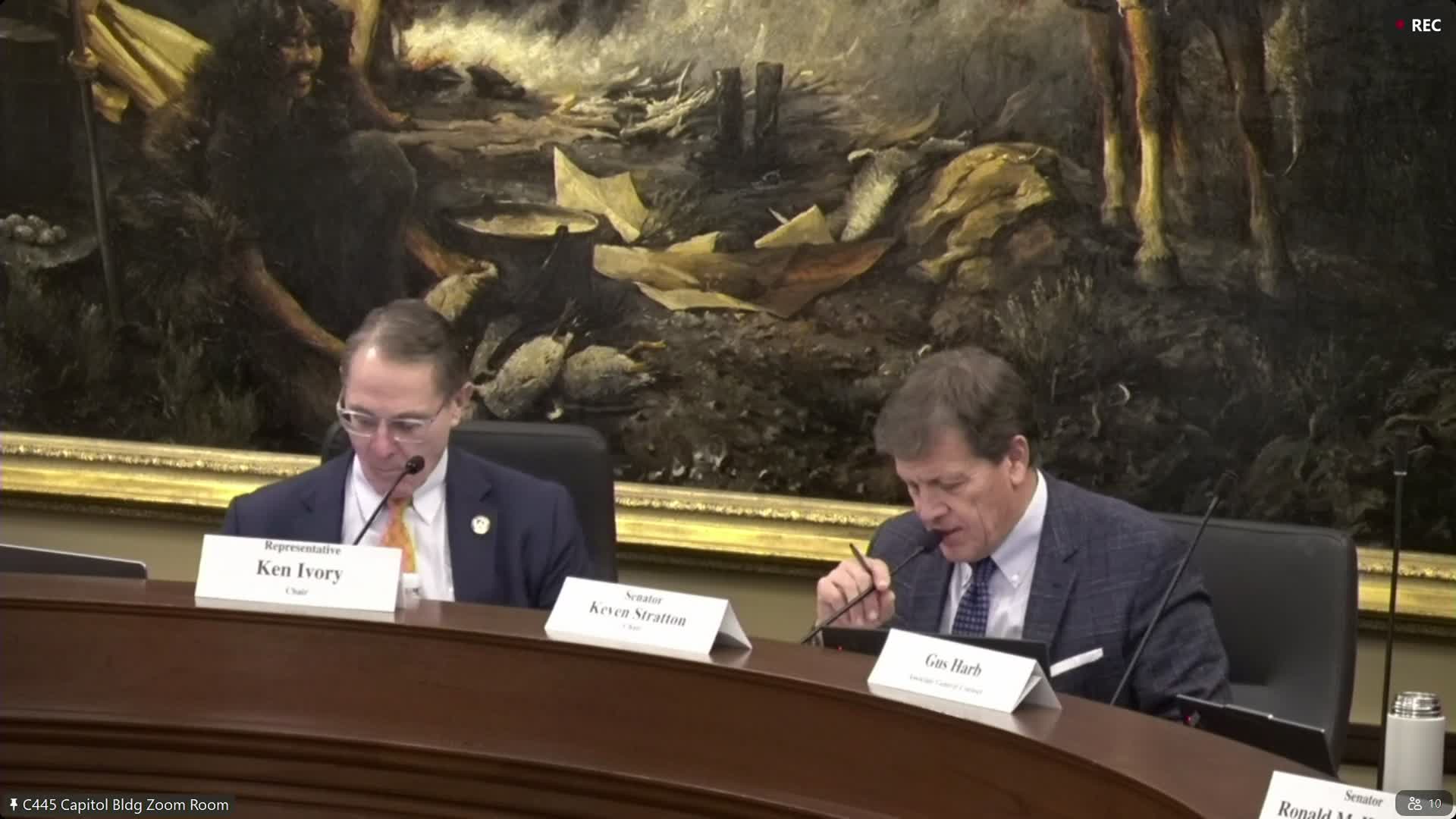
Salt Lake City — State health and human services officials told the Federalism Commission that several recent federal guidance letters warrant closer review but generally do not require immediate programmatic changes in Utah.
Nathan Brady of the Office of Legislative Research summarized six DHHS letters the commission asked to be reviewed. Tanya Myra, director of the Division of Child and Family Services, said the Family Violence Prevention and Services Act (FVPSA) letter asks recipients to ensure federal funds are not used for unlawful DEIA initiatives and that DHHS currently sees no fiscal or compliance conflict. "At this time we are not seeing that there is any real impact," Myra said.
Office of Substance Use and Mental Health director Eric Tadahara addressed a SAMHSA letter responding to a federal executive order on homelessness and vagrancy. He said Utah's programs already align with the letter's acceptable activities and that no operational changes were required.
Julie Ewing, the newly appointed state Medicaid director, described CMS guidance restarting periodic data matching (PDM) and limits on continuous eligibility waivers. She said periodic data matching will resume and that one state waiver (TAM) covering roughly 6,500 individuals will transition from 12‑month continuous eligibility to a program without that provision, requiring paperwork adjustments but not immediate loss of coverage.
Officials repeatedly flagged increased monitoring and reporting burdens. Ewing noted potential database and AFCARS reporting impacts tied to reauthorization provisions and said DHHS is evaluating how best to implement changes with minimal disruption.
Commissioners emphasized the federalism principle: even when guidance aligns with state priorities, the commission should track federal instructions and preserve the state's flexibility. The commission will expand the agency reporting the legislation envisions to ensure ongoing transparency and to gather written agency assessments for letters not covered at this hearing.
Nathan Brady of the Office of Legislative Research summarized six DHHS letters the commission asked to be reviewed. Tanya Myra, director of the Division of Child and Family Services, said the Family Violence Prevention and Services Act (FVPSA) letter asks recipients to ensure federal funds are not used for unlawful DEIA initiatives and that DHHS currently sees no fiscal or compliance conflict. "At this time we are not seeing that there is any real impact," Myra said.
Office of Substance Use and Mental Health director Eric Tadahara addressed a SAMHSA letter responding to a federal executive order on homelessness and vagrancy. He said Utah's programs already align with the letter's acceptable activities and that no operational changes were required.
Julie Ewing, the newly appointed state Medicaid director, described CMS guidance restarting periodic data matching (PDM) and limits on continuous eligibility waivers. She said periodic data matching will resume and that one state waiver (TAM) covering roughly 6,500 individuals will transition from 12‑month continuous eligibility to a program without that provision, requiring paperwork adjustments but not immediate loss of coverage.
Officials repeatedly flagged increased monitoring and reporting burdens. Ewing noted potential database and AFCARS reporting impacts tied to reauthorization provisions and said DHHS is evaluating how best to implement changes with minimal disruption.
Commissioners emphasized the federalism principle: even when guidance aligns with state priorities, the commission should track federal instructions and preserve the state's flexibility. The commission will expand the agency reporting the legislation envisions to ensure ongoing transparency and to gather written agency assessments for letters not covered at this hearing.
View the Full Meeting & All Its Details
This article offers just a summary. Unlock complete video, transcripts, and insights as a Founder Member.
✓
Watch full, unedited meeting videos
✓
Search every word spoken in unlimited transcripts
✓
AI summaries & real-time alerts (all government levels)
✓
Permanent access to expanding government content
30-day money-back guarantee
