Inglewood GPAC weighs land‑use alternatives as state housing rules limit local control
February 03, 2026 | Inglewood, Los Angeles County, California
This article was created by AI summarizing key points discussed. AI makes mistakes, so for full details and context, please refer to the video of the full meeting. Please report any errors so we can fix them. Report an error »
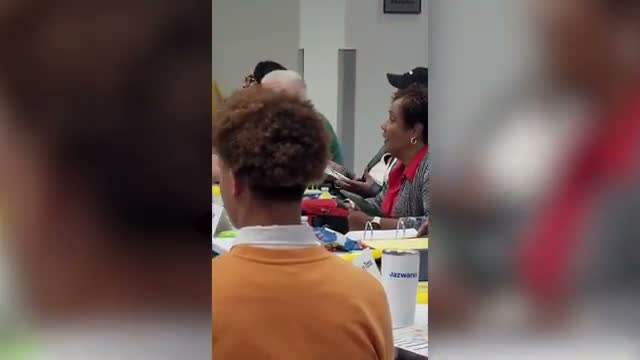
PlaceWorks project manager Jonathan presented land‑use alternatives to the Inglewood General Plan Advisory Committee, saying state law limits the city's ability to remove residential capacity and can allow a minimum of four housing units on parcels that are currently single‑family. "State law allows for a minimum of 4 housing units," Jonathan said, framing the constraints the GPAC must consider while choosing alternatives to present to the public.
The presentation covered the project schedule, recent outreach (an open house Sept. 6, district town hall and an online survey) and a map of land‑use alternatives for areas across the city. Consultants described four primary character types—commercial only, residential only, horizontal mixed use (stand‑alone commercial and residential next to each other) and vertical mixed use (residential over commercial)—and used illustrations of Prairie Avenue and other corridors to show how these patterns might look.
Why this matters: consultants said the general plan sets broad guidance for the city's land uses and must reflect state requirements. Jonathan warned that state density bonus laws and recent legislation mean the city cannot simply remove residential capacity in many places: where housing is allowed today, the city must generally allow at least as much in the future or compensate by adding capacity elsewhere. As a result, GPAC discussion centered on what alternatives to offer the public rather than definitive re‑zonings.
Members raised traffic, noise and market suitability around entertainment areas such as the stadium corridor and asked how mixed use would function near major generators. Several commissioners and members of the public said they were worried about increased congestion and nighttime noise for residents; consultants said traffic and environmental impacts would be analyzed later in the environmental review and that mitigation (for example, sound insulation) is part of project planning.
The committee debated whether some corridors should be shown as "commercial only" or offered as a mixed‑use alternative. For Prairie Avenue and other major boulevards the consultant proposed showing both options so the public can comment; Jonathan asked for a show of hands and the group supported presenting a commercial‑only alternative alongside mixed use.
Public commenters also raised safety concerns on Imperial between Prairie and Crenshaw, including an allegation that "there's a prostitution ring going on there"; GPAC members noted police activity in the corridor and discussed whether adding residential could change conditions, but no enforcement action or policy change was decided.
Next steps: consultants asked GPAC members to send questions and suggested alternatives in writing so the team can prepare for a follow‑up meeting and for public hearings. The committee agreed to present multiple alternatives to the public and to compile emailed comments before deciding if another GPAC meeting is needed; staff and consultants will coordinate possible dates in December or early January.
The presentation covered the project schedule, recent outreach (an open house Sept. 6, district town hall and an online survey) and a map of land‑use alternatives for areas across the city. Consultants described four primary character types—commercial only, residential only, horizontal mixed use (stand‑alone commercial and residential next to each other) and vertical mixed use (residential over commercial)—and used illustrations of Prairie Avenue and other corridors to show how these patterns might look.
Why this matters: consultants said the general plan sets broad guidance for the city's land uses and must reflect state requirements. Jonathan warned that state density bonus laws and recent legislation mean the city cannot simply remove residential capacity in many places: where housing is allowed today, the city must generally allow at least as much in the future or compensate by adding capacity elsewhere. As a result, GPAC discussion centered on what alternatives to offer the public rather than definitive re‑zonings.
Members raised traffic, noise and market suitability around entertainment areas such as the stadium corridor and asked how mixed use would function near major generators. Several commissioners and members of the public said they were worried about increased congestion and nighttime noise for residents; consultants said traffic and environmental impacts would be analyzed later in the environmental review and that mitigation (for example, sound insulation) is part of project planning.
The committee debated whether some corridors should be shown as "commercial only" or offered as a mixed‑use alternative. For Prairie Avenue and other major boulevards the consultant proposed showing both options so the public can comment; Jonathan asked for a show of hands and the group supported presenting a commercial‑only alternative alongside mixed use.
Public commenters also raised safety concerns on Imperial between Prairie and Crenshaw, including an allegation that "there's a prostitution ring going on there"; GPAC members noted police activity in the corridor and discussed whether adding residential could change conditions, but no enforcement action or policy change was decided.
Next steps: consultants asked GPAC members to send questions and suggested alternatives in writing so the team can prepare for a follow‑up meeting and for public hearings. The committee agreed to present multiple alternatives to the public and to compile emailed comments before deciding if another GPAC meeting is needed; staff and consultants will coordinate possible dates in December or early January.
Don't Miss a Word: See the Full Meeting!
Go beyond summaries. Unlock every video, transcript, and key insight with a Founder Membership.
✓
Get instant access to full meeting videos
✓
Search and clip any phrase from complete transcripts
✓
Receive AI-powered summaries & custom alerts
✓
Enjoy lifetime, unrestricted access to government data
30-day money-back guarantee
