Washington committee hears from growers on bill to add juice grapes to marketing law
January 22, 2026 | Legislative Sessions, Washington
This article was created by AI summarizing key points discussed. AI makes mistakes, so for full details and context, please refer to the video of the full meeting. Please report any errors so we can fix them. Report an error »
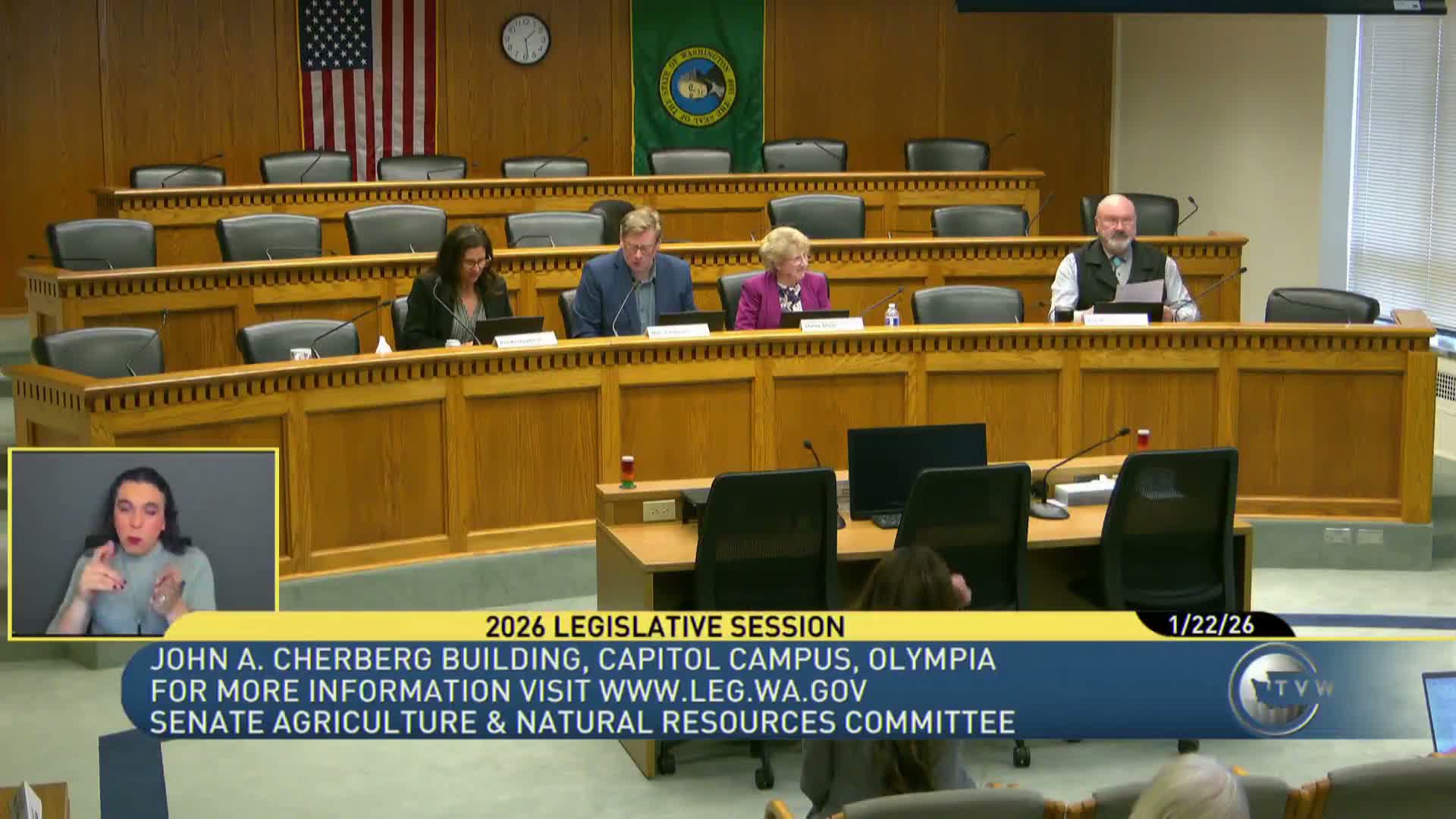
A Washington State Senate committee on Tuesday heard testimony on Senate Bill 5816, which would add "juice grapes" to the Washington Agricultural Marketing and Fair Practices Act and give juice-grape producers the same negotiating timelines and accreditation tools as pear, sweet corn and potato growers. Committee staff told members SB 5816 would require negotiations to begin at least 60 days before a crop's normal harvest date and conclude within 30 days after, and reported a fiscal note of $17,347 in the current biennium and just over $20,000 in future biennia.
Sponsor Senator Nikki Torres presented the bill as a narrow fix aimed at giving Washington families and farms greater bargaining power. "Right now, Washington's juice grape industry is under real financial pressure because processors are not consistently paying fair prices for non-fermented grapes," Torres said.
Remote testimony came from a third-generation grower identified by staff as David Golladay, who described farming near Grandview and said growers are frequently "boxed in" when prices are set days before harvest by a small number of buyers. Golladay cited recent year-to-year price spreads and said some processors offer substantially different returns for identical grapes depending on sale mechanisms (cash price versus pooled processing outcomes). He said a WSDA investigator indicated something looked "off" in past pricing events but lacked jurisdiction to pursue the matter further and that growers are circulating a petition in support of forming an association.
Committee staff and members asked clarifying questions. Vice chair closed the public hearing after noting only one individual had signed up to testify; no committee action was taken on the bill during the session and the hearing record was closed.
What happens next: The public hearing is complete; sponsors may seek amendments or scheduling for further committee action during the legislative session.
Sponsor Senator Nikki Torres presented the bill as a narrow fix aimed at giving Washington families and farms greater bargaining power. "Right now, Washington's juice grape industry is under real financial pressure because processors are not consistently paying fair prices for non-fermented grapes," Torres said.
Remote testimony came from a third-generation grower identified by staff as David Golladay, who described farming near Grandview and said growers are frequently "boxed in" when prices are set days before harvest by a small number of buyers. Golladay cited recent year-to-year price spreads and said some processors offer substantially different returns for identical grapes depending on sale mechanisms (cash price versus pooled processing outcomes). He said a WSDA investigator indicated something looked "off" in past pricing events but lacked jurisdiction to pursue the matter further and that growers are circulating a petition in support of forming an association.
Committee staff and members asked clarifying questions. Vice chair closed the public hearing after noting only one individual had signed up to testify; no committee action was taken on the bill during the session and the hearing record was closed.
What happens next: The public hearing is complete; sponsors may seek amendments or scheduling for further committee action during the legislative session.
Don't Miss a Word: See the Full Meeting!
Go beyond summaries. Unlock every video, transcript, and key insight with a Founder Membership.
✓
Get instant access to full meeting videos
✓
Search and clip any phrase from complete transcripts
✓
Receive AI-powered summaries & custom alerts
✓
Enjoy lifetime, unrestricted access to government data
30-day money-back guarantee
