Retirement system warns PHIP costs rising after federal changes; board to draw retiree trust
February 02, 2026 | Joint Interim Committees, Alabama Legislative Sessions, Alabama
This article was created by AI summarizing key points discussed. AI makes mistakes, so for full details and context, please refer to the video of the full meeting. Please report any errors so we can fix them. Report an error »
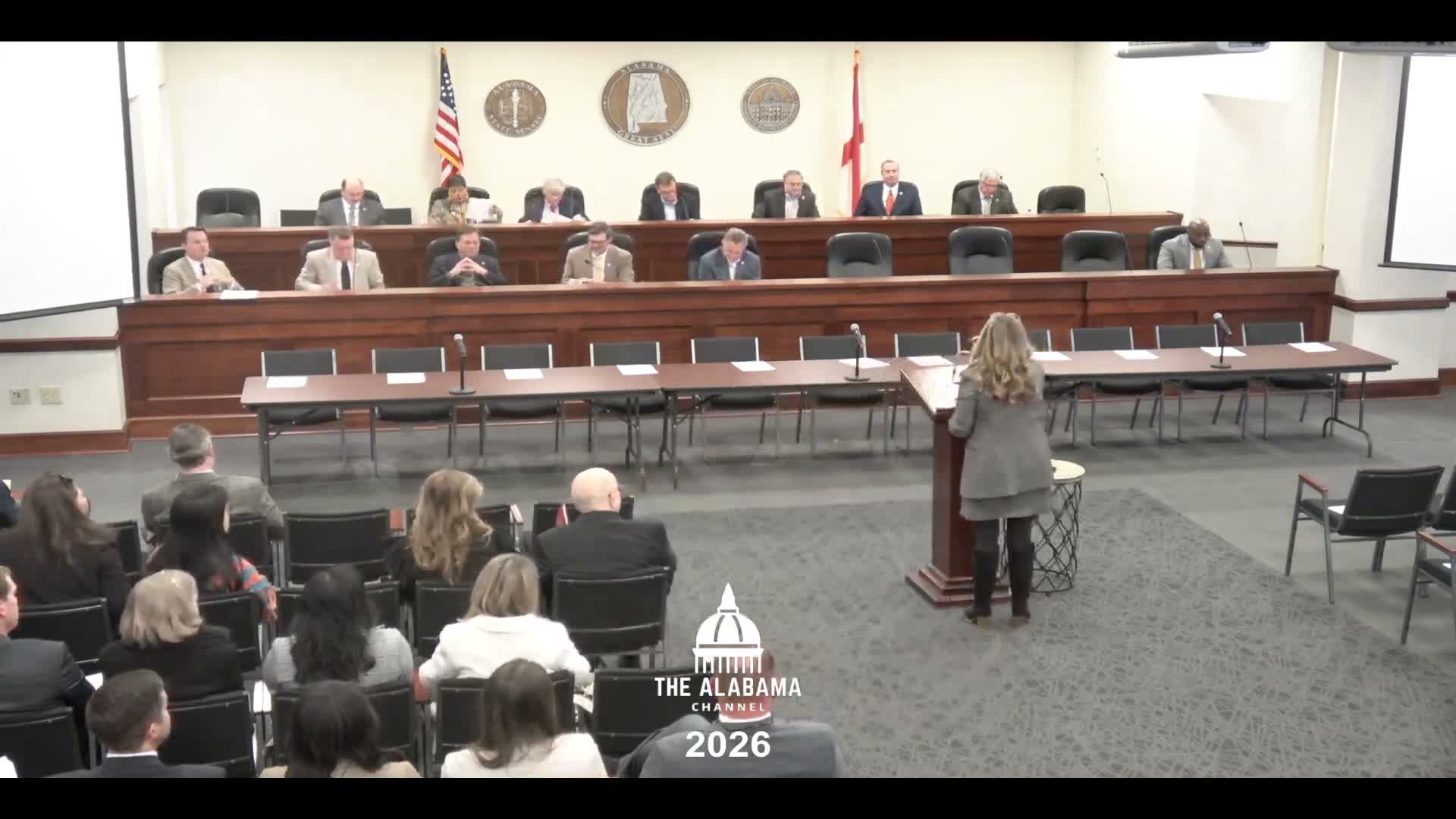
Nia Scott of the Retirement Systems of Alabama told the Education Trust Fund budget committee that PHIP — the system that covers active employees, retirees and dependents for K–12, community colleges and three universities — covers roughly 355,000 lives and cost about $1.67 billion in fiscal 2025.
Scott said recent federal changes to Medicare Advantage funding and provisions of the Inflation Reduction Act increased the program’s costs sharply, producing roughly a $150 million one‑year increase and projecting an aggregate rise through 2028. “CMS … shifted a lot of the cost to PHIP,” she said, describing less than a year’s notice before the change took effect.
Scott explained the plan is funded mainly through an employer per‑member rate set by the legislature (the FY25 rate was $800 per active member per month) and that about 72% of PHIP funding comes from Education Trust Fund dollars appropriated to participating employers. Member premiums and investment income make up the rest.
To cover a funding gap, the PHIP board authorized a $119 million withdrawal from the retiree trust (created in 2007), and Scott said the system may need an additional $31 million to $74 million on top of that for the current fiscal year. She told the committee PHIP projects an FY27 shortfall in the neighborhood of $380 million and has requested increased employer funding; the governor’s budget contains an increase the presentation estimated would provide about $210 million, leaving roughly $170 million for the PHIP board to address.
Scott cited multiple cost drivers beyond Medicare changes: higher utilization (more people using more services and longer hospital stays), general health‑care inflation, and parity requirements for mental‑health services. She described PHIP’s largest cost components as active and non‑Medicare retiree hospital/medical, followed by pharmacy and the Medicare Advantage prescription‑drug portion for Medicare‑eligible retirees.
Committee members pressed Scott for more granular utilization and hospital‑stay data; Scott offered to provide additional breakdowns. On the retiree trust, she said withdrawals are limited to 10% of the prior year’s fair‑market value and that the trust balance was about $2.6 billion (as of a cited date), from which the planned $119 million withdrawal would be taken.
The committee did not take a formal vote. Scott closed by saying PHIP plans to continue monitoring cost drivers and that board and staff would return with more data as requested by members.
Scott said recent federal changes to Medicare Advantage funding and provisions of the Inflation Reduction Act increased the program’s costs sharply, producing roughly a $150 million one‑year increase and projecting an aggregate rise through 2028. “CMS … shifted a lot of the cost to PHIP,” she said, describing less than a year’s notice before the change took effect.
Scott explained the plan is funded mainly through an employer per‑member rate set by the legislature (the FY25 rate was $800 per active member per month) and that about 72% of PHIP funding comes from Education Trust Fund dollars appropriated to participating employers. Member premiums and investment income make up the rest.
To cover a funding gap, the PHIP board authorized a $119 million withdrawal from the retiree trust (created in 2007), and Scott said the system may need an additional $31 million to $74 million on top of that for the current fiscal year. She told the committee PHIP projects an FY27 shortfall in the neighborhood of $380 million and has requested increased employer funding; the governor’s budget contains an increase the presentation estimated would provide about $210 million, leaving roughly $170 million for the PHIP board to address.
Scott cited multiple cost drivers beyond Medicare changes: higher utilization (more people using more services and longer hospital stays), general health‑care inflation, and parity requirements for mental‑health services. She described PHIP’s largest cost components as active and non‑Medicare retiree hospital/medical, followed by pharmacy and the Medicare Advantage prescription‑drug portion for Medicare‑eligible retirees.
Committee members pressed Scott for more granular utilization and hospital‑stay data; Scott offered to provide additional breakdowns. On the retiree trust, she said withdrawals are limited to 10% of the prior year’s fair‑market value and that the trust balance was about $2.6 billion (as of a cited date), from which the planned $119 million withdrawal would be taken.
The committee did not take a formal vote. Scott closed by saying PHIP plans to continue monitoring cost drivers and that board and staff would return with more data as requested by members.
Don't Miss a Word: See the Full Meeting!
Go beyond summaries. Unlock every video, transcript, and key insight with a Founder Membership.
✓
Get instant access to full meeting videos
✓
Search and clip any phrase from complete transcripts
✓
Receive AI-powered summaries & custom alerts
✓
Enjoy lifetime, unrestricted access to government data
30-day money-back guarantee
