Senate committee advances sweeping Medicaid, SNAP reforms while lawmakers and advocates clash over work rules
February 02, 2026 | 2026 Legislature FL, Florida
This article was created by AI summarizing key points discussed. AI makes mistakes, so for full details and context, please refer to the video of the full meeting. Please report any errors so we can fix them. Report an error »
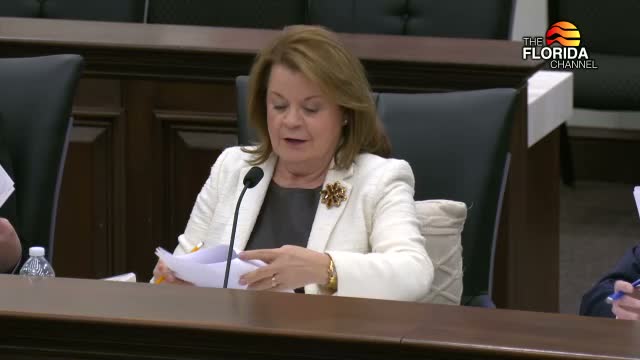
Sen. Hunter Gates (Sponsor) told the Health Policy Committee SB 1758 is a five‑part package meant to rein in fraud, redesign Medicaid rules and expand behavioral‑health services while modernizing the prescription drug program and reducing SNAP errors. The bill would: give the Agency for Health Care Administration (AHCA) broader authority to investigate Medicaid fraud and recover overpayments; direct AHCA to seek a federal waiver to add an 80‑hour‑per‑month work or training requirement for able‑bodied adults without caregiving responsibilities; expand home‑and‑community‑based behavioral health services through a Medicaid waiver and require legislative approval of implementation plans; create preferred drug lists to cut prior‑authorization delays and negotiate rebates; and require Department of Children and Families (DCF) corrective plans to lower SNAP payment error rates.
Gates said the work requirement would not take effect until a federal waiver was granted and an implementation plan approved by the legislature, and he emphasized that the package pairs eligibility changes with investments in workforce training and behavioral‑health services. He framed the reforms as necessary to protect Medicaid’s fiscal sustainability and to redirect resources to clinically needy populations.
Opponents, including policy advocates and health‑care groups, urged caution. Witnesses and committee members cited research and state experience showing work requirements and stricter reporting often produce coverage losses without clear long‑term employment gains and can impose disproportionate burdens on people with limited internet access, unstable housing, or caregiving responsibilities. Several speakers referenced recent court findings and administrative failures during Florida’s Medicaid unwinding as evidence that the state’s eligibility and renewal systems are fragile and risk erroneous terminations if additional reporting burdens are layered on.
Committee discussion focused on enforcement, operational capacity, and costs. Sponsor Gates and supporters pointed to the bill’s requirement that agencies return an implementation/business plan, with costs and projected savings, to the governor and legislature before reforms could take effect. The committee adopted a substitute amendment to shorten drug‑list update cycles and other targeted amendments addressing public input and prior‑authorization timing for high‑cost drugs. After extensive debate and public testimony—both in favor and opposed—the committee reported SB 1758 favorably as a committee substitute.
Next steps: Implementation of the most consequential provisions (including any work requirement or waiver‑based expansions) requires federal approvals and subsequent legislative review and approval of agency implementation plans; advocates said they will press for safeguards to prevent coverage loss during administration changes.
Gates said the work requirement would not take effect until a federal waiver was granted and an implementation plan approved by the legislature, and he emphasized that the package pairs eligibility changes with investments in workforce training and behavioral‑health services. He framed the reforms as necessary to protect Medicaid’s fiscal sustainability and to redirect resources to clinically needy populations.
Opponents, including policy advocates and health‑care groups, urged caution. Witnesses and committee members cited research and state experience showing work requirements and stricter reporting often produce coverage losses without clear long‑term employment gains and can impose disproportionate burdens on people with limited internet access, unstable housing, or caregiving responsibilities. Several speakers referenced recent court findings and administrative failures during Florida’s Medicaid unwinding as evidence that the state’s eligibility and renewal systems are fragile and risk erroneous terminations if additional reporting burdens are layered on.
Committee discussion focused on enforcement, operational capacity, and costs. Sponsor Gates and supporters pointed to the bill’s requirement that agencies return an implementation/business plan, with costs and projected savings, to the governor and legislature before reforms could take effect. The committee adopted a substitute amendment to shorten drug‑list update cycles and other targeted amendments addressing public input and prior‑authorization timing for high‑cost drugs. After extensive debate and public testimony—both in favor and opposed—the committee reported SB 1758 favorably as a committee substitute.
Next steps: Implementation of the most consequential provisions (including any work requirement or waiver‑based expansions) requires federal approvals and subsequent legislative review and approval of agency implementation plans; advocates said they will press for safeguards to prevent coverage loss during administration changes.
View the Full Meeting & All Its Details
This article offers just a summary. Unlock complete video, transcripts, and insights as a Founder Member.
✓
Watch full, unedited meeting videos
✓
Search every word spoken in unlimited transcripts
✓
AI summaries & real-time alerts (all government levels)
✓
Permanent access to expanding government content
30-day money-back guarantee
