Senate committee narrows insanity defense in amended SB 1326; mental-health and defense groups object
February 02, 2026 | 2026 Legislature FL, Florida
This article was created by AI summarizing key points discussed. AI makes mistakes, so for full details and context, please refer to the video of the full meeting. Please report any errors so we can fix them. Report an error »
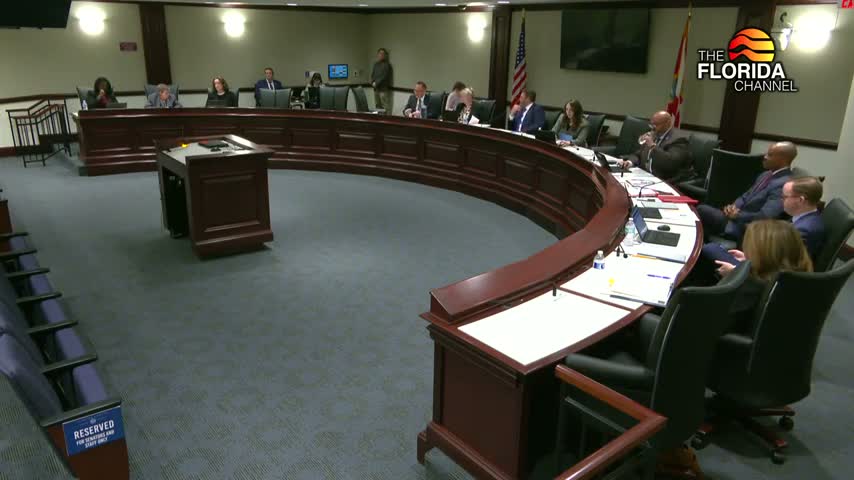
Tallahassee — The Senate Criminal Justice Committee adopted a major amendment to SB 1326 that narrows the legal standard for insanity and adjusts commitment and sentencing rules for defendants with mental illness, drawing sharp objections from defense lawyers, clinicians and advocacy groups.
Senator Martin described the amendment as removing the "moral incapacity" prong of the M'Naghten test so the defense would be limited to cases where a defendant lacks the cognitive ability to know right from wrong. The amendment also directs courts to involuntarily commit defendants acquitted by reason of insanity if they are found dangerous, prohibits treating severe and persistent mental illness as a mitigating factor for certain violent offenses when defendants are judged dangerous, and bars outpatient treatment in lieu of incarceration for those offenders.
Nellie King, past president of the Florida Association of Criminal Defense Lawyers, opposed the amendment and argued it would "take us backwards" from evidence-based reforms and could increase commitments without the available bed capacity. Matt Metz, public defender for the 7th Circuit, said an insanity acquittal effectively can become a life sentence under current practice because patients may remain under state-hospital jurisdiction indefinitely; he warned narrowing the defense would push more people into prison rather than treatment and raise costs.
Clinicians and advocacy groups, including NAMI Florida and Disability Rights Florida, testified against the amendment. Dr. Carla Sapp, a licensed clinician with extensive forensic experience, said the amendment asked clinicians to convert nuanced clinical judgments into rigid legal conclusions and risked misdiagnosis and unjust outcomes.
Supporters including Senator Pizzo and Senator Simon acknowledged the system's strain and urged that the amendment be paired with funding and capacity for state hospitals and competency-restoration services. Several senators said they would seek fiscal amendments to provide more beds and treatment resources as the bill proceeds to later committees.
The committee adopted the amendment and reported the committee substitute favorably. Two senators recorded no votes; sponsors indicated intent to seek appropriations to address bed capacity and treatment needs.
Senator Martin described the amendment as removing the "moral incapacity" prong of the M'Naghten test so the defense would be limited to cases where a defendant lacks the cognitive ability to know right from wrong. The amendment also directs courts to involuntarily commit defendants acquitted by reason of insanity if they are found dangerous, prohibits treating severe and persistent mental illness as a mitigating factor for certain violent offenses when defendants are judged dangerous, and bars outpatient treatment in lieu of incarceration for those offenders.
Nellie King, past president of the Florida Association of Criminal Defense Lawyers, opposed the amendment and argued it would "take us backwards" from evidence-based reforms and could increase commitments without the available bed capacity. Matt Metz, public defender for the 7th Circuit, said an insanity acquittal effectively can become a life sentence under current practice because patients may remain under state-hospital jurisdiction indefinitely; he warned narrowing the defense would push more people into prison rather than treatment and raise costs.
Clinicians and advocacy groups, including NAMI Florida and Disability Rights Florida, testified against the amendment. Dr. Carla Sapp, a licensed clinician with extensive forensic experience, said the amendment asked clinicians to convert nuanced clinical judgments into rigid legal conclusions and risked misdiagnosis and unjust outcomes.
Supporters including Senator Pizzo and Senator Simon acknowledged the system's strain and urged that the amendment be paired with funding and capacity for state hospitals and competency-restoration services. Several senators said they would seek fiscal amendments to provide more beds and treatment resources as the bill proceeds to later committees.
The committee adopted the amendment and reported the committee substitute favorably. Two senators recorded no votes; sponsors indicated intent to seek appropriations to address bed capacity and treatment needs.
View the Full Meeting & All Its Details
This article offers just a summary. Unlock complete video, transcripts, and insights as a Founder Member.
✓
Watch full, unedited meeting videos
✓
Search every word spoken in unlimited transcripts
✓
AI summaries & real-time alerts (all government levels)
✓
Permanent access to expanding government content
30-day money-back guarantee
