Senate Judiciary Committee advances bills to limit probation consequences for unpaid court fines and to give people time after release to start payments
February 02, 2026 | 2026 Legislature VA, Virginia
This article was created by AI summarizing key points discussed. AI makes mistakes, so for full details and context, please refer to the video of the full meeting. Please report any errors so we can fix them. Report an error »
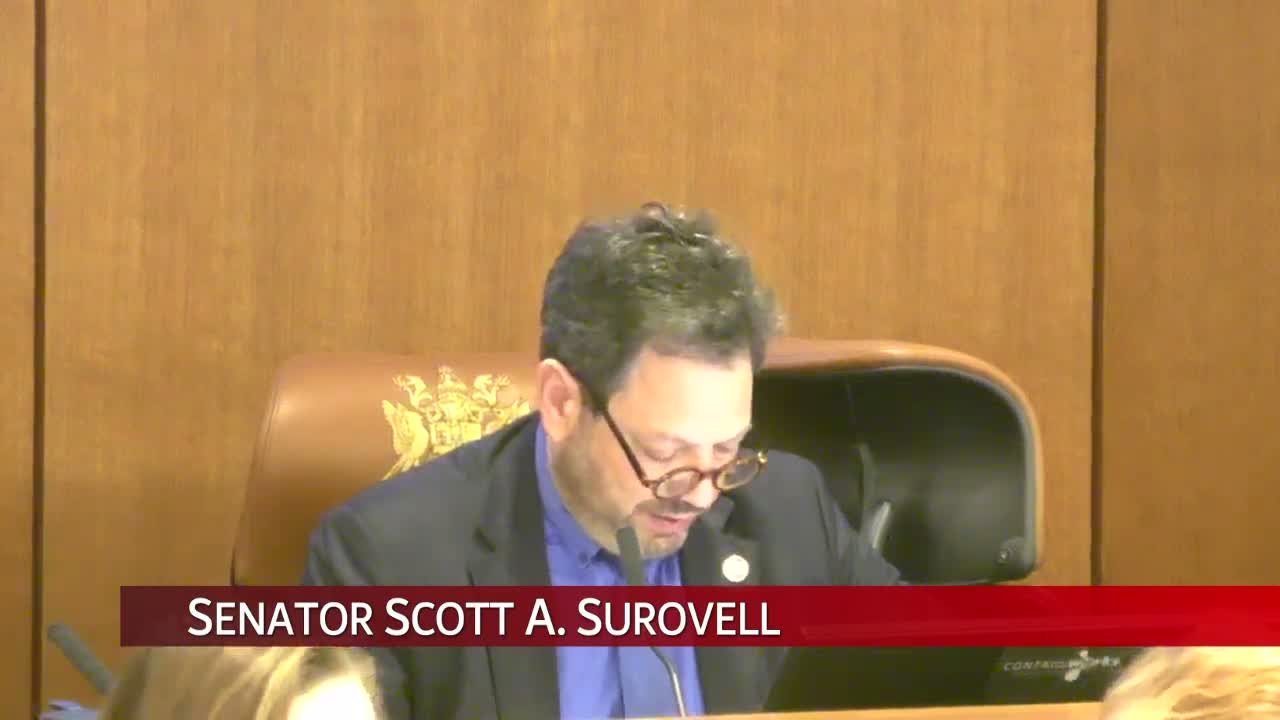
Senate Judiciary Committee — Richmond — The committee on Wednesday advanced a set of measures aimed at reducing the role of court debt in driving people back into the criminal legal system.
Senate Bill 776, introduced by Senator Mokai, would require courts to take a defendant's ability to pay into account before treating unpaid fines and costs as a breach of probation. "We don't believe folks should run the risk of returning to incarceration simply for not being able to pay those court fines and costs," testified Sammy Perez of Prison Fellowship, who described paying more than $10,000 in court costs while struggling to reenter the workforce.
Legal Aid Justice Center attorney Anna Kurian told the committee the bill shifts the burden to the court by presuming indigency under existing code when a defendant meets the statutory definition, which she said would reduce probation revocations tied solely to court debt. "This bill successfully ensures that an inability to pay is not a basis for a probation violation," Kurian said.
Committee members asked about a draft provision (Romanette II) that would have defined what counts as a "bona fide effort" to seek employment; members called that language subjective. The patron agreed to remove that provision and clarify that the bill does not affect restitution, which remains collectible. The committee adopted the friendly amendment and moved SB 776 forward for further processing and review in finance and other subcommittees.
Related measures that the committee advanced or referred to finance aim to limit immediate collection actions against incarcerated people and to set the start of payment obligations after release. Senator Jordan's SB 810 — adopted in substitute form — would require courts to set deferred payment agreements no earlier than 180 days after a defendant's release from incarceration; the committee amended timing and implementation language after OES said the courts' case‑management systems need a specific date to operate. The committee directed Senator Jordan to work with the Office of the Executive Secretary (OES) and reported the substitute to finance (committee tally recorded in the transcript: Eyes 13, Noes 2).
Why it matters: Supporters said these bills reduce the risk that indigent people cycle back into incarceration for unpaid court debt and create a consistent statewide approach. Opponents or cautious members warned about vague drafting that could create inconsistent local application and asked for clearer implementation language so court and corrections data systems can operate the policy.
What’s next: SB 776 and the related deferred‑payment and collection bills were advanced to the finance committee for technical and fiscal review; the patron and staff were directed to reconcile wording with OES and the Supreme Court's systems.
Quotes: "We get called weekly by Virginians who cannot pay their fines and fees," Anna Kurian of the Legal Aid Justice Center told the committee. "This bill puts the burden on the court to assume that someone who is indigent is unable to pay." Sammy Perez of Prison Fellowship said the 180‑day approach "would give individuals the time to gain the stability that's needed for them to find a job and begin to pay their court fines and costs."
Senate Bill 776, introduced by Senator Mokai, would require courts to take a defendant's ability to pay into account before treating unpaid fines and costs as a breach of probation. "We don't believe folks should run the risk of returning to incarceration simply for not being able to pay those court fines and costs," testified Sammy Perez of Prison Fellowship, who described paying more than $10,000 in court costs while struggling to reenter the workforce.
Legal Aid Justice Center attorney Anna Kurian told the committee the bill shifts the burden to the court by presuming indigency under existing code when a defendant meets the statutory definition, which she said would reduce probation revocations tied solely to court debt. "This bill successfully ensures that an inability to pay is not a basis for a probation violation," Kurian said.
Committee members asked about a draft provision (Romanette II) that would have defined what counts as a "bona fide effort" to seek employment; members called that language subjective. The patron agreed to remove that provision and clarify that the bill does not affect restitution, which remains collectible. The committee adopted the friendly amendment and moved SB 776 forward for further processing and review in finance and other subcommittees.
Related measures that the committee advanced or referred to finance aim to limit immediate collection actions against incarcerated people and to set the start of payment obligations after release. Senator Jordan's SB 810 — adopted in substitute form — would require courts to set deferred payment agreements no earlier than 180 days after a defendant's release from incarceration; the committee amended timing and implementation language after OES said the courts' case‑management systems need a specific date to operate. The committee directed Senator Jordan to work with the Office of the Executive Secretary (OES) and reported the substitute to finance (committee tally recorded in the transcript: Eyes 13, Noes 2).
Why it matters: Supporters said these bills reduce the risk that indigent people cycle back into incarceration for unpaid court debt and create a consistent statewide approach. Opponents or cautious members warned about vague drafting that could create inconsistent local application and asked for clearer implementation language so court and corrections data systems can operate the policy.
What’s next: SB 776 and the related deferred‑payment and collection bills were advanced to the finance committee for technical and fiscal review; the patron and staff were directed to reconcile wording with OES and the Supreme Court's systems.
Quotes: "We get called weekly by Virginians who cannot pay their fines and fees," Anna Kurian of the Legal Aid Justice Center told the committee. "This bill puts the burden on the court to assume that someone who is indigent is unable to pay." Sammy Perez of Prison Fellowship said the 180‑day approach "would give individuals the time to gain the stability that's needed for them to find a job and begin to pay their court fines and costs."
Don't Miss a Word: See the Full Meeting!
Go beyond summaries. Unlock every video, transcript, and key insight with a Founder Membership.
✓
Get instant access to full meeting videos
✓
Search and clip any phrase from complete transcripts
✓
Receive AI-powered summaries & custom alerts
✓
Enjoy lifetime, unrestricted access to government data
30-day money-back guarantee
