Committee approves substitute to standardize courthouse device policies and protect confidential attorney‑client communications
February 02, 2026 | 2026 Legislature VA, Virginia
This article was created by AI summarizing key points discussed. AI makes mistakes, so for full details and context, please refer to the video of the full meeting. Please report any errors so we can fix them. Report an error »
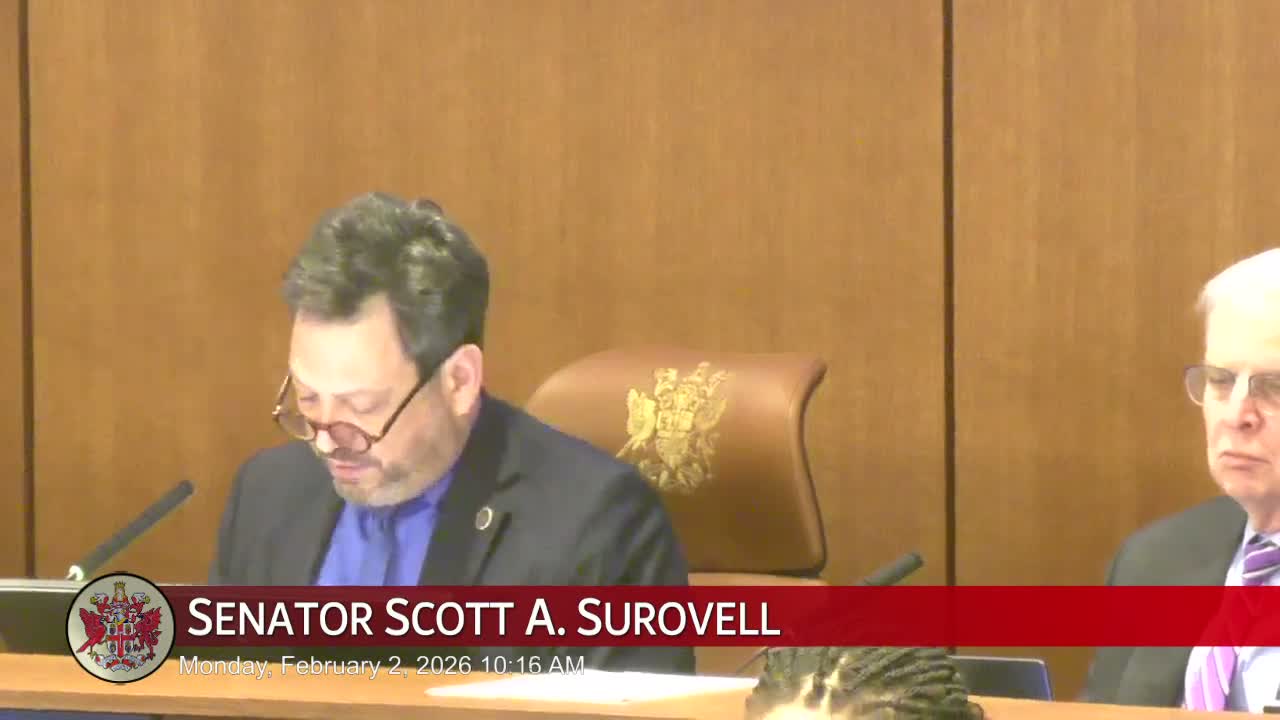
Senate Judiciary Committee — Richmond — Senators approved a substituted bill that would allow chief judges to establish clear courthouse policies on portable electronic devices, require security screening and limited designated areas for device use, and set minimum standards for confidential communications between attorneys and detained clients.
Supporters argued the policy would reduce arbitrary local variation and help self‑represented litigants who often carry evidence or documents on phones that are currently barred from many courthouses. David Tissell, a pro bono attorney, told the committee his housing clients frequently cannot bring photos or messages stored on phones into court and are thus disadvantaged.
The substitute also includes provisions affecting sheriff and jail policies and an enactment clause asking for a report on jail communications capabilities by November 1, 2026. The Office of the Executive Secretary said the substitute mirrors a model Supreme Court policy developed in 2018 but adds items that local sheriffs and jail administrators also control. The committee adopted a line amendment clarifying coverage for people "held in custody" and reported the substitute and referred it to finance (roll recorded in transcript: Ayes 9, Noes 6).
Why it matters: Advocates said a uniform approach will reduce confusion for courthouse visitors and prevent the loss of evidence for self‑represented litigants; judges retain discretion to tailor local policies within the statute's parameters.
What’s next: Substitute reported and referred to finance for fiscal and operational review and to coordinate with the Supreme Court model policy.
Supporters argued the policy would reduce arbitrary local variation and help self‑represented litigants who often carry evidence or documents on phones that are currently barred from many courthouses. David Tissell, a pro bono attorney, told the committee his housing clients frequently cannot bring photos or messages stored on phones into court and are thus disadvantaged.
The substitute also includes provisions affecting sheriff and jail policies and an enactment clause asking for a report on jail communications capabilities by November 1, 2026. The Office of the Executive Secretary said the substitute mirrors a model Supreme Court policy developed in 2018 but adds items that local sheriffs and jail administrators also control. The committee adopted a line amendment clarifying coverage for people "held in custody" and reported the substitute and referred it to finance (roll recorded in transcript: Ayes 9, Noes 6).
Why it matters: Advocates said a uniform approach will reduce confusion for courthouse visitors and prevent the loss of evidence for self‑represented litigants; judges retain discretion to tailor local policies within the statute's parameters.
What’s next: Substitute reported and referred to finance for fiscal and operational review and to coordinate with the Supreme Court model policy.
Don't Miss a Word: See the Full Meeting!
Go beyond summaries. Unlock every video, transcript, and key insight with a Founder Membership.
✓
Get instant access to full meeting videos
✓
Search and clip any phrase from complete transcripts
✓
Receive AI-powered summaries & custom alerts
✓
Enjoy lifetime, unrestricted access to government data
30-day money-back guarantee
