VEDP reports strong pipeline but warns site inventory, talent and housing gaps may limit future growth
February 02, 2026 | 2026 Legislature VA, Virginia
This article was created by AI summarizing key points discussed. AI makes mistakes, so for full details and context, please refer to the video of the full meeting. Please report any errors so we can fix them. Report an error »
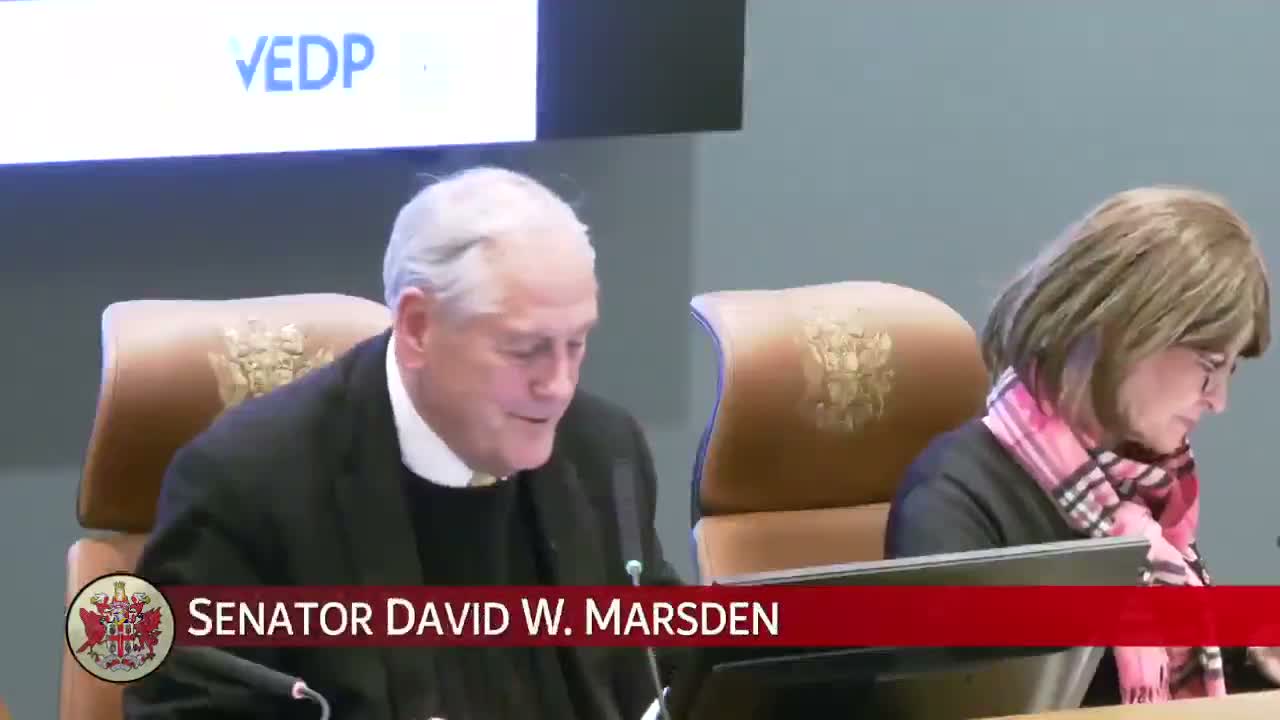
Jason L. Coovey, speaking for the Virginia Economic Development Partnership, told a Senate Finance subcommittee that Virginia's economic-development pipeline remains strong but faces mounting constraints from a shrinking national labor pool, housing shortages and a diminishing inventory of project-ready sites.
"We're gonna endeavor to make Virginia a leading state for economic growth, not just in terms of the number of jobs, but also in terms of the quality of those jobs," Coovey said. He reported that VEDP has supported more than 100,000 new direct jobs over recent years and that roughly two-thirds of projects represent expansions of existing Virginia companies. He said the median VEDP project has fewer than 100 direct jobs and under $10 million in capital investment.
Coovey emphasized the structure and oversight of VEDP's incentives, saying custom performance grants are delivered on a post-performance basis: jobs and capital investments must be verified before incentives are paid. He told members that VEDP conducts detailed due diligence, provides monthly progress reports to Senate Finance staff, and that a recent Joint Legislative Audit and Review Commission (JLARC) report described the grants as generally well designed and targeted.
The VEDP director also urged the General Assembly to consider two budget priorities: expanded marketing to national and global investors and consistent funding for site development. He said the current baseline in the state budget for site development appears to be about $20,000,000 per year and argued that both the size and predictability of funding matter for results.
On repurposing commercial office space, Coovey said local partners in Northern Virginia are discussing a sites program for commercial real-estate transition and that some local leaders have raised the need for state assistance to demolish class B and C office buildings to clear redevelopment sites.
Coovey closed with a list of long-term forces shaping economic development: slower U.S. population growth and immigration flows, smaller average project sizes and capital needs, the need for workforce reskilling (including impacts of automation and AI), housing supply constraints that will affect talent attraction, rising energy demand, and trade-policy uncertainty.
A committee member cited an "11,000" jobs figure and asked how many of 48 listed sites were connected to those jobs; Coovey estimated about one-quarter (roughly 12 sites) were involved. He also agreed to follow up with specific figures on employer participation in veteran hiring certification programs (V3) at the committee's request. The committee took no votes and adjourned.
"We're gonna endeavor to make Virginia a leading state for economic growth, not just in terms of the number of jobs, but also in terms of the quality of those jobs," Coovey said. He reported that VEDP has supported more than 100,000 new direct jobs over recent years and that roughly two-thirds of projects represent expansions of existing Virginia companies. He said the median VEDP project has fewer than 100 direct jobs and under $10 million in capital investment.
Coovey emphasized the structure and oversight of VEDP's incentives, saying custom performance grants are delivered on a post-performance basis: jobs and capital investments must be verified before incentives are paid. He told members that VEDP conducts detailed due diligence, provides monthly progress reports to Senate Finance staff, and that a recent Joint Legislative Audit and Review Commission (JLARC) report described the grants as generally well designed and targeted.
The VEDP director also urged the General Assembly to consider two budget priorities: expanded marketing to national and global investors and consistent funding for site development. He said the current baseline in the state budget for site development appears to be about $20,000,000 per year and argued that both the size and predictability of funding matter for results.
On repurposing commercial office space, Coovey said local partners in Northern Virginia are discussing a sites program for commercial real-estate transition and that some local leaders have raised the need for state assistance to demolish class B and C office buildings to clear redevelopment sites.
Coovey closed with a list of long-term forces shaping economic development: slower U.S. population growth and immigration flows, smaller average project sizes and capital needs, the need for workforce reskilling (including impacts of automation and AI), housing supply constraints that will affect talent attraction, rising energy demand, and trade-policy uncertainty.
A committee member cited an "11,000" jobs figure and asked how many of 48 listed sites were connected to those jobs; Coovey estimated about one-quarter (roughly 12 sites) were involved. He also agreed to follow up with specific figures on employer participation in veteran hiring certification programs (V3) at the committee's request. The committee took no votes and adjourned.
View the Full Meeting & All Its Details
This article offers just a summary. Unlock complete video, transcripts, and insights as a Founder Member.
✓
Watch full, unedited meeting videos
✓
Search every word spoken in unlimited transcripts
✓
AI summaries & real-time alerts (all government levels)
✓
Permanent access to expanding government content
30-day money-back guarantee
