District attorney briefs commissioners on SART progress, SANE nurse shortage and victim‑centered approach
December 15, 2025 | Anderson County, Texas
This article was created by AI summarizing key points discussed. AI makes mistakes, so for full details and context, please refer to the video of the full meeting. Please report any errors so we can fix them. Report an error »
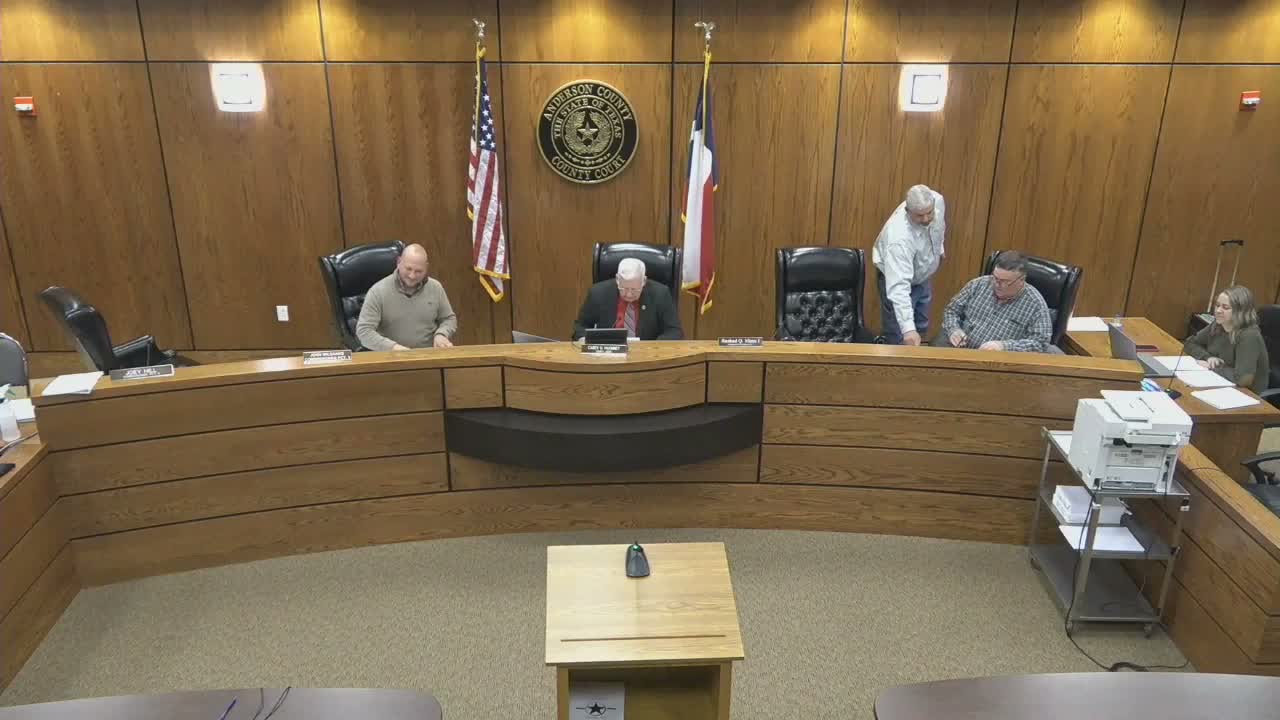
Elizabeth Severn of the Anderson County District Attorney’s office presented the biannual report of the county’s Sexual Assault Response Team (SART), describing improved multi‑jurisdictional coordination but persistent staffing and evidentiary challenges.
Severn said the SART — which includes the crisis center, the DA’s office, the Anderson County Sheriff’s Office and several police departments — now meets every three to four months and provides faster notification when adult sexual assault reports are filed. “The interaction between the police departments and the district attorney’s office with the adult sexual assaults has been moving greatly, in a more significant way,” Severn said.
Severn told the court the county has struggled to recruit and retain a SANE (sexual assault nurse examiner) nurse and that not all victims choose to pursue prosecution. “Not every adult sexual assault victim wants to actually go much further than reporting it,” she said, and estimated that among cases that reach the DA’s office about 75 percent of victims who start the process ultimately follow through if they want prosecution.
She described steps to strengthen the response: earlier involvement by the crisis center during interviews, monthly reporting of assault reports to the DA’s office, and planned case‑analysis work to compare outcomes for cases handled according to the SART protocol versus those that were not. Severn recommended more SART training for participating law enforcement and said the team was consulting Henderson County’s child advocacy center for training models and grant‑supported resources.
What happens next: Severn said the office will perform a case analysis to identify what elements of the protocol are working and which need tweaks, and requested continued interagency participation and training; no formal county action was requested beyond acknowledgement.
Severn said the SART — which includes the crisis center, the DA’s office, the Anderson County Sheriff’s Office and several police departments — now meets every three to four months and provides faster notification when adult sexual assault reports are filed. “The interaction between the police departments and the district attorney’s office with the adult sexual assaults has been moving greatly, in a more significant way,” Severn said.
Severn told the court the county has struggled to recruit and retain a SANE (sexual assault nurse examiner) nurse and that not all victims choose to pursue prosecution. “Not every adult sexual assault victim wants to actually go much further than reporting it,” she said, and estimated that among cases that reach the DA’s office about 75 percent of victims who start the process ultimately follow through if they want prosecution.
She described steps to strengthen the response: earlier involvement by the crisis center during interviews, monthly reporting of assault reports to the DA’s office, and planned case‑analysis work to compare outcomes for cases handled according to the SART protocol versus those that were not. Severn recommended more SART training for participating law enforcement and said the team was consulting Henderson County’s child advocacy center for training models and grant‑supported resources.
What happens next: Severn said the office will perform a case analysis to identify what elements of the protocol are working and which need tweaks, and requested continued interagency participation and training; no formal county action was requested beyond acknowledgement.
View the Full Meeting & All Its Details
This article offers just a summary. Unlock complete video, transcripts, and insights as a Founder Member.
✓
Watch full, unedited meeting videos
✓
Search every word spoken in unlimited transcripts
✓
AI summaries & real-time alerts (all government levels)
✓
Permanent access to expanding government content
30-day money-back guarantee
