Trinity LGC to prioritize edits to master development use agreement and Phase 1 premise
January 23, 2026 | Dallas, Dallas County, Texas
This article was created by AI summarizing key points discussed. AI makes mistakes, so for full details and context, please refer to the video of the full meeting. Please report any errors so we can fix them. Report an error »
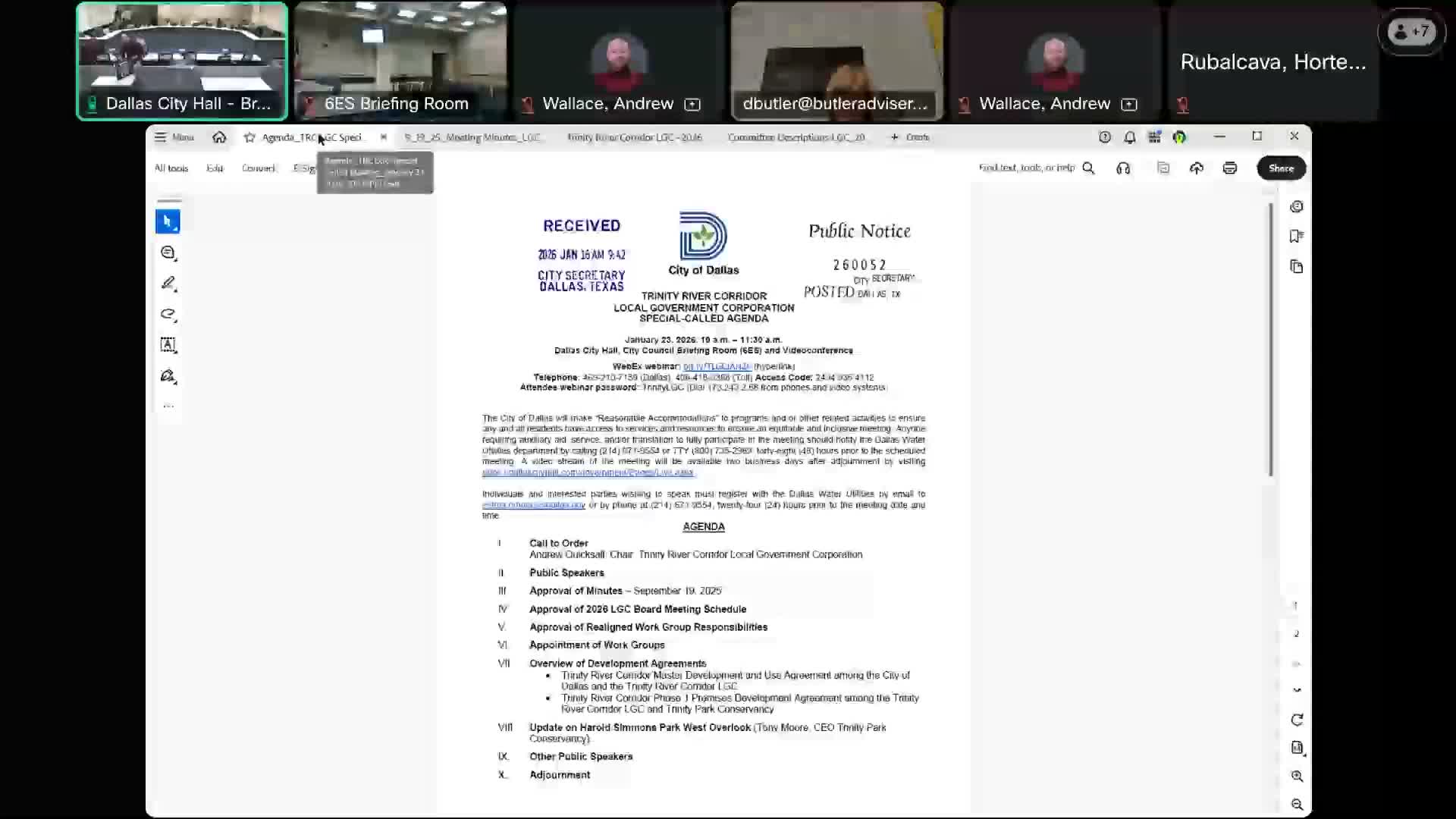
At the January meeting the Trinity LGC devoted a large portion of its agenda to a high‑level discussion about two interlinked documents that govern the project: the master development use agreement (MBUA) and the Phase 1 premise. The chair said the documents are linked and that the LGC’s newly formalized business administration working group should prioritize drafting proposed changes and highlighting controversial language for legal review.
Board members said several issues are now urgent: reporting and oversight flows from the MBUA through the Phase 1 premise to the implementing partner, and those flows are not operating smoothly; the Phase 1 premise assigns handling of funds to the implementing partner, which the board said limits the LGC’s ability to solicit, receive or hold public funds; and some project parcels are privately held while others are city owned, creating ambiguity about when city funds or approvals apply.
"We can't," Chair Andrew Quicksaw said during a frank exchange about the limits the current language places on delivering Phase 3, summarizing the board’s view that without changed language the project will be constrained.
Board members repeatedly asked that proposed edits be organized and prioritized: the working group should produce redlines, an annotated list of high‑controversy items and a summary pros/cons for suggested changes. The board emphasized the edits must then be routed to city lawyers, then back to the LGC, and ultimately to city council for any formal amendments.
Members also raised fundraising questions: Tony Moore’s update noted TPC has pursued civic funding from the City of Dallas and is in dialogue with the city’s economic development staff. Several members said the difference between private fundraising on privately held parcels and the LGC's limits on soliciting city funds needs explicit clarification in the agreements.
Next steps agreed by the board: the business administration working group (Chair, Sarah Jackson, Diane Butler) will meet between now and the February meeting to compile redlines and prioritized issues; city staff and legal counsel will be engaged to translate LGC recommendations into legal text; the working group will return to the full board in February with a summary and proposed path to city council.
All characterizations of contractual limits, fundraising behavior, and oversight in this article are drawn from the LGC meeting transcript and the on‑record exchange among board members, staff and project leadership.
Board members said several issues are now urgent: reporting and oversight flows from the MBUA through the Phase 1 premise to the implementing partner, and those flows are not operating smoothly; the Phase 1 premise assigns handling of funds to the implementing partner, which the board said limits the LGC’s ability to solicit, receive or hold public funds; and some project parcels are privately held while others are city owned, creating ambiguity about when city funds or approvals apply.
"We can't," Chair Andrew Quicksaw said during a frank exchange about the limits the current language places on delivering Phase 3, summarizing the board’s view that without changed language the project will be constrained.
Board members repeatedly asked that proposed edits be organized and prioritized: the working group should produce redlines, an annotated list of high‑controversy items and a summary pros/cons for suggested changes. The board emphasized the edits must then be routed to city lawyers, then back to the LGC, and ultimately to city council for any formal amendments.
Members also raised fundraising questions: Tony Moore’s update noted TPC has pursued civic funding from the City of Dallas and is in dialogue with the city’s economic development staff. Several members said the difference between private fundraising on privately held parcels and the LGC's limits on soliciting city funds needs explicit clarification in the agreements.
Next steps agreed by the board: the business administration working group (Chair, Sarah Jackson, Diane Butler) will meet between now and the February meeting to compile redlines and prioritized issues; city staff and legal counsel will be engaged to translate LGC recommendations into legal text; the working group will return to the full board in February with a summary and proposed path to city council.
All characterizations of contractual limits, fundraising behavior, and oversight in this article are drawn from the LGC meeting transcript and the on‑record exchange among board members, staff and project leadership.
Don't Miss a Word: See the Full Meeting!
Go beyond summaries. Unlock every video, transcript, and key insight with a Founder Membership.
✓
Get instant access to full meeting videos
✓
Search and clip any phrase from complete transcripts
✓
Receive AI-powered summaries & custom alerts
✓
Enjoy lifetime, unrestricted access to government data
30-day money-back guarantee
