Council OKs introductory rezoning for 1500 Coimann Street; second reading required
February 02, 2026 | Grand Haven, Ottawa County, Michigan
This article was created by AI summarizing key points discussed. AI makes mistakes, so for full details and context, please refer to the video of the full meeting. Please report any errors so we can fix them. Report an error »
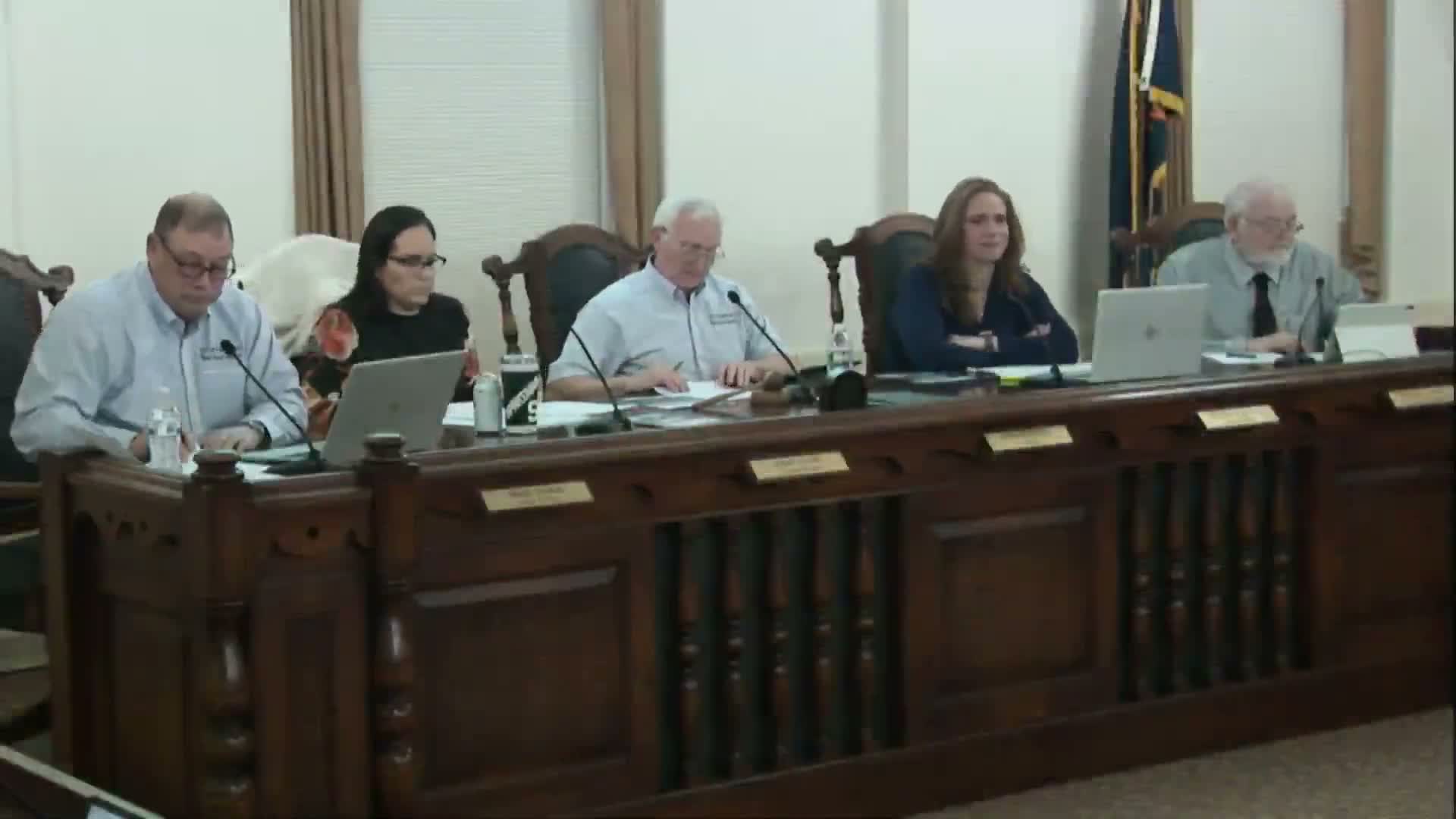
Grand Haven — The City Council voted unanimously Monday to approve an introductory resolution to rezone 1500 Coimann Street (parcel 70-03-28-301-019) from Transitional Industrial (TI) to Planned Development (PD), a procedural step that will come back for a second reading before becoming final.
City planner Bridal Eckert summarized the project history to the council, saying the site previously received planning-commission approvals for a mixed-use plan and that a small wetland in the southeast corner would be preserved with a public viewing platform. “The permanent development plan must demonstrate a public benefit,” she told the council, and staff included a condition to specify the public-unit area in the master deed to ensure the wetland amenity remains public.
Todd Anthes, attorney for the developer, told council the PD rezone responds to practical barriers in the mortgage market. He said lenders have repeatedly declined residential financing when the zoning label contains the word “industrial,” and that converting the site to a PD would allow potential homeowners to pursue conventional mortgage financing. Anthes highlighted past, nearby development that produced taxable value for the city and asked council to approve the zoning change “to implement the master plan” and enable the project to move forward.
A nearby business owner, Jim Verdine of Verint Manufacturing, spoke during the public hearing, saying that inserting residential units into the middle of an industrial area raises operational concerns for truck turning, parking and deliveries. Verdine asked that, if residential uses are allowed, the city consider mitigations such as industrial parking restrictions on the street.
Council discussion focused on two strands: whether the master plan and the TI district already allowed mixed uses and whether lenders’ underwriting practices create a practical barrier to residential financing when “industrial” appears in the zoning name. Several council members said PD is a more restrictive, project-based district that gives the city precise control over allowable uses and can protect the public benefit the developer proposes. Council member comments also referenced an estimated mortgage-savings figure raised in discussions at earlier hearings.
The motion (moved by Fritz, seconded by Dora) passed on roll call with Fritz, Dora, Calio, Lyon and Maneta voting yes. Mayor noted the ordinance amendment requires a second reading and will return to council at a future meeting.
What’s next: The rezoning will appear for a required second reading; any conditions in the preliminary plan and the master deed will be finalized before final adoption.
City planner Bridal Eckert summarized the project history to the council, saying the site previously received planning-commission approvals for a mixed-use plan and that a small wetland in the southeast corner would be preserved with a public viewing platform. “The permanent development plan must demonstrate a public benefit,” she told the council, and staff included a condition to specify the public-unit area in the master deed to ensure the wetland amenity remains public.
Todd Anthes, attorney for the developer, told council the PD rezone responds to practical barriers in the mortgage market. He said lenders have repeatedly declined residential financing when the zoning label contains the word “industrial,” and that converting the site to a PD would allow potential homeowners to pursue conventional mortgage financing. Anthes highlighted past, nearby development that produced taxable value for the city and asked council to approve the zoning change “to implement the master plan” and enable the project to move forward.
A nearby business owner, Jim Verdine of Verint Manufacturing, spoke during the public hearing, saying that inserting residential units into the middle of an industrial area raises operational concerns for truck turning, parking and deliveries. Verdine asked that, if residential uses are allowed, the city consider mitigations such as industrial parking restrictions on the street.
Council discussion focused on two strands: whether the master plan and the TI district already allowed mixed uses and whether lenders’ underwriting practices create a practical barrier to residential financing when “industrial” appears in the zoning name. Several council members said PD is a more restrictive, project-based district that gives the city precise control over allowable uses and can protect the public benefit the developer proposes. Council member comments also referenced an estimated mortgage-savings figure raised in discussions at earlier hearings.
The motion (moved by Fritz, seconded by Dora) passed on roll call with Fritz, Dora, Calio, Lyon and Maneta voting yes. Mayor noted the ordinance amendment requires a second reading and will return to council at a future meeting.
What’s next: The rezoning will appear for a required second reading; any conditions in the preliminary plan and the master deed will be finalized before final adoption.
Don't Miss a Word: See the Full Meeting!
Go beyond summaries. Unlock every video, transcript, and key insight with a Founder Membership.
✓
Get instant access to full meeting videos
✓
Search and clip any phrase from complete transcripts
✓
Receive AI-powered summaries & custom alerts
✓
Enjoy lifetime, unrestricted access to government data
30-day money-back guarantee
