Senate Finance Committee warned of $77.9M shortfall for Alaska Marine Highway after federal grant notice delay
February 02, 2026 | 2026 Legislature Alaska, Alaska
This article was created by AI summarizing key points discussed. AI makes mistakes, so for full details and context, please refer to the video of the full meeting. Please report any errors so we can fix them. Report an error »
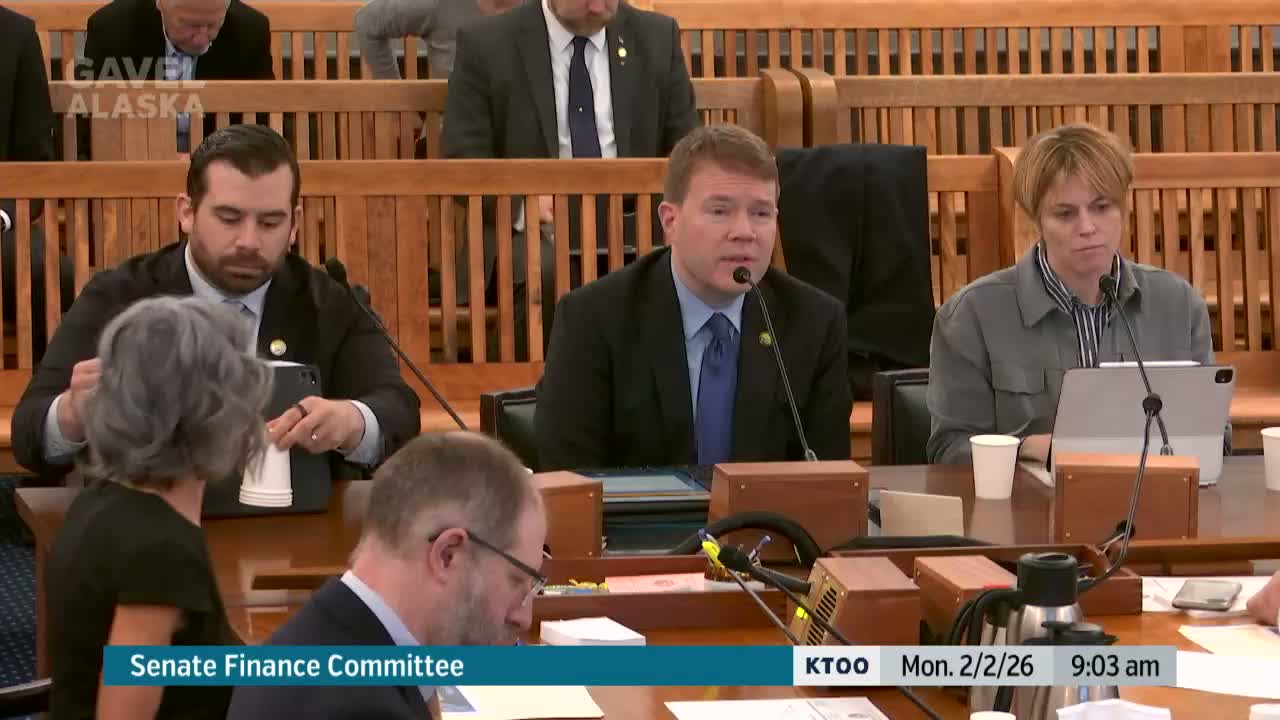
Juneau — The Alaska Department of Transportation and Public Facilities told the Senate Finance Committee on Feb. 2 that the Alaska Marine Highway System faces a gap of roughly $77.9 million in expected federal operating grant funds for calendar year 2026 after a Notice of Funding Opportunity for the rural ferry program was not issued last summer.
Ryan Anderson, commissioner of the Alaska Department of Transportation and Public Facilities, opened the department’s briefing by reviewing Alaska’s success competing for discretionary rural ferry grants created by the Infrastructure Investment and Jobs Act and said the department would outline past awards and the current 2026 financial picture. Don Pinone, DOT director responsible for marine highway finance matters, told the committee that "the $77,000,000 is the federal funds we have yet to receive for the current calendar year," and that the department has enough cash to operate into May while it pursues options.
Why it matters: The rural ferry grants have funded both capital work and, unusually, operating costs (up to 50% of net operating costs), and Alaska’s use of toll credits has reduced state match obligations. DOT officials said those federal operating grants accounted for about 45.6% of the department’s calendar‑year 2026 operating budget for the Marine Highway and that the lack of a timely federal award creates immediate cash‑flow and matching concerns.
What DOT told the committee: Deputy Commissioner Catherine Keith summarized prior awards, including a $46 million low/no‑emission ferry award and capital awards that contributed to a multi‑year funding portfolio. Don Pinone explained the toll‑credit approach under federal law (Title 23): when the state reinvests AMHS toll revenue into ferry facilities, it may claim conceptual credits to use in lieu of state cash for federal matching. "We’ve saved the state approximately $66,000,000 in match, to date," Pinone said, and he identified the Tustumena replacement vessel and several dock and terminal projects as uses for those credits.
Cash‑flow and contingency planning: DOT described several near‑term options should federal funds fail to arrive in full, including working with the congressional delegation and the Federal Transit Administration, pursuing cost savings, redeploying vessels (the Kennicott and Columbia work may allow one vessel to serve as a hotel ship), and considering disposal of older, expensive vessels such as the Matanuska. Commissioner Anderson said DOT is planning outreach to Washington, D.C., and would press for clarity on the grant timeline.
Committee requests and next steps: Committee members asked DOT to provide an annual toll‑credit balance sheet showing accumulated credits and how the credits have been expended, plus detailed cash‑flow scenarios showing how long current funds will sustain service and what state actions would be needed to avoid service reductions. Chair Steadman asked DOT to coordinate with the Office of Management and Budget; Senator Kiel asked that the Department of Law be looped in early to review authority around shifting funds between fiscal years. DOT committed to return in the next several weeks with more detailed timeline and cash‑flow materials.
Context and caveats: DOT said the rural ferry grant program was authorized and funded in the Infrastructure Investment and Jobs Act but that the Federal Transit Administration did not publish the expected Notice of Funding Opportunity for the latest cycle; DOT confirmed the 2022–2024 awards are available for obligation and that the specific $77.9 million figure represents federal funds expected in calendar year 2026 that have not yet been received. Committee members emphasized that if federal discretionary grants are not continued or become smaller, the state may need to identify other revenue or reduce services for rural coastal communities.
The committee scheduled follow‑up briefings, directed DOT to provide the requested financial schedules and toll‑credit accounting, and adjourned.
Ryan Anderson, commissioner of the Alaska Department of Transportation and Public Facilities, opened the department’s briefing by reviewing Alaska’s success competing for discretionary rural ferry grants created by the Infrastructure Investment and Jobs Act and said the department would outline past awards and the current 2026 financial picture. Don Pinone, DOT director responsible for marine highway finance matters, told the committee that "the $77,000,000 is the federal funds we have yet to receive for the current calendar year," and that the department has enough cash to operate into May while it pursues options.
Why it matters: The rural ferry grants have funded both capital work and, unusually, operating costs (up to 50% of net operating costs), and Alaska’s use of toll credits has reduced state match obligations. DOT officials said those federal operating grants accounted for about 45.6% of the department’s calendar‑year 2026 operating budget for the Marine Highway and that the lack of a timely federal award creates immediate cash‑flow and matching concerns.
What DOT told the committee: Deputy Commissioner Catherine Keith summarized prior awards, including a $46 million low/no‑emission ferry award and capital awards that contributed to a multi‑year funding portfolio. Don Pinone explained the toll‑credit approach under federal law (Title 23): when the state reinvests AMHS toll revenue into ferry facilities, it may claim conceptual credits to use in lieu of state cash for federal matching. "We’ve saved the state approximately $66,000,000 in match, to date," Pinone said, and he identified the Tustumena replacement vessel and several dock and terminal projects as uses for those credits.
Cash‑flow and contingency planning: DOT described several near‑term options should federal funds fail to arrive in full, including working with the congressional delegation and the Federal Transit Administration, pursuing cost savings, redeploying vessels (the Kennicott and Columbia work may allow one vessel to serve as a hotel ship), and considering disposal of older, expensive vessels such as the Matanuska. Commissioner Anderson said DOT is planning outreach to Washington, D.C., and would press for clarity on the grant timeline.
Committee requests and next steps: Committee members asked DOT to provide an annual toll‑credit balance sheet showing accumulated credits and how the credits have been expended, plus detailed cash‑flow scenarios showing how long current funds will sustain service and what state actions would be needed to avoid service reductions. Chair Steadman asked DOT to coordinate with the Office of Management and Budget; Senator Kiel asked that the Department of Law be looped in early to review authority around shifting funds between fiscal years. DOT committed to return in the next several weeks with more detailed timeline and cash‑flow materials.
Context and caveats: DOT said the rural ferry grant program was authorized and funded in the Infrastructure Investment and Jobs Act but that the Federal Transit Administration did not publish the expected Notice of Funding Opportunity for the latest cycle; DOT confirmed the 2022–2024 awards are available for obligation and that the specific $77.9 million figure represents federal funds expected in calendar year 2026 that have not yet been received. Committee members emphasized that if federal discretionary grants are not continued or become smaller, the state may need to identify other revenue or reduce services for rural coastal communities.
The committee scheduled follow‑up briefings, directed DOT to provide the requested financial schedules and toll‑credit accounting, and adjourned.
View the Full Meeting & All Its Details
This article offers just a summary. Unlock complete video, transcripts, and insights as a Founder Member.
✓
Watch full, unedited meeting videos
✓
Search every word spoken in unlimited transcripts
✓
AI summaries & real-time alerts (all government levels)
✓
Permanent access to expanding government content
30-day money-back guarantee
