Safe Routes to School study recommends multiuse paths, e-bike education and enforcement
February 02, 2026 | Lake Havasu City, Mohave County, Arizona
This article was created by AI summarizing key points discussed. AI makes mistakes, so for full details and context, please refer to the video of the full meeting. Please report any errors so we can fix them. Report an error »
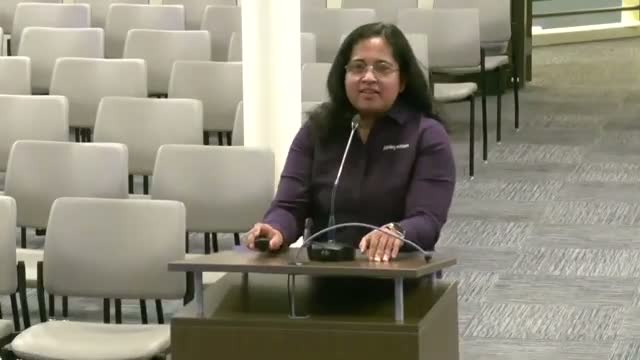
Consultants presented the Lake Havasu Safe Routes to School study to the Metropolitan Planning Organization executive board on Dec. 9, outlining infrastructure and program recommendations aimed at improving safety for students who walk and bike to public schools.
Anita (presenter) said the study covered the eight public schools in the district (charter schools excluded), included field observations during AM and PM drop‑off/pickup, student tallies and a parent survey, and resulted in a set of prioritized recommendations. Taylor, the study analyst, said the team analyzed five years of crash data and found that bicycle crashes nearly doubled in 2024, with student‑aged persons disproportionately represented.
The study collected 230 parent survey responses and 39 web‑map comments. Taylor said roughly 20% of middle school and high school students currently walk or bike to school, while few elementary students do. Common parent concerns were traffic volume, dangerous intersections and speeding; the consultants also noted widespread e‑bike use among older students and unsafe behaviors on sidewalks and roadways.
Key recommendations fall into short‑, mid‑ and long‑term buckets. Short‑term items include revised signal phasing, pavement markings, upgraded crossing‑guard vests and paddles, and use of non‑infrastructure Safe Routes funding for equipment. Anita said the city and school district agreed that on‑site signage and some re‑striping can be done using school replacement funds and city roadway changes.
On e‑bike policy, Anita said, "Helmet is a requirement per Lake Havasu's ordinance, but we didn't see a lot of kids wearing and using the helmets when we were out in the field." The consultants proposed clearer local definitions for bike path versus bike lane, a registration or permit program tied to an education course, and expanded bike rodeos and crossing‑guard training targeted at younger students.
Mid‑term infrastructure proposals include a 10‑foot multiuse path along Palo Verde in front of the high school, moving some parent drop‑off to the south parking lot to reduce intersection queuing, filling sidewalk gaps on Thunderbolt for the middle school, and adding a HAWK pedestrian beacon at Cisco Drive synchronized with Palo Verde traffic signals. The consultants said they developed project worksheets and 30–60% preliminary designs to support federal grant applications and estimated that, if federal funding is available in 2027, construction could be completed around 2030.
Board members pressed on enforcement resources; the consultants said they had worked with the police department on speed monitoring and education and suggested identifying funding (for example, Governor’s Office of Highway Safety grants) to back periodic enforcement that reinforces education efforts.
Council member Campbell asked whether recommendations could be expedited before 2030; staff said the study could be presented again at the board’s January retreat for further action. The final Safe Routes to School report is expected by the end of January and will contain school‑level recommendations and detailed design worksheets.
The board thanked the presenters and requested follow‑up to integrate near‑term actions into city and school plans.
Anita (presenter) said the study covered the eight public schools in the district (charter schools excluded), included field observations during AM and PM drop‑off/pickup, student tallies and a parent survey, and resulted in a set of prioritized recommendations. Taylor, the study analyst, said the team analyzed five years of crash data and found that bicycle crashes nearly doubled in 2024, with student‑aged persons disproportionately represented.
The study collected 230 parent survey responses and 39 web‑map comments. Taylor said roughly 20% of middle school and high school students currently walk or bike to school, while few elementary students do. Common parent concerns were traffic volume, dangerous intersections and speeding; the consultants also noted widespread e‑bike use among older students and unsafe behaviors on sidewalks and roadways.
Key recommendations fall into short‑, mid‑ and long‑term buckets. Short‑term items include revised signal phasing, pavement markings, upgraded crossing‑guard vests and paddles, and use of non‑infrastructure Safe Routes funding for equipment. Anita said the city and school district agreed that on‑site signage and some re‑striping can be done using school replacement funds and city roadway changes.
On e‑bike policy, Anita said, "Helmet is a requirement per Lake Havasu's ordinance, but we didn't see a lot of kids wearing and using the helmets when we were out in the field." The consultants proposed clearer local definitions for bike path versus bike lane, a registration or permit program tied to an education course, and expanded bike rodeos and crossing‑guard training targeted at younger students.
Mid‑term infrastructure proposals include a 10‑foot multiuse path along Palo Verde in front of the high school, moving some parent drop‑off to the south parking lot to reduce intersection queuing, filling sidewalk gaps on Thunderbolt for the middle school, and adding a HAWK pedestrian beacon at Cisco Drive synchronized with Palo Verde traffic signals. The consultants said they developed project worksheets and 30–60% preliminary designs to support federal grant applications and estimated that, if federal funding is available in 2027, construction could be completed around 2030.
Board members pressed on enforcement resources; the consultants said they had worked with the police department on speed monitoring and education and suggested identifying funding (for example, Governor’s Office of Highway Safety grants) to back periodic enforcement that reinforces education efforts.
Council member Campbell asked whether recommendations could be expedited before 2030; staff said the study could be presented again at the board’s January retreat for further action. The final Safe Routes to School report is expected by the end of January and will contain school‑level recommendations and detailed design worksheets.
The board thanked the presenters and requested follow‑up to integrate near‑term actions into city and school plans.
View the Full Meeting & All Its Details
This article offers just a summary. Unlock complete video, transcripts, and insights as a Founder Member.
✓
Watch full, unedited meeting videos
✓
Search every word spoken in unlimited transcripts
✓
AI summaries & real-time alerts (all government levels)
✓
Permanent access to expanding government content
30-day money-back guarantee
