Senate committee approves bill to formalize and enforce Purple Heart parking spaces
February 02, 2026 | 2026 Legislature WV, West Virginia
This article was created by AI summarizing key points discussed. AI makes mistakes, so for full details and context, please refer to the video of the full meeting. Please report any errors so we can fix them. Report an error »
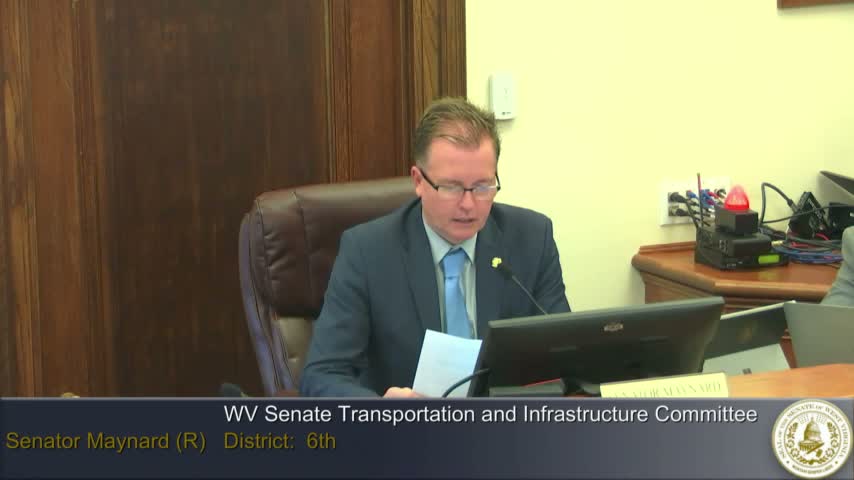
CHARLESTON, W.Va. — The Senate Transportation Infrastructure Committee on Jan. 27 agreed to a committee substitute for Senate Bill 467 that would allow public entities and private commercial facilities to designate parking spaces specifically for Purple Heart recipients and enforce those spaces under the state’s accessible-parking enforcement scheme.
Committee counsel Mara told the committee the substitute adds a definition for “Purple Heart,” authorizes the marking of parking spaces (including paint or the Purple Heart symbol) and requires signs to advise drivers of a potential fine. "Any such designated parking spot would be reserved solely for vehicles that display a Purple Heart plate in which a Purple Heart recipient is a driver or occupant," Mara said. The substitute applies the same enforcement and penalty provisions currently used for mobility-impaired parking.
Why it matters: The change would create a statutory enforcement mechanism for parking spots that some facilities already mark in purple but that have relied on the honor system, committee members said. The substitute makes unauthorized parking subject to the state’s existing penalty framework tied to accessible-parking violations, which Mara said currently ranges from $200 for a first conviction to $500 for subsequent offenses.
Committee discussion and clarifications: Senators pressed counsel on practical details. A question from the senator from Randolph asked whether private owners such as retailers would be covered; Mara said yes, businesses could designate and enforce Purple Heart spaces if they mark them and post the required sign. Senators also asked what credential a driver would need to use a Purple Heart spot. Mara said the substitute, as drafted, requires a Purple Heart license plate; there is no separate Purple Heart placard in the bill. The DMV’s general counsel, Adam Holly, told the committee the DMV could produce a mirror-hung placard similar to current disability placards but would have to purchase it; he did not provide a price estimate. Mara also noted a House bill on third reading could raise accessible-parking fines in the near term.
Votes and next steps: With no amendments, the committee agreed to the committee substitute by voice vote and, on a separate motion, voted to report the committee substitute for Senate Bill 467 to the full Senate with the recommendation that it pass.
What the bill does not do: The substitute contains no provision allowing a driver ticketed for parking in a Purple Heart space to later present documentation of Purple Heart status to have the ticket dismissed; counsel said the bill intentionally keeps enforcement clear for law enforcement officers. Other credential options—such as disabled-veteran plates or mobility-impaired placards—remain distinct and, without a Purple Heart plate, could leave a driver in violation of a Purple Heart-designated spot under the current draft.
The committee moved the substitute forward to the full Senate; the bill’s placement on the Senate calendar will determine when it is considered by the full chamber.
Committee counsel Mara told the committee the substitute adds a definition for “Purple Heart,” authorizes the marking of parking spaces (including paint or the Purple Heart symbol) and requires signs to advise drivers of a potential fine. "Any such designated parking spot would be reserved solely for vehicles that display a Purple Heart plate in which a Purple Heart recipient is a driver or occupant," Mara said. The substitute applies the same enforcement and penalty provisions currently used for mobility-impaired parking.
Why it matters: The change would create a statutory enforcement mechanism for parking spots that some facilities already mark in purple but that have relied on the honor system, committee members said. The substitute makes unauthorized parking subject to the state’s existing penalty framework tied to accessible-parking violations, which Mara said currently ranges from $200 for a first conviction to $500 for subsequent offenses.
Committee discussion and clarifications: Senators pressed counsel on practical details. A question from the senator from Randolph asked whether private owners such as retailers would be covered; Mara said yes, businesses could designate and enforce Purple Heart spaces if they mark them and post the required sign. Senators also asked what credential a driver would need to use a Purple Heart spot. Mara said the substitute, as drafted, requires a Purple Heart license plate; there is no separate Purple Heart placard in the bill. The DMV’s general counsel, Adam Holly, told the committee the DMV could produce a mirror-hung placard similar to current disability placards but would have to purchase it; he did not provide a price estimate. Mara also noted a House bill on third reading could raise accessible-parking fines in the near term.
Votes and next steps: With no amendments, the committee agreed to the committee substitute by voice vote and, on a separate motion, voted to report the committee substitute for Senate Bill 467 to the full Senate with the recommendation that it pass.
What the bill does not do: The substitute contains no provision allowing a driver ticketed for parking in a Purple Heart space to later present documentation of Purple Heart status to have the ticket dismissed; counsel said the bill intentionally keeps enforcement clear for law enforcement officers. Other credential options—such as disabled-veteran plates or mobility-impaired placards—remain distinct and, without a Purple Heart plate, could leave a driver in violation of a Purple Heart-designated spot under the current draft.
The committee moved the substitute forward to the full Senate; the bill’s placement on the Senate calendar will determine when it is considered by the full chamber.
View the Full Meeting & All Its Details
This article offers just a summary. Unlock complete video, transcripts, and insights as a Founder Member.
✓
Watch full, unedited meeting videos
✓
Search every word spoken in unlimited transcripts
✓
AI summaries & real-time alerts (all government levels)
✓
Permanent access to expanding government content
30-day money-back guarantee
