Committee backs plan to let certain physicians use personal vehicles as authorized emergency vehicles
February 02, 2026 | 2026 Legislature WV, West Virginia
This article was created by AI summarizing key points discussed. AI makes mistakes, so for full details and context, please refer to the video of the full meeting. Please report any errors so we can fix them. Report an error »
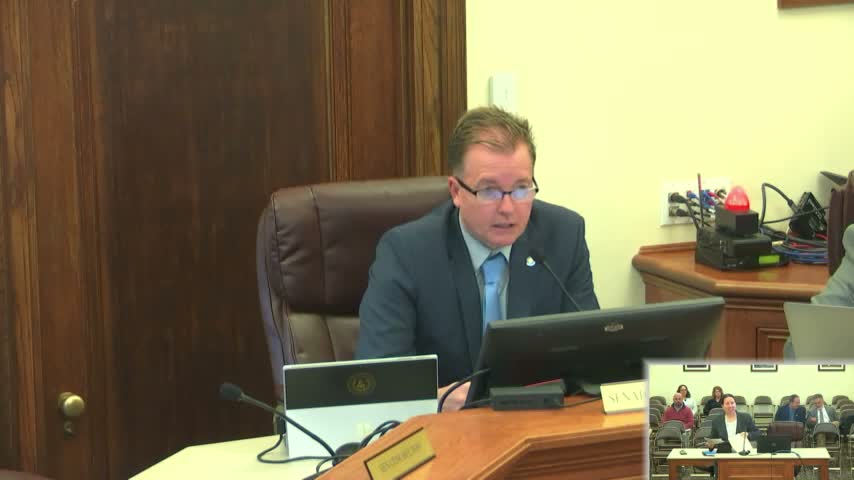
CHARLESTON, W.Va. — The Senate Transportation Infrastructure Committee on Jan. 27 agreed to a committee substitute for Senate Bill 620 that would create a physicians-authorized emergency vehicle program and require the West Virginia Board of Medicine and the West Virginia Board of Osteopathic Medicine to write rules for who may use such authorizations.
Committee counsel Mara described the substitute as adding physicians to code provisions that already authorize other emergency responders to use personal vehicles as authorized emergency vehicles. The substitute would require boards to propose rules for legislative approval establishing eligibility, specifications for temporary warning lights and audible signals, application and renewal procedures (authorizations not to exceed five years), and administrative penalties and fees to cover program costs. "The operation of an authorized emergency vehicle would not release the driver from the duty to drive with a due regard for the safety of all persons," Mara said.
Why it matters: The substitute aims to provide a uniform regulatory framework so that a physician responding to a genuine medical emergency can be more clearly identified while maintaining safety limits and board oversight. Counsel and senators emphasized that authorization would be subject to board-determined eligibility (for example, specialties more likely to face life-or-death emergencies) and that the boards could decline to authorize physicians whose practice does not warrant it.
Testimony and concerns: Senators raised questions about misuse, enforcement and liability if a physician used the authorization for non-emergency convenience. Mara said policing improper use would fall to appropriate agencies and could result in tickets or administrative penalties; she also noted that authorization would not shield reckless driving from legal consequences. Greg Foster, counsel for the West Virginia Board of Medicine, appeared to answer questions about rulemaking and said he had not yet seen proposed rules; Senator from Jefferson said he supports the legislation but would welcome rule language that limits eligibility to physicians reasonably expected to respond to life-or-death emergencies.
Votes and next steps: The committee agreed to the committee substitute by voice vote and, on motion, reported it to the full Senate with the recommendation that it pass but, under the bill’s original double-reference, be first referred to the Committee on Finance.
What the bill does not do: The substitute does not itself specify medical specialties or eligibility criteria; it delegates those determinations to the licensing boards through rulemaking, which the committee and witnesses said would later come back before the Legislature for approval.
Committee counsel Mara described the substitute as adding physicians to code provisions that already authorize other emergency responders to use personal vehicles as authorized emergency vehicles. The substitute would require boards to propose rules for legislative approval establishing eligibility, specifications for temporary warning lights and audible signals, application and renewal procedures (authorizations not to exceed five years), and administrative penalties and fees to cover program costs. "The operation of an authorized emergency vehicle would not release the driver from the duty to drive with a due regard for the safety of all persons," Mara said.
Why it matters: The substitute aims to provide a uniform regulatory framework so that a physician responding to a genuine medical emergency can be more clearly identified while maintaining safety limits and board oversight. Counsel and senators emphasized that authorization would be subject to board-determined eligibility (for example, specialties more likely to face life-or-death emergencies) and that the boards could decline to authorize physicians whose practice does not warrant it.
Testimony and concerns: Senators raised questions about misuse, enforcement and liability if a physician used the authorization for non-emergency convenience. Mara said policing improper use would fall to appropriate agencies and could result in tickets or administrative penalties; she also noted that authorization would not shield reckless driving from legal consequences. Greg Foster, counsel for the West Virginia Board of Medicine, appeared to answer questions about rulemaking and said he had not yet seen proposed rules; Senator from Jefferson said he supports the legislation but would welcome rule language that limits eligibility to physicians reasonably expected to respond to life-or-death emergencies.
Votes and next steps: The committee agreed to the committee substitute by voice vote and, on motion, reported it to the full Senate with the recommendation that it pass but, under the bill’s original double-reference, be first referred to the Committee on Finance.
What the bill does not do: The substitute does not itself specify medical specialties or eligibility criteria; it delegates those determinations to the licensing boards through rulemaking, which the committee and witnesses said would later come back before the Legislature for approval.
View the Full Meeting & All Its Details
This article offers just a summary. Unlock complete video, transcripts, and insights as a Founder Member.
✓
Watch full, unedited meeting videos
✓
Search every word spoken in unlimited transcripts
✓
AI summaries & real-time alerts (all government levels)
✓
Permanent access to expanding government content
30-day money-back guarantee
