SchoolHouse Connection and districts outline McKinney‑Vento tools to keep unhoused students in school
January 23, 2026 | 2026 Legislature Alaska, Alaska
This article was created by AI summarizing key points discussed. AI makes mistakes, so for full details and context, please refer to the video of the full meeting. Please report any errors so we can fix them. Report an error »
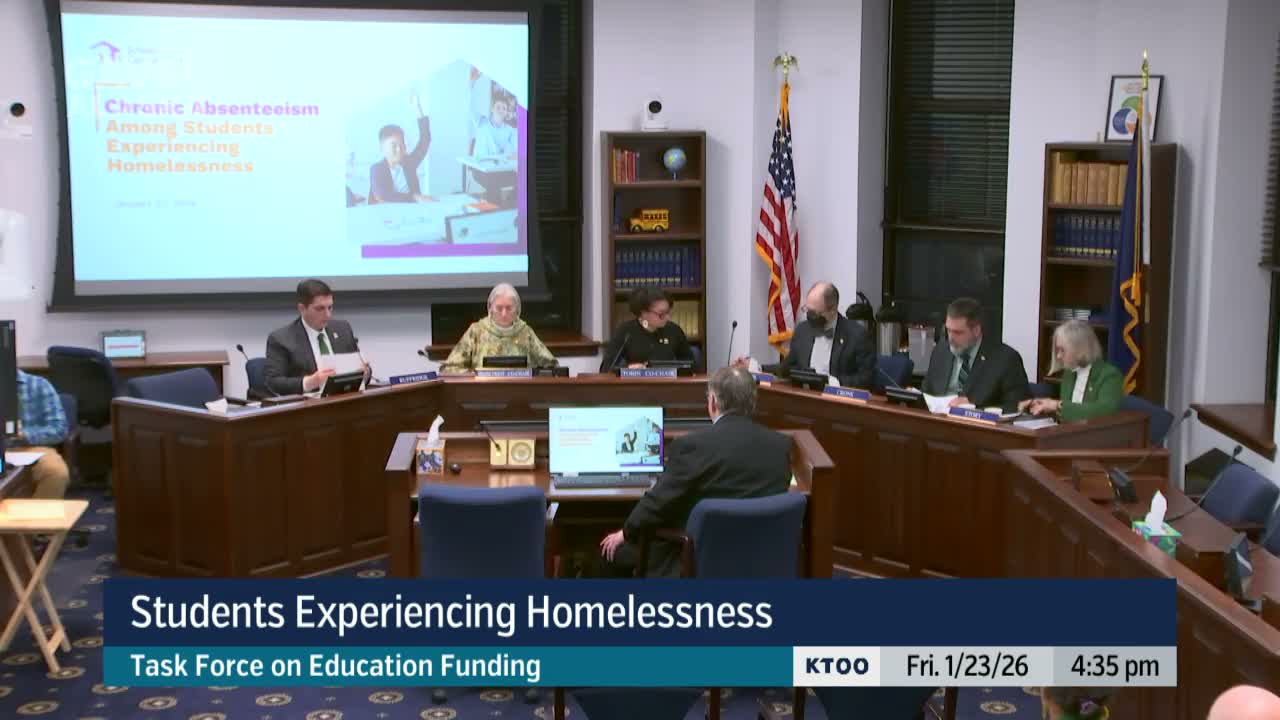
Barbara Duffield, executive director of SchoolHouse Connection, and McKinney‑Vento coordinators from Kenai Peninsula Borough School District and Anchorage School District told the task force that schools have tools to stabilize education for students experiencing homelessness but need integrated data and targeted resources.
“Most students who are homeless are in hidden situations, staying temporarily with other people due to lack of alternatives,” Duffield said, urging the committee to view rising counts as sometimes reflecting better identification and the opportunity to intervene. She noted the McKinney‑Vento Act’s central aim is school stability — staying in the school of origin and providing transportation as appropriate — and said state and local policy should avoid creating disincentives for districts to identify these students.
Kelly King, KPBSD’s McKinney‑Vento coordinator, described district protocols that trigger rapid liaison outreach (for example, more than three unplanned missed days or seven days in a quarter). She listed practical supports KPBSD provides: route changes to preserve school‑of‑origin transportation, short‑term fuel assistance, laundromat/shower cards, backpacks and supplies, and a dedicated youth support specialist whose targeted outreach helped a chronically absent senior graduate.
David Mayo, Anchorage School District’s homeless liaison, reported the district identified about 1,880 students as experiencing homelessness last year (about 4.3% of the district). He said approximately 60% of those students were in doubled‑up living situations and that many students move frequently; about 25% reported three or more addresses during the school year. Anchorage uses regular attendance reports, staff cell phones and texts to reach families, student support specialists and creative interventions such as car repairs or temporary taxis to restore attendance.
On funding, Duffield said the U.S. House funding package maintained McKinney‑Vento appropriations at roughly $129,000,000 and allowed some flexibility for short‑term motel stays; Kelly King said her district’s McKinney‑Vento subgrant is approximately $28,000 and currently serves about 250 students, while Anchorage’s subgrant is about $140,000 plus a Title I set‑aside (roughly $1.3 million) that supports local staffing and services.
Speakers urged the state to make homelessness visible in attendance dashboards (within privacy constraints), bridge silos between homeless‑education staff and attendance teams, and consider targeted state or pilot funding to pair housing supports with school services. The task force asked staff to gather district parental‑outreach policies and to inventory existing local practices for use in future recommendations.
What’s next: task force consultant Matthew Turner was asked to collect district policies on outreach and open‑enrollment practices for the committee’s next meeting.
“Most students who are homeless are in hidden situations, staying temporarily with other people due to lack of alternatives,” Duffield said, urging the committee to view rising counts as sometimes reflecting better identification and the opportunity to intervene. She noted the McKinney‑Vento Act’s central aim is school stability — staying in the school of origin and providing transportation as appropriate — and said state and local policy should avoid creating disincentives for districts to identify these students.
Kelly King, KPBSD’s McKinney‑Vento coordinator, described district protocols that trigger rapid liaison outreach (for example, more than three unplanned missed days or seven days in a quarter). She listed practical supports KPBSD provides: route changes to preserve school‑of‑origin transportation, short‑term fuel assistance, laundromat/shower cards, backpacks and supplies, and a dedicated youth support specialist whose targeted outreach helped a chronically absent senior graduate.
David Mayo, Anchorage School District’s homeless liaison, reported the district identified about 1,880 students as experiencing homelessness last year (about 4.3% of the district). He said approximately 60% of those students were in doubled‑up living situations and that many students move frequently; about 25% reported three or more addresses during the school year. Anchorage uses regular attendance reports, staff cell phones and texts to reach families, student support specialists and creative interventions such as car repairs or temporary taxis to restore attendance.
On funding, Duffield said the U.S. House funding package maintained McKinney‑Vento appropriations at roughly $129,000,000 and allowed some flexibility for short‑term motel stays; Kelly King said her district’s McKinney‑Vento subgrant is approximately $28,000 and currently serves about 250 students, while Anchorage’s subgrant is about $140,000 plus a Title I set‑aside (roughly $1.3 million) that supports local staffing and services.
Speakers urged the state to make homelessness visible in attendance dashboards (within privacy constraints), bridge silos between homeless‑education staff and attendance teams, and consider targeted state or pilot funding to pair housing supports with school services. The task force asked staff to gather district parental‑outreach policies and to inventory existing local practices for use in future recommendations.
What’s next: task force consultant Matthew Turner was asked to collect district policies on outreach and open‑enrollment practices for the committee’s next meeting.
View the Full Meeting & All Its Details
This article offers just a summary. Unlock complete video, transcripts, and insights as a Founder Member.
✓
Watch full, unedited meeting videos
✓
Search every word spoken in unlimited transcripts
✓
AI summaries & real-time alerts (all government levels)
✓
Permanent access to expanding government content
30-day money-back guarantee
