School liaisons, bus routes and basic needs aid keep homeless students in class, presenters tell Alaska task force
January 23, 2026 | 2026 Legislature Alaska, Alaska
This article was created by AI summarizing key points discussed. AI makes mistakes, so for full details and context, please refer to the video of the full meeting. Please report any errors so we can fix them. Report an error »
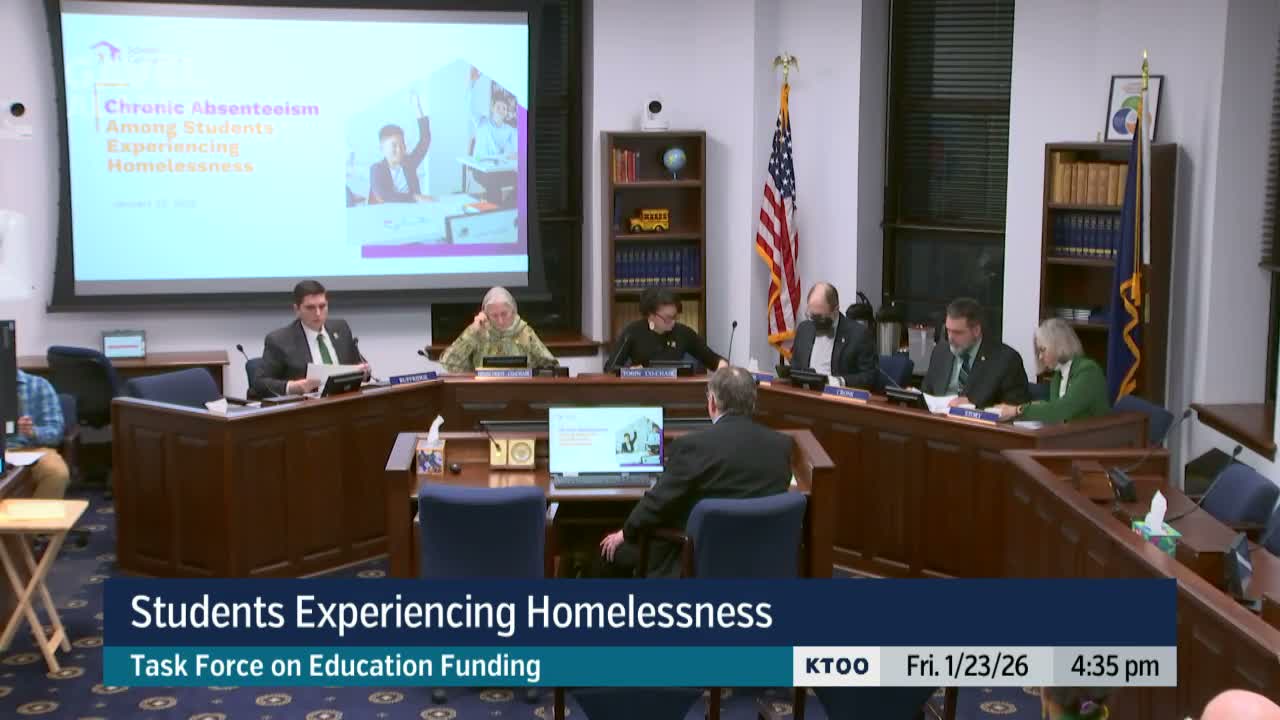
Barbara Duffield, executive director of SchoolHouse Connection, Kelly King, Kenai Peninsula Borough School District McKinney‑Vento coordinator, and Dave Mayo, Anchorage School District child‑in‑transition liaison, briefed the task force on Jan. 23 about how homelessness intersects with attendance.
Duffield said that rising counts of students identified as experiencing homelessness can reflect better identification and help schools provide supports, but that homelessness also creates unique, cumulative barriers to attendance including mobility, transportation gaps, hygiene needs and caregiver responsibilities. She described the McKinney‑Vento Act as a federal framework that prioritizes school stability (transportation to the school of origin, immediate enrollment and liaison support) and urged the state to ensure homeless students are integrated into broader attendance initiatives rather than treated as an afterthought.
Kelly King described practices in Kenai Peninsula that target access: district policies requiring liaison outreach after multiple absences, amending bus routes to preserve school‑of‑origin stability, short‑term fuel assistance, and targeted hygiene supports (laundromat cards and clothing) to remove barriers to returning to school. King said KPBSD reports about an 82% average daily attendance rate for McKinney‑Vento students and currently serves roughly 250 students; identifications have increased by about 30% this year and could exceed 300.
Dave Mayo reported Anchorage identified 1,880 students who experienced homelessness last year—about 4.3% of the district—and described district practices that include weekly attendance reports, rapid outreach by staff (cell phones and texts), creative transportation fixes (rerouting buses, using taxis), and student support specialists who build trust and help students navigate frequent moves. Mayo noted that Anchorage relies on a mix of the McKinney‑Vento subgrant (about $140,000) and Title I set‑asides (he cited an estimated $1,300,000 set‑aside in the current allocation) to fund staff and services.
On federal funding, Duffield told the committee the U.S. House appropriations package at the time of her briefing would keep McKinney‑Vento funding at $129,000,000 and permit use of funds for short‑term motel stays; final action awaited the Senate.
Task force members asked for additional detail about district funding mixes and data collection practices, and the chair requested staff compile district parental‑outreach policies, attendance dashboards (by grade), and open‑enrollment practices for the next meeting. No formal votes were taken.
Duffield said that rising counts of students identified as experiencing homelessness can reflect better identification and help schools provide supports, but that homelessness also creates unique, cumulative barriers to attendance including mobility, transportation gaps, hygiene needs and caregiver responsibilities. She described the McKinney‑Vento Act as a federal framework that prioritizes school stability (transportation to the school of origin, immediate enrollment and liaison support) and urged the state to ensure homeless students are integrated into broader attendance initiatives rather than treated as an afterthought.
Kelly King described practices in Kenai Peninsula that target access: district policies requiring liaison outreach after multiple absences, amending bus routes to preserve school‑of‑origin stability, short‑term fuel assistance, and targeted hygiene supports (laundromat cards and clothing) to remove barriers to returning to school. King said KPBSD reports about an 82% average daily attendance rate for McKinney‑Vento students and currently serves roughly 250 students; identifications have increased by about 30% this year and could exceed 300.
Dave Mayo reported Anchorage identified 1,880 students who experienced homelessness last year—about 4.3% of the district—and described district practices that include weekly attendance reports, rapid outreach by staff (cell phones and texts), creative transportation fixes (rerouting buses, using taxis), and student support specialists who build trust and help students navigate frequent moves. Mayo noted that Anchorage relies on a mix of the McKinney‑Vento subgrant (about $140,000) and Title I set‑asides (he cited an estimated $1,300,000 set‑aside in the current allocation) to fund staff and services.
On federal funding, Duffield told the committee the U.S. House appropriations package at the time of her briefing would keep McKinney‑Vento funding at $129,000,000 and permit use of funds for short‑term motel stays; final action awaited the Senate.
Task force members asked for additional detail about district funding mixes and data collection practices, and the chair requested staff compile district parental‑outreach policies, attendance dashboards (by grade), and open‑enrollment practices for the next meeting. No formal votes were taken.
Don't Miss a Word: See the Full Meeting!
Go beyond summaries. Unlock every video, transcript, and key insight with a Founder Membership.
✓
Get instant access to full meeting videos
✓
Search and clip any phrase from complete transcripts
✓
Receive AI-powered summaries & custom alerts
✓
Enjoy lifetime, unrestricted access to government data
30-day money-back guarantee
