State colleges seek authority to grant standalone agriculture education degrees and doctoral programs
January 26, 2026 | 2026 Legislature NE, Nebraska
This article was created by AI summarizing key points discussed. AI makes mistakes, so for full details and context, please refer to the video of the full meeting. Please report any errors so we can fix them. Report an error »
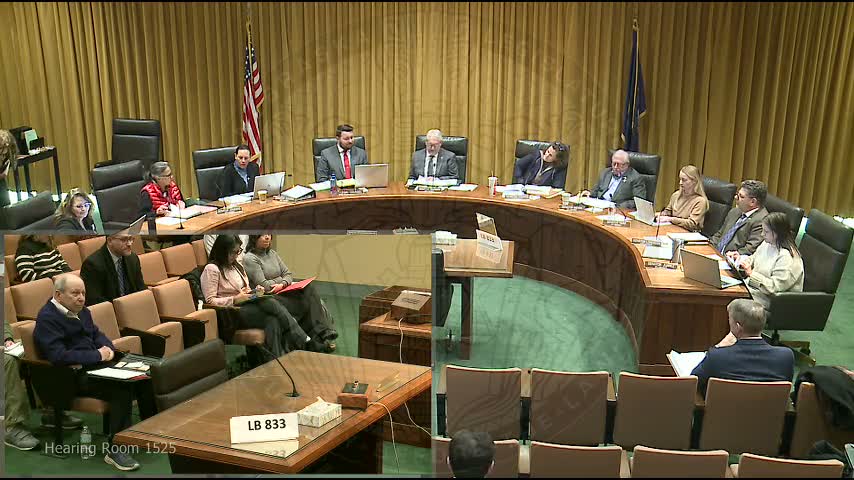
Sen. Kathleen Kauth, R‑LD31, told the Education Committee that LB833 would allow Nebraska’s state colleges to seek Coordinating Commission approval to offer standalone agricultural‑education degrees and add doctoral degrees in education, arguing the change would help retain teachers in rural communities. "I think this will help improve agricultural education in rural areas and I ask for your yes vote," Kauth said during opening remarks.
Paul Turman, chancellor of the Nebraska State College System, testified the bill addresses three targeted gaps in statute: removing a carve‑out that currently forces agriculture education students to transfer to the University of Nebraska–Lincoln for a final year; clarifying state colleges may offer reduced‑credit bachelor programs; and allowing doctoral granting authority in education. Turman cited vacancy data: "Career and Technical Education reported that had 37 unfilled teaching positions. And when you drill down into that and look specifically at Ag Education, the number this last year for reported districts was 6," he said, framing the bill as a response to a teacher shortage in parts of the state.
Turman said state colleges already grant master’s degrees and that faculty credentials could support doctoral instruction, supplemented by adjuncts drawn from regional expertise. He described the existing statutory partnership with UNL as limiting in practice and said the bill preserves a coordinating‑commission approval step: state colleges would still need permission to create a standalone ag‑education program.
Matt Bloomstead, associate vice president for government relations at the University of Nebraska, opposed statutory change absent additional planning, urging continued collaborative pathways and cautioning that doctoral programs "require sustained investment in doctoral qualified faculty, research capacity, accreditation, student support, and stable enrollment pipelines." Bloomstead referenced historical efforts to coordinate agricultural instruction and suggested the state pursue strategic systemwide planning rather than immediate statutory expansion.
Courtney Wittstruck of the Nebraska Community College Association testified neutral in support of improved access but urged broader inclusion of community colleges in any structural changes or an interim study to assess cross‑sector impacts.
Committee members pressed Turman on program design, capacity and student‑teaching timing. Turman said the current agricultural pathway is designed for students to complete degree requirements in four years and that student teaching typically occurs in the fourth year, a factor the bill would leave subject to placement decisions.
The hearing record includes invited testimony and public comments both supporting and cautioning about the changes. The committee did not take a vote at the hearing; staff and lawmakers said they would continue discussions on technical language and coordination with the University and the Coordinating Commission.
Paul Turman, chancellor of the Nebraska State College System, testified the bill addresses three targeted gaps in statute: removing a carve‑out that currently forces agriculture education students to transfer to the University of Nebraska–Lincoln for a final year; clarifying state colleges may offer reduced‑credit bachelor programs; and allowing doctoral granting authority in education. Turman cited vacancy data: "Career and Technical Education reported that had 37 unfilled teaching positions. And when you drill down into that and look specifically at Ag Education, the number this last year for reported districts was 6," he said, framing the bill as a response to a teacher shortage in parts of the state.
Turman said state colleges already grant master’s degrees and that faculty credentials could support doctoral instruction, supplemented by adjuncts drawn from regional expertise. He described the existing statutory partnership with UNL as limiting in practice and said the bill preserves a coordinating‑commission approval step: state colleges would still need permission to create a standalone ag‑education program.
Matt Bloomstead, associate vice president for government relations at the University of Nebraska, opposed statutory change absent additional planning, urging continued collaborative pathways and cautioning that doctoral programs "require sustained investment in doctoral qualified faculty, research capacity, accreditation, student support, and stable enrollment pipelines." Bloomstead referenced historical efforts to coordinate agricultural instruction and suggested the state pursue strategic systemwide planning rather than immediate statutory expansion.
Courtney Wittstruck of the Nebraska Community College Association testified neutral in support of improved access but urged broader inclusion of community colleges in any structural changes or an interim study to assess cross‑sector impacts.
Committee members pressed Turman on program design, capacity and student‑teaching timing. Turman said the current agricultural pathway is designed for students to complete degree requirements in four years and that student teaching typically occurs in the fourth year, a factor the bill would leave subject to placement decisions.
The hearing record includes invited testimony and public comments both supporting and cautioning about the changes. The committee did not take a vote at the hearing; staff and lawmakers said they would continue discussions on technical language and coordination with the University and the Coordinating Commission.
Don't Miss a Word: See the Full Meeting!
Go beyond summaries. Unlock every video, transcript, and key insight with a Founder Membership.
✓
Get instant access to full meeting videos
✓
Search and clip any phrase from complete transcripts
✓
Receive AI-powered summaries & custom alerts
✓
Enjoy lifetime, unrestricted access to government data
30-day money-back guarantee
